
By Melanie Ortiz Reyes - Marketing Strategist - PrimeStreet.io
Move to Wilmington
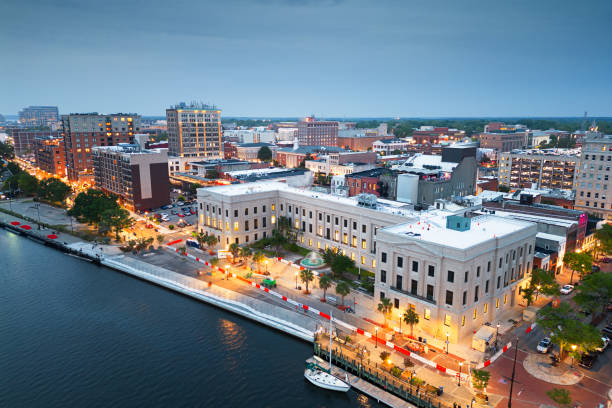
The first thing most people know about Wilmington, North Carolina is that it has a beach. What takes longer to learn is that Wilmington is a fully formed city with a genuine identity that exists entirely on its own terms, with or without the shoreline.
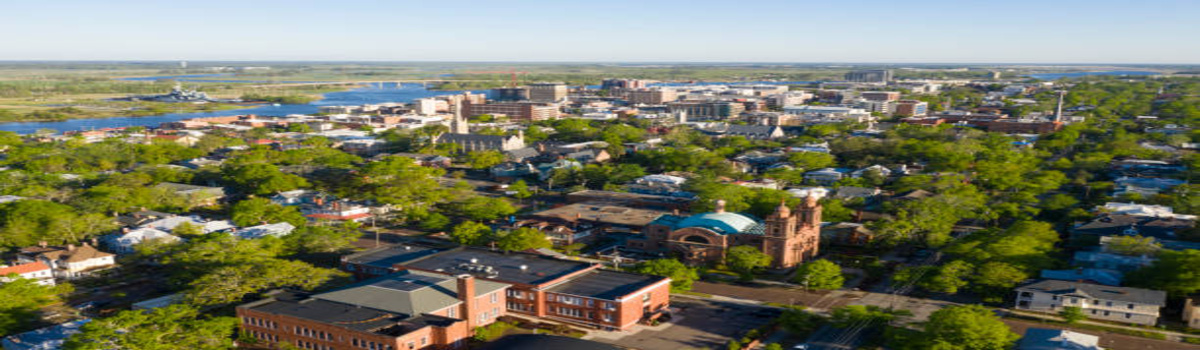
Wilmington sits along the Cape Fear River in southeastern North Carolina, at the center of a coastal region that draws retirees, military families, university students, healthcare professionals, remote workers, and everyone in between. The greater Wilmington metro area encompasses New Hanover County and reaches into Brunswick County to the south and west, Pender County to the north, Columbus County inland, and Bladen County further west, forming a diverse coastal corridor where pine forests, blackwater rivers, saltwater marshes, and Atlantic beaches shape daily life in ways that are hard to fully appreciate until you are living them.
People who relocate here from the Mid-Atlantic, the Northeast, Florida, or from inland North Carolina cities like Raleigh or Charlotte describe a consistent pattern: they expected a pleasant beach town and found a real city with a walkable historic core, a growing healthcare and life sciences economy, a respected research university, and a community culture rooted in place rather than assembled for tourism.
This guide is written for people making a serious decision about relocating to the Wilmington area. It covers the economy, housing, cost of living, neighborhoods across six counties, and the rhythms of daily life that shape long-term happiness here so that the move, when it happens, is grounded in knowledge rather than guesswork.
What Makes Wilmington Different?
A Port City With Depth
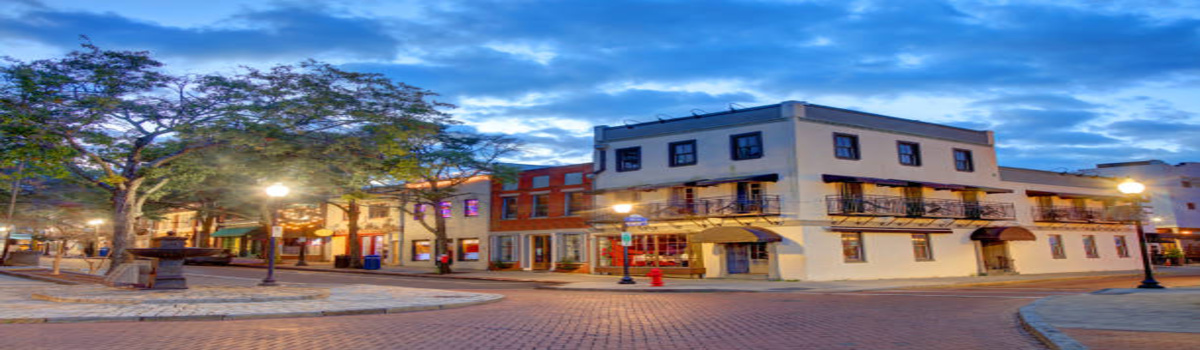
Wilmington was founded in 1739 and served as a critical port during the colonial and antebellum periods. The city's historic downtown reflects that layered past in a way that newer coastal destinations simply cannot manufacture. The downtown riverfront along Water Street holds a collection of restored 19th-century commercial buildings, Federal-style homes, and converted warehouses that give the city's core a texture and substance that draws residents to live, dine, and gather there year-round.
The University of North Carolina Wilmington anchors the city's intellectual and cultural life with more than 17,000 students and a growing research profile in marine biology, coastal sustainability, and health sciences. The university generates arts programming, public lectures, workforce pipeline connections, and a year-round energy that reaches well beyond the campus boundaries into the surrounding community.
Cape Fear Community College provides associate degree, vocational, and workforce training programs that feed the region's healthcare, construction, hospitality, and maritime industries. The two institutions together give the Wilmington metro an educational infrastructure that serves both young people building careers and adults changing them.
The Water Is Everywhere
What distinguishes coastal living in the Wilmington area from inland life is not simply that the beach is nearby. It is that water is present in every direction, in multiple forms, each with its own community and its own relationship to time.
Wrightsville Beach, a short drive east of downtown, is the closest ocean beach to the city and one of the most beloved barrier island communities on the East Coast. Carolina Beach and Kure Beach to the south anchor the southern edge of New Hanover County with a more family-oriented and laid-back character. Figure Eight Island is one of the Southeast's most exclusive and private coastal communities.
The Cape Fear River runs through the heart of the city and past the downtown riverfront. The Intracoastal Waterway parallels the coast through Brunswick County marshlands, supporting boating, paddleboarding, kayaking, and waterfront living at a pace set by tides rather than traffic. The inland waterways of the coastal plain, including the Black River and its cypress-tupelo swamps, which contain some of the oldest living trees in the eastern United States, offer a kind of natural grandeur that is easy to overlook when beaches are the headline.
Carolina Beach State Park, Fort Fisher State Recreation Area, Hammocks Beach State Park, and the Green Swamp Preserve provide natural landscapes that complement the Atlantic shoreline and give the region an ecological diversity rare among coastal metros of comparable size.
Food, History, and Community
Downtown Wilmington's dining and nightlife scene has matured considerably over the past decade. The stretch of Front Street from the riverfront north through the historic district holds restaurants, coffee shops, bars, and galleries that serve the permanent population through all four seasons rather than closing down after Labor Day. Establishments like Boca Bay, Rx Restaurant, and the growing collection of independent dining concepts along Castle Street and Soda Pop District give the city a culinary identity that reflects the diversity of its permanent residents.
The Cargo District, a converted warehouse neighborhood near downtown, has become a hub for independent breweries, studios, retail, and food businesses that draw residents from across the metro. It is one of the clearer signs that Wilmington's growth has come with genuine creative investment rather than simple population expansion.
The film industry has maintained a quiet but significant presence in Wilmington for decades, centered on EUE Screen Gems Studios. That history has shaped the city's creative culture and attracted a population of artists, writers, and production professionals who contribute to the arts community alongside the university and the downtown gallery circuit.
The Azalea Festival each spring, the Riverfest each fall, and the year-round programming at venues like the Cameron Art Museum and Thalian Hall anchor a community calendar that serves permanent residents rather than seasonal visitors.



Economy and Employment
Healthcare as the Anchor
Healthcare has emerged as the dominant driver of stable, high-wage employment across the Wilmington metro. Novant Health New Hanover Regional Medical Center operates one of the region's largest hospitals and a growing network of outpatient facilities, specialty clinics, and physician practices that collectively employ thousands of clinical and administrative professionals. Cape Fear Valley Health in Fayetteville, while outside the metro core, draws patients from across the Cape Fear region and supports a broad network of affiliated providers in Brunswick, Pender, and Bladen counties.
The growing permanence of the coastal population, much of it driven by retiree migration from the Northeast and Mid-Atlantic, has created sustained demand for cardiology, oncology, orthopedics, and primary care that continues to attract specialists and healthcare organizations to the region. For professionals in nursing, pharmacy, physical therapy, medical technology, and hospital administration, Wilmington offers career opportunities that are comparable to what larger metros provide, with a cost of living and quality of life that larger metros cannot match.
Technology, Finance, and Remote Work
Pender Commerce Park, the North Kerr Industrial Area, and several emerging technology campuses have attracted light manufacturing, logistics, and technology operations to the Wilmington market. Live Oak Bank, headquartered in Wilmington, is one of the largest SBA lenders in the country and a source of significant financial technology employment and innovation within the city itself.
The normalization of remote work has accelerated Wilmington's population growth considerably. Knowledge workers in finance, technology, marketing, consulting, and other fields who carry Northeast or West Coast salaries but are no longer required to live near a specific office have relocated to Wilmington in numbers that have reshaped certain neighborhoods and driven sustained demand for housing with reliable high-speed internet access. The quality of life that Wilmington offers relative to its cost represents a genuine competitive advantage for households that have the flexibility to choose their geography.
Tourism, Hospitality, and the Film Industry
Tourism provides a significant employment base across hotels, restaurants, retail, and attractions throughout the metro, particularly in New Hanover County's beach communities and the Brunswick County island towns. The film and television production industry, centered on EUE Screen Gems and the state of North Carolina's incentive programs, adds production and post-production employment that is less visible than hospitality but meaningful in volume.
The construction sector has maintained one of the region's most active employment bases for more than a decade, driven by residential growth across Brunswick County, the US-17 corridor in Pender County, and continued commercial and healthcare development throughout New Hanover County.
Cost of Living
Housing and What the Budget Actually Buys
The Wilmington metro's cost of living runs roughly 5 to 10 percent below the national average, with housing representing the largest source of savings for households relocating from coastal markets in Virginia, Maryland, New Jersey, or Florida. Median home prices in New Hanover County cluster in the $340,000 to $400,000 range depending on proximity to the coast and community characteristics, representing meaningful value compared to comparable beachside metros up and down the East Coast.
Brunswick County offers additional savings, with median prices in inland communities like Leland and Bolivia running notably below those in New Hanover County's beach towns. Pender County, Columbus County, and Bladen County extend the affordability ladder further for households that prioritize land, acreage, or historic home character over proximity to downtown Wilmington or the ocean.
Average one-bedroom apartment rents in the Wilmington area run approximately $1,300 to $1,600 per month depending on location, with the most affordable rental options in Leland, Hampstead, and the US-74/76 corridor communities of Brunswick County. Renters who need waterfront access or walkability to downtown Wilmington will pay a meaningful premium over those figures.
North Carolina's Tax Environment
North Carolina taxes retirement income differently than South Carolina, and households considering the Wilmington area should consult a qualified tax professional to understand how their specific income sources would be treated under North Carolina's current rules. What can be noted without providing advice is that North Carolina has reduced its individual income tax rate in recent legislative sessions and that property taxes in New Hanover and Brunswick counties are generally below what residents of Northeast states pay on comparable homes.
Flood insurance represents a real cost for properties in FEMA-designated flood zones, which are common throughout coastal New Hanover, Brunswick, and Pender counties. Buyers should review flood zone designations carefully during the due diligence period, particularly for properties near tidal creeks, the Cape Fear River, the Intracoastal Waterway, and low-elevation coastal areas.
Daily Life Costs
Car ownership is a practical necessity throughout the Wilmington metro. The city's geography distributes employment, healthcare, schools, and retail across a broad coastal corridor, and while downtown Wilmington has walkable neighborhoods, the surrounding suburban communities require personal transportation for most daily errands. The Market Street and US-17 corridors are the region's primary commercial spines and experience meaningful congestion during peak hours, particularly in summer when beach traffic layers onto commuter patterns.
Summer air conditioning adds to utility costs, and hurricane season preparation, including generator maintenance, storm supplies, and flood insurance premiums, is a routine part of coastal living that residents plan for as a matter of course rather than emergency. The Wilmington area's hurricane exposure is real, though the storm history of the past several decades reflects the fact that direct impacts are the exception rather than the rule.
Real Estate Market
What Buyers Find in Today's Market
The Wilmington real estate market appreciated sharply during the 2020-to-2022 period, driven by the same combination of remote worker relocation and retiree demand from Northern markets that reshaped coastal markets across the South. The market has since found more balance, with increased inventory and less competitive offer conditions than the peak years, though well-priced properties in high-demand communities continue to attract serious buyer attention.
New construction remains robust, concentrated in master-planned communities in Brunswick County's Leland and Bolivia areas, the US-17 corridor through Pender County, and the southern New Hanover County communities near Carolina Beach. National builders including D.R. Horton, Toll Brothers, and Centex operate alongside regional builders who know the specific characteristics of coastal construction in ways that matter for long-term maintenance and storm resilience.
The condominium and townhome market reflects Wilmington's dual nature as a permanent city and a coastal tourism destination. Oceanfront and near-oceanfront condominiums in Wrightsville Beach, Carolina Beach, and the Brunswick County island communities represent a segment of the market with its own due diligence requirements around short-term rental restrictions, HOA fee structures, building age, and reserve funding. Buyers considering these properties benefit from working with agents who specialize in this segment.
Architectural Character
Downtown Wilmington's historic district holds one of the largest collections of antebellum and Victorian residential architecture in the Southeast, with Italianate, Queen Anne, Federal, and Greek Revival homes lining the streets north of the riverfront. These properties attract buyers who value character, walkability, and a genuine connection to the city's long history, and they come with the maintenance realities that older construction requires.
Midtown and the Oleander Drive corridor hold the post-war neighborhoods built between the 1940s and 1970s that serve families who want established trees, larger lots, and proximity to schools and shopping without the premium of the historic district or the distance of the suburban growth areas.
The dominant housing type in the outlying communities is the single-story or two-story production home built since 2000, with open floor plans, attached garages, and community amenities that vary considerably in quality and character across subdivisions that may look similar on a map but differ in important ways on the ground.
Where in the Wilmington Area?
The greater Wilmington metro covers six counties, each with its own character, school systems, tax structures, and geographic relationship to the coast. Getting to know these differences is the foundation of a relocation decision that holds up over time.
New Hanover County
New Hanover County is the smallest county in North Carolina by land area and the urban heart of the Cape Fear region. Everything that defines Wilmington's identity as a coastal city, the historic downtown, the river, the beaches, the university, and the healthcare infrastructure, sits within its boundaries. The county is nearly fully developed, which means that buyers who choose it are generally choosing established neighborhoods rather than new construction subdivisions, though infill development and redevelopment continue to add inventory.
Historic Downtown Wilmington
The area bounded roughly by the Cape Fear River to the west, Wrightsville Avenue to the east, and extending from the riverfront northward through the historic district represents Wilmington's most walkable and character-rich residential environment. Streets like Third Street, Fourth Street, and the numbered avenues running parallel to the river are lined with restored homes dating to the 1850s through 1920s, and the proximity to Front Street dining, the river walk, and the cultural anchors of Thalian Hall and the Cape Fear Museum makes downtown living a genuine lifestyle choice rather than simply a geographic preference.
Buyers in the historic district trade square footage for character, walkability, and a sense of place that newer communities cannot replicate. Properties here require careful attention to historic preservation requirements, older mechanical and structural systems, and the particular insurance landscape of older coastal homes.
Midtown and Oleander
The midtown neighborhoods stretching along Oleander Drive and the Market Street corridor west of downtown hold the established residential fabric that many families and working professionals find most livable. Communities like Forest Hills, Winter Park, and the South College Road corridor offer mature trees, larger lots than the historic district, and proximity to New Hanover County schools that consistently rank among the county's stronger performers. These neighborhoods absorb much of the demand from buyers who want city proximity without city density.
Wrightsville Beach
Wrightsville Beach, separated from the mainland by the Intracoastal Waterway and reached by a drawbridge, is among the most sought-after barrier island communities on the East Coast. The permanent residential community here is small and fiercely protective of the beach town character that distinguishes it from the more commercially developed beach towns further south. Properties on Wrightsville Beach represent the upper end of the New Hanover County market, with values reflecting the combination of oceanfront access, community quality, and scarcity that come with barrier island geography.
Carolina Beach and Kure Beach
Carolina Beach and Kure Beach anchor the southern end of New Hanover County's barrier island, forming a peninsula community with distinct personalities. Carolina Beach has a boardwalk, a lively summer scene, and a permanent residential population that appreciates the town's unpretentious character and affordability relative to Wrightsville Beach. Kure Beach, just south, carries a quieter reputation and is home to Fort Fisher State Recreation Area and the North Carolina Aquarium at Fort Fisher, which together create a natural setting that shapes the community's identity. Both towns have seen meaningful permanent population growth and residential investment over the past decade.
Brunswick County
Brunswick County lies directly south and west of New Hanover County and has been one of the fastest-growing counties in North Carolina for more than fifteen years. The county's combination of lower housing costs than New Hanover, a growing commercial infrastructure in the Leland area, direct access to multiple island beach communities, and easy proximity to the Wilmington job market has made it the destination of choice for families, retirees, and remote workers seeking maximum value within the Cape Fear coastal region.
Leland
Leland has transformed from a small crossroads community into one of the Wilmington metro's most active suburban centers in less than two decades. The town's position just across the Cape Fear River bridges from downtown Wilmington, combined with a rapidly expanding commercial corridor along US-74/76 and the concentrated development of master-planned communities with pools, fitness centers, and walking trails, has made it the region's dominant family relocation destination. Brunswick County Schools serves the area, and several Leland-area schools have built strong academic reputations.
The Waterford, Magnolia Greens, and Brunswick Forest communities represent some of the most established and amenity-rich master-planned neighborhoods in the metro, with home prices and community quality that attract buyers who want the suburban living experience without the New Hanover County price premium.
Ocean Isle Beach, Sunset Beach, and Holden Beach
Brunswick County's barrier island communities offer some of the most relaxed and least commercially developed beach town character on the North Carolina coast. Ocean Isle Beach, Sunset Beach, and Holden Beach each maintain a predominantly residential character with far smaller commercial footprints than the Myrtle Beach or Wilmington beach communities. Permanent residents choose these towns for their quieter pace, their access to both North Carolina and South Carolina amenities across the state line, and the genuine small-town community bonds that form when a barrier island is home to people who know each other year-round.
Bolivia, Southport, and the Oak Island Area
Southport, a historic fishing village on the Cape Fear River at the mouth of the harbor, carries a genuine small-city identity that sets it apart from the purpose-built retirement and resort communities that dominate much of coastal Brunswick County. The downtown streetscape, the waterfront park, and the community's active civic and arts calendar make Southport a destination for buyers who want beauty, history, and a real sense of place. Oak Island, connected to Southport by bridge, offers ocean beach access at price points more accessible than Wrightsville Beach or the New Hanover barrier islands.
Pender County
Pender County stretches north of New Hanover County along the US-17 coastal corridor and represents the Wilmington metro's northern growth frontier. The county's combination of lower land costs, developing commercial infrastructure, access to the Topsail Island beach communities, and proximity to New Hanover County employment has drawn a growing permanent residential population that has reshaped communities like Hampstead and Surf City over the past decade.
Hampstead
Hampstead has grown from a rural community to a substantial suburban destination as families seeking more land, lower price points, and newer construction have moved up the US-17 corridor from New Hanover County. The drive to downtown Wilmington or the New Hanover County employment centers runs approximately 25 to 35 minutes under normal conditions. Pender County Schools serves the area, and community investment in school infrastructure has followed the population growth. The commercial development along US-17 in Hampstead has expanded to meet daily shopping and dining needs without requiring drives into Wilmington for routine errands.
Topsail Island Communities
Surf City, North Topsail Beach, and Topsail Beach collectively form the Topsail Island community, a 26-mile barrier island with a character that falls between the quieter Brunswick County island towns and the more commercially developed Wrightsville Beach. The permanent residential population here is growing, supported by improved connectivity to the mainland and a community identity that values the island's relative lack of development intensity. Topsail Island's beach access, the history of the island's early rocket testing program (which gives the area an interesting footnote in aerospace history), and the lower price points relative to Wrightsville Beach attract buyers who want ocean living without the premium of the most sought-after New Hanover County communities.
Columbus County
Columbus County sits inland to the northwest of Brunswick County in the North Carolina coastal plain, and its eastern communities represent the outer edge of the Wilmington metro's commuter reach. Whiteville, the county seat, is a small city with a functioning downtown, Southeastern Community College, and a community character shaped by agriculture and manufacturing traditions that stretch back generations.
Buyers who require maximum acreage and minimum price, and who are comfortable with a 60-to-75-minute drive to the northern Grand Strand or a similar commute to Wilmington employment centers, find properties here at price points that are genuinely exceptional by coastal standards. The Lumber River flows through Columbus County, designated as a North Carolina State Scenic River, and offers exceptional fishing, kayaking, and camping access that rewards residents who want natural recreation close to home.
Columbus County is not the choice for buyers who need urban proximity or short commutes. It is the choice for households that want land, space, and the quiet of the North Carolina coastal plain without sacrificing reasonable access to the larger regional economy. For that specific need, it offers real value that the beach communities simply cannot match.
Bladen County
Bladen County lies west of Pender County and north of Columbus County, forming the inland western edge of the Cape Fear coastal region. Elizabethtown, the county seat, holds a small downtown on the Cape Fear River that anchors a county with deep agricultural roots and a quiet, community-oriented character that appeals to buyers seeking acreage, rural character, and genuine distance from coastal development pressure.
Lake Waccamaw, which straddles the Bladen-Columbus county line, is one of the Carolina bays, a remarkable geological feature unique to the coastal plain of the Carolinas. The lake holds a rare ecosystem with several endemic species found nowhere else on earth, and the state park on its eastern shore provides swimming, boating, camping, and natural area access that draws visitors from across the region. For residents, the lake is a defining natural amenity.
Bladen County communities offer some of the region's most accessible price points for buyers who want history, land, and community connection rather than beach access as their primary residential criteria. The commute to Wilmington runs 60 to 75 minutes, which suits households that travel to the city for work or services but prefer to anchor their daily lives in a slower-paced rural setting.

Next Steps
Let us help!
The Wilmington metro rewards the people who take the time to understand it. The distance between a historic district home on a brick-lined street three blocks from the Cape Fear River and a new-construction home in a Brunswick County master-planned community is measured in more than miles. It is measured in school systems, commute patterns, insurance requirements, community culture, and the particular quality of daily life that each setting produces.
A family relocating with school-age children faces a completely different set of considerations than a couple retiring from New England who want a walkable waterfront community. A remote worker who needs dependable fiber internet and proximity to good coffee shops has different priorities than a retiree whose primary concern is healthcare access and hurricane preparedness. A buyer drawn to the character of a Southport Victorian home faces different research needs than one evaluating a Hampstead subdivision with a community pool.
PrimeStreet connects relocating buyers and renters with experienced Cape Fear region real estate professionals who understand these distinctions from daily practice rather than from a map. Whether the priority is a downtown Wilmington home within walking distance of the river, a Brunswick County community with top-ranked schools and resort-style amenities, a quiet island town on the North Carolina coast, or an inland property with acreage and history, the right local agent is the difference between a search that exhausts and one that delivers.
Call 855-531-5347 or click Find an Agent to connect with a Wilmington area specialist who will take the time to understand the timeline, priorities, and vision for what coastal Carolina life should actually look like.