
By Melanie Ortiz Reyes - Marketing Strategist - PrimeStreet.io
Move to the Tri-Cities Region of Tennessee and Virginia
There is a particular kind of place in America where mountains, music, and genuine community life converge in ways that take most newcomers completely by surprise. The Tri-Cities region of Northeast Tennessee and Southwest Virginia is one of those places, and people who move here from Atlanta, Charlotte, Washington, or the Northeast tend to describe the same arc of discovery: they came for the cost of living and stayed for everything else.
The Tri-Cities comprises the cities of Kingsport, Johnson City, and Bristol, along with Bristol's mirror city of the same name just across the state line in Virginia. Together they form a Combined Statistical Area of approximately 600,000 people nestled in the valleys and ridges of the Southern Appalachians, within reach of the Cherokee National Forest to the south, the Jefferson National Forest and Mount Rogers to the north, and more miles of hiking, fishing, paddling, and cycling trail than most households will exhaust in a lifetime of weekends.
Administratively, the region spans six counties: Sullivan and Hawkins in Tennessee on the Kingsport-Bristol side, Washington and Carter in Tennessee on the Johnson City side, and Washington County and the independent city of Bristol on the Virginia side. Each carries its own tax structure, school system, community character, and relationship to the mountains and valleys that define the region. Understanding those differences is where a well-grounded relocation decision begins.
This guide is written for people genuinely considering making the move. It covers the economy, cost of living, the housing market, outdoor life, community culture, and the neighborhoods and counties that shape daily life here so that when the boxes are packed, the destination is known rather than hoped for.
What the Tri-Cities Region Actually Is
Three Cities, One Region
The Tri-Cities region is commonly understood as a single metropolitan area centered on Kingsport, Johnson City, and Bristol, and that is how residents, employers, and community institutions think about it. Technically, the federal government has divided it into two Metropolitan Statistical Areas that combine into a single Combined Statistical Area, but the regional identity residents experience does not observe that boundary.
For a relocating household, the practical implication is that searching by city name alone risks missing the full regional picture. Residents routinely commute between Johnson City and Kingsport, shop across MSA lines, and attend the same concerts, sporting events, and civic functions without giving statistical delineations a second thought. This guide treats the region as what it is: a single interconnected community spread across mountains and valleys in two states.
A Region Shaped by Mountains
The physical geography of the Tri-Cities is not backdrop. It is the reason the region exists in the form it does, the reason people choose it, and the reason those who leave often return. The Great Appalachian Valley cradled the region's industrial development along 19th-century railroad corridors, and those same valleys now hold the urban cores of Kingsport, Johnson City, and Bristol while the surrounding ridges, balds, and hollows remain wild in ways that few metro areas of comparable size can claim.
Watauga Lake, the highest lake in the Tennessee Valley Authority system, sits in Carter County surrounded by the Cherokee National Forest and provides some of the most dramatic lakeside scenery in the eastern United States. Roan Mountain State Park holds one of the largest natural rhododendron gardens in the world, and the Roan Highlands section of the Appalachian Trail along its ridgeline offers views that reward every mile of the approach. South Holston Lake in Sullivan County is a 7,580-acre reservoir providing boating, fishing, and waterfront community living within comfortable reach of both Kingsport and Johnson City.
The Appalachian Trail itself passes through the region, connecting the Tri-Cities to a community of thru-hikers and trail-oriented residents who bring a particular outdoor ethic to the communities they inhabit. For households where access to serious wilderness is a non-negotiable quality-of-life criterion, the Tri-Cities offers it on a scale genuinely uncommon within commuting distance of a functioning city economy.
The Birthplace of Country Music
Bristol, Tennessee and Virginia holds a distinction that resonates well beyond the world of music historians. The 1927 Bristol Sessions, recorded in a warehouse on State Street with the painted center line marking the state border, captured the first commercially recorded performances of the Carter Family and Jimmie Rodgers and are widely credited with launching the commercial country music industry. The Birthplace of Country Music Museum in downtown Bristol, affiliated with the Smithsonian Institution, tells that story with exhibitions drawing visitors from across the country and serves as a source of genuine civic pride for year-round residents.
The musical tradition from those sessions remains alive in the region in ways that are more participatory than curatorial. The Carter Family Fold in Hiltons, Virginia and the Crooked Road Virginia Heritage Music Trail connect residents and visitors to a living Appalachian musical culture rooted in place. East Tennessee State University's bluegrass music program, the only comprehensive university-level program of its kind in the world, educates performers and scholars who sustain and extend that tradition.
Community Culture and Civic Identity
The Tri-Cities carries a civic identity reflecting its Appalachian heritage: independent, community-minded, and deeply attached to place. The region was designated an All-America City in 1999 by the National Civic League, one of ten communities nationwide recognized annually for demonstrated civic achievement. That recognition reflects a culture of community investment visible in how neighborhoods function, how institutions are supported, and how newcomers are welcomed when they arrive with a genuine intention to belong.
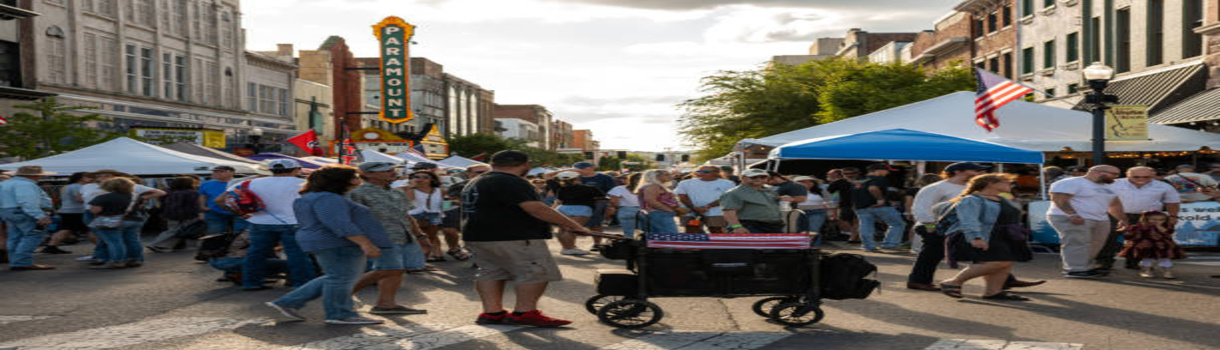
Johnson City's downtown has undergone meaningful revitalization, with the Tree Streets neighborhood, the Founders Park greenway corridor, and a growing collection of independent restaurants, breweries, and creative businesses giving the city a daily vitality its national profile understates. Kingsport's downtown and established neighborhoods reflect the intentional city-building of its industrial founders. Bristol's State Street, bisected by the Tennessee-Virginia state line painted down its center, is one of America's more distinctive main streets and has seen sustained investment in its restaurant, retail, and entertainment offerings.



Economy
Eastman Chemical: A Fortune 500 Anchor
Eastman Chemical Company is the defining economic anchor of the Tri-Cities region. Founded in Kingsport in 1920, the Fortune 500 specialty chemical manufacturer employs approximately 15,000 people globally and maintains its world headquarters and largest manufacturing facility in Kingsport. The company's presence is structural: its payroll, supplier network, workforce development partnerships with area colleges, and civic engagement collectively shape the economic baseline from which the rest of the regional economy operates. For professionals in chemical engineering, materials science, manufacturing technology, research and development, and corporate functions, Kingsport offers career opportunities within a major global company that the region's overall profile would not otherwise suggest.
Healthcare as a Second Pillar
Ballad Health, formed by the merger of Mountain States Health Alliance and Wellmont Health System, operates a network of hospitals and specialty facilities across Northeast Tennessee and Southwest Virginia collectively employing tens of thousands of clinical and administrative professionals. Holston Valley Medical Center in Kingsport, Johnson City Medical Center, and Bristol Regional Medical Center form the system's acute care core, with specialty programs in cardiology, cancer care, neurology, and trauma services serving a broad regional catchment area.
East Tennessee State University's James H. Quillen College of Medicine and College of Pharmacy generate physician and pharmacist pipeline for the region while supporting health sciences research that has attracted federal research investment to Johnson City. The combination of a major hospital system, a medical school, and a pharmacy school gives the region a healthcare ecosystem that shapes career opportunities, community health access, and real estate demand in surrounding neighborhoods.
Education, Technology, and the University Influence
East Tennessee State University, with approximately 16,500 students and programs spanning medicine, pharmacy, business, arts, and the humanities, is one of the most significant economic and cultural forces in Washington County. The university directly employs approximately 2,400 people and generates student spending, arts programming, research investment, and community engagement that ripple across the Johnson City economy in ways that make the city meaningfully different from what it would be without it.
Northeast State Community College, the Kingsport Higher Education Center, and Virginia Highlands Community College on the Virginia side provide associate degree, vocational, and workforce training programs that prepare the regional workforce for careers in manufacturing, healthcare, information technology, and skilled trades. The Kingsport Higher Education Center consolidates classes from five institutions, including the University of Tennessee, into a single downtown facility, making university-level coursework accessible without the commute to a main campus.
Remote workers from higher-cost markets have settled in the Tri-Cities in growing numbers, drawn by housing costs representing a dramatic improvement over what their incomes produce in Charlotte, Raleigh, Nashville, or the Northeast. Internet infrastructure has improved substantially across the region in recent years, making remote work increasingly practical throughout the metro.
Manufacturing, Tourism, and the Outdoor Economy
Manufacturing beyond Eastman includes a diverse array of producers in plastics, printing, food processing, and metal fabrication distributed throughout Sullivan, Hawkins, and Washington counties in Tennessee. Bristol Motor Speedway, one of the most storied venues on the NASCAR circuit and among the largest sports venues in the world by seating capacity, generates substantial tourism revenue and employment around race weekends and serves as a regional landmark drawing visitors from across the country. The outdoor recreation economy anchored by the Cherokee and Jefferson national forests, the Appalachian Trail, and the Virginia Creeper Trail has grown as national awareness of the region's natural assets has expanded.
Cost of Living
What Households Actually Find
The Tri-Cities region's cost of living runs approximately 15 to 20 percent below the national average, with housing representing the most dramatic source of savings. Median home prices across the region cluster in the $230,000 to $290,000 range depending on county and community character. Established neighborhoods in Johnson City and Kingsport offer homes that would require budgets two to three times that size in comparable East Coast or major Sunbelt markets.
Households relocating from Northern Virginia, Maryland, New Jersey, or the major metros of the Southeast consistently report that their housing budgets unlock a fundamentally different quality of home than what they left behind. A $350,000 budget that produces a modest townhouse in a Northern Virginia suburb produces a well-appointed single-family home with a yard, a garage, and established neighborhood character in Johnson City or Kingsport. That arithmetic is what the market actually reflects.
Average one-bedroom apartment rents in the region run approximately $950 to $1,200 per month depending on location and amenity level, with the most affordable options in the county communities outside the city cores. Renters who need walkable proximity to downtown Johnson City or the Kingsport city center will pay a premium over the broader suburban rental market.
Tennessee and Virginia Tax Structures
Tennessee levies no state income tax on wages, salaries, or most retirement income, making it one of the more favorable states for households with earned income or retirement distributions. Property taxes in Sullivan and Washington counties in Tennessee are moderate, and homeowner exemptions available to primary residences reduce effective tax burdens further. Grocery purchases in Tennessee are subject to a reduced state sales tax rate lower than the general sales tax rate.
The Virginia side of the region, encompassing Washington County and the independent city of Bristol, Virginia, operates under Virginia's income tax and property tax structures, which differ meaningfully from Tennessee's. Households considering Virginia-side communities should consult a qualified tax professional to understand how those differences apply to their specific financial situation before making a purchase decision.
Daily Life Costs
Personal transportation is a practical necessity throughout the Tri-Cities. The region's geography distributes employment, healthcare, schools, and retail across multiple city cores and suburban communities connected by I-26, I-81, US-19W, and US-11E. While each city has walkable pockets, the broader metro requires a vehicle for daily logistics. Traffic congestion is modest compared to Atlanta or Charlotte, and commute times within and between the major cities generally run 20 to 35 minutes under normal conditions.
Utility costs are seasonal, with both summer cooling and winter heating representing meaningful cost variables in a climate that delivers genuine four-season weather. The region sits at elevations of roughly 1,500 to 2,000 feet in the valley cities, which moderates summer heat compared to lower-elevation Southern metros. Residents choosing higher-elevation properties in Carter County or the Virginia highlands experience winters that require more heating investment than counterparts in the valley communities.
Real Estate Market
A Market With Genuine Stability
The Tri-Cities real estate market appreciated during the 2020-to-2022 period as remote worker relocation drove demand from outside the market. The market has since moderated, with inventory gradually recovering and buyer conditions less compressed than the peak years. The combination of Eastman's stable employment base, ETSU's enrollment-driven demand, Ballad Health's workforce, and a permanent population that replaces itself regularly produces market stability rather than the speculative volatility affecting coastal and major-metro markets.
New construction is concentrated in the Gray community in Washington County, north Johnson City along the US-11E corridor, the Boones Creek area, and suburban growth areas in Sullivan County north of Kingsport. National builders have established presences alongside regional builders with long-term knowledge of mountain terrain construction, flood zones, and the particular requirements of building in Appalachian topography.
The region's historic housing stock is substantial and varied. Johnson City's Tree Streets neighborhood holds craftsman bungalows and Tudor Revival homes from the early 20th century. Kingsport's original planned-city residential neighborhoods hold Georgian Revival and Colonial Revival homes built by Eastman's founders with architectural intentions that remain visible today. Bristol's State Street district holds Victorian and early 20th-century homes that attract buyers who value character and history. These properties require due diligence appropriate to older construction but offer an authenticity of build that newer subdivisions cannot replicate.
Where in the Tri-Cities Region?
Six county-level geographies shape the residential choices available across the Tri-Cities. Each has distinct school systems, tax structures, commute patterns, and relationships to the mountains and cities that define the region. Getting to know these differences is the foundation of a move that holds up over time.
Sullivan County, Tennessee
Sullivan County forms the industrial and commercial core of the Kingsport-Bristol MSA and is home to both Kingsport and the Tennessee half of Bristol. The county encompasses the full range of Tri-Cities residential life, from Kingsport's historic planned-city neighborhoods to suburban developments along the US-11W corridor to rural properties near South Holston Lake.
Kingsport
Kingsport was purpose-built in the early 20th century by a partnership of industrialists who hired noted urban planner John Nolen to design a model American industrial city from scratch. That legacy is visible in the city's street grid, civic buildings, and the quality of its original residential neighborhoods in ways that distinguish Kingsport from cities that simply grew. The neighborhoods radiating from the original city core hold homes from the 1920s through the 1950s with architectural quality and community character that reward buyers who want established urban fabric.
Bays Mountain Park and Planetarium, with 3,000 acres of natural area and 25 miles of trails within city limits, is among the most significant urban natural areas in the state. South Holston Lake's waterfront communities provide boating and lakeside living within a short drive of Kingsport's employment centers. The Kingsport Higher Education Center and the downtown revitalization corridor reflect a city that has invested deliberately in its own future.
Bristol, Tennessee
The Tennessee half of Bristol shares State Street with its Virginia twin and carries the full weight of the Birthplace of Country Music identity. The Paramount Bristol, a restored 1931 theater presenting national touring acts and community performances, anchors the entertainment life of the downtown corridor. Residential neighborhoods surrounding Bristol's historic core offer homes at accessible price points with proximity to both states's commercial and cultural offerings. Bristol's position at the I-81 corridor provides regional connectivity practical for daily commutes and longer travel alike.
Blountville and the Sullivan County Communities
The unincorporated Sullivan County communities, including Blountville, Bluff City, and the South Holston Lake corridor, offer residential options trading city proximity for more land, more quiet, and in some cases direct waterfront access on South Holston Lake. Blountville is home to the Tri-Cities Regional Airport, which provides direct and connecting service to major hubs and is a practical daily-life amenity. Sullivan County Schools serves the unincorporated county and has built a solid academic reputation.
Washington County, Tennessee
Washington County is home to East Tennessee State University and the most rapidly growing county in the Tri-Cities region. The presence of ETSU, Ballad Health's Johnson City Medical Center, and a downtown corridor that has attracted significant private investment makes Johnson City the region's most dynamic urban environment for residents who want city amenities alongside mountain access.
Downtown Johnson City and the Tree Streets
Downtown Johnson City has produced a concentration of independent restaurants, craft breweries, wine bars, boutique retail, and arts venues along Tipton Street, Main Street, and adjacent blocks that rivals what most small cities of comparable population achieve. The Tree Streets neighborhood, a walkable district of streets named for trees immediately south of downtown, holds craftsman bungalows and early 20th-century homes on shaded streets that attract buyers who want urban walkability within a small-city scale. The Founders Park linear greenway along Buffalo Creek connects the neighborhood to downtown and reflects civic investment in livable public space.
ETSU's campus sits within walking distance of the Tree Streets and generates year-round cultural programming, arts events, musical performances, and community energy. The bluegrass music program, the Reece Museum, and ETSU's performing arts venues contribute to a cultural calendar that rewards residents who engage with it.
Gray and North Johnson City
Gray, in northern Washington County along US-11E, has emerged as the region's most active new construction corridor and one of the premier family destinations across the entire Tri-Cities. The community's concentration of newer subdivisions, retail centers, and medical offices, combined with Washington County school district access, has attracted substantial residential investment. Master-planned communities in Gray offer the full amenity package alongside homes that meet the expectations of buyers relocating from larger suburban markets.
Washington County Schools has built a strong academic reputation that drives meaningful buyer demand. Families relocating from Nashville, Charlotte, or Northern Virginia consistently find Washington County Schools meets or exceeds the academic environment they left behind.
Jonesborough
Jonesborough holds the distinction of being the oldest town in Tennessee, wearing that history with a quiet pride that has shaped its preservation approach and community character for generations. The downtown historic district holds Federal-style and Greek Revival buildings from the late 18th and early 19th centuries maintained with care unusual even by the standards of serious preservation communities. The National Storytelling Festival, held each October and drawing tens of thousands of visitors to a town of approximately 5,000 permanent residents, reflects a community identity rooted in Appalachian oral tradition.
Jonesborough's residential market offers historic homes on the main streets and newer subdivisions on the town's periphery at price points generally below comparable Johnson City neighborhoods. The commute to downtown Johnson City runs approximately 15 minutes, and many residents consider Jonesborough's setting and community character well worth the modest additional drive.
Carter County, Tennessee
Carter County lies southeast of Washington County and represents the region's most dramatic mountain landscape. Elizabethton, the county seat, sits along the Watauga River in a valley surrounded by ridges rising toward the Roan Highlands. The county is home to Roan Mountain State Park, Watauga Lake, and Cherokee National Forest lands that make it a destination for outdoor recreationists from across the Southeast.
Elizabethton
Elizabethton is a small city of approximately 13,000 residents with a community identity shaped by its frontier heritage, its natural surroundings along the Watauga River, and a civic culture that has invested in its own character. Sycamore Shoals State Historic Park commemorates early American frontier history predating the Revolution. The Covered Bridge in downtown Elizabethton, the riverwalk along the Watauga, and proximity to the Doe River Gorge and Appalachian Trail system give residents daily access to natural settings that counterbalance the modest scale of the city's commercial offerings.
Housing prices in Elizabethton run below both Johnson City and Kingsport, offering families and first-time buyers meaningful value within a 20-to-25-minute commute of the major employment centers. Carter County Schools serves the surrounding communities.
Roan Mountain and the High Country
The communities south of Elizabethton toward Roan Mountain State Park represent the furthest rural extension of the Tri-Cities commuter range in Carter County. Residents here accept a 30-to-45-minute drive to Johnson City or Kingsport in exchange for properties at higher elevations, more land, greater privacy, and proximity to the Roan Highlands trail system, Watauga Lake, and Cherokee National Forest. This trade-off suits households whose outdoor recreation identity is central to daily life and whose work arrangements allow flexibility in commute frequency.
Hawkins County, Tennessee
Hawkins County lies west of Sullivan County along the Holston River and represents the rural peripheral extension of the Kingsport metro. Rogersville, the county seat, holds one of the best-preserved 19th-century courthouse squares in Tennessee, with a commercial streetscape reflecting the county's early American prosperity with an integrity rarely found in communities that have faced sustained development pressure.
Residents who choose Hawkins County typically seek rural land, older homes with genuine character, and the quiet of the Holston River valley at price points that cannot be matched in Sullivan or Washington counties. The commute to Kingsport runs 25 to 40 minutes. Cherokee Lake, a TVA reservoir in the southern part of the county, provides boating and waterfront residential opportunities that attract buyers seeking lake access within the broader Tri-Cities commuter range. Hawkins County's projected population growth is among the stronger in the region, reflecting increasing awareness of its value proposition.
Washington County, Virginia
Washington County, Virginia and the independent city of Bristol on the Virginia side represent the northern tier of the Tri-Cities region and carry a character shaped distinctly by Virginia's cultural and institutional traditions. Abingdon, the county seat, is one of Southwest Virginia's most beloved small cities and has built a reputation far exceeding its population through historic architecture, nationally recognized performing arts, outdoor recreation access, and deliberate civic investment in quality of place.
Abingdon
Abingdon holds the Barter Theatre, founded in 1933 and grown into one of the premier regional theater companies in the Southeast with a full professional season. The historic district along Main Street holds Federal and Victorian architecture from the early 19th century alongside restaurants, galleries, and Heartwood, a state-operated artisan gateway celebrating and selling the work of Southwest Virginia craftspeople and musicians.
The Virginia Creeper Trail, a 34-mile rails-to-trails corridor, runs from Abingdon through Damascus and provides residents a cycling, walking, and nature access resource that functions as a daily community amenity. Residential options range from historic homes in the downtown district to newer subdivisions on the town's edges, at price points competitive with Johnson City and Kingsport while offering a community character distinctly shaped by Virginia history and arts traditions. The drive to Bristol runs approximately 20 minutes, keeping Abingdon fully integrated with the region's employment and service network.
Damascus
Damascus, Virginia, known throughout the outdoor community as Trail Town USA, sits at the convergence of the Appalachian Trail, the Virginia Creeper Trail, the TransAmerica Bicycle Trail, and several other major long-distance routes, making it one of the most trail-saturated small towns in the country. The permanent residential community in Damascus is small, and its identity is fundamentally shaped by the outdoor recreation culture the trails bring. For households that want to anchor daily life in a genuine trail town where hikers, cyclists, and outdoor enthusiasts form the social fabric, Damascus offers a residential experience available in very few places in the eastern United States.
Washington County Schools serves Damascus and the surrounding rural communities. Housing prices here are among the most accessible in the Tri-Cities region, and the drive to Abingdon for services runs approximately 15 minutes.
Scott County, VA
Scott County occupies the northwestern edge of the Tri-Cities regional footprint in Virginia, bordering Kentucky and separated from the main urban cores by mountain terrain that shapes both its isolation and its character. Gate City, the county seat, is a small town with a community identity rooted in the coal and agricultural heritage of Southwest Virginia. Natural Tunnel State Park holds a naturally formed tunnel 850 feet long carved through a mountain by Stock Creek over millennia, one of the geological wonders of the Appalachians.
Scott County represents the most rural and most affordable residential option within the broader Tri-Cities commuter range. Buyers who need maximum value, genuine rural character, and do not require daily proximity to the urban core find properties here at prices exceptional by any regional standard. The drive to Bristol for employment, healthcare, and services runs 45 to 60 minutes depending on destination. For the specific household that prioritizes land, mountain character, and affordability above other residential criteria, Scott County delivers those things fully.

Next Steps
Let us help!
The Tri-Cities region has a way of holding people who take the time to understand it. Families who relocate for a job at Eastman or Ballad Health and arrive expecting a temporary posting often put down roots after their first spring on the Roan Highlands or their first winter evening in a downtown Johnson City restaurant, and find the idea of returning to a larger market harder to explain than it once seemed.
That said, the region rewards thoughtful research. A family with school-age children evaluating Gray, Tennessee faces entirely different considerations than a retiree seeking a walkable historic home in Abingdon, Virginia. A remote worker who wants craft breweries and coffee shops within walking distance has different needs than a household seeking Hawkins County acreage for horses or a woodlot. A buyer drawn to Jonesborough's historic district needs to understand older construction in ways that a buyer evaluating a new Boones Creek build does not. And a buyer on the Virginia side needs to understand Virginia's tax structure in ways that do not apply to a Tennessee-side purchase.
PrimeStreet connects relocating buyers and renters with experienced Tri-Cities real estate professionals who know these distinctions from daily practice across both states and all six county geographies. Whether the priority is a downtown Johnson City home near ETSU, a master-planned community in Gray with access to Washington County Schools, a Kingsport neighborhood with Eastman a short commute away, a Carter County property backing to Cherokee National Forest, a historic Abingdon home near the Barter Theatre, or rural land in Scott County or Hawkins County at an entry-level price, the right local agent transforms the search from guesswork into a process that delivers real confidence.
Call 855-531-5347 or click Find an Agent to connect with a Tri-Cities specialist who will take time to understand what kind of life you are building and where in this remarkable region that life belongs.