
By Melanie Ortiz Reyes - Marketing Strategist - PrimeStreet.io
Move to Southwest Michigan
Southwest Michigan has a way of disarming people who expect it to be merely a place between Chicago and Detroit. Positioned exactly halfway along the I-94 corridor, anchored by a city with a pharmaceutical and brewing legacy that reaches back more than a century, and stretched along one of the most beautiful freshwater shorelines in the world, this region consistently delivers more than its reputation prepares newcomers for.
The seven counties that form the official Southwest Michigan region, Berrien, Van Buren, Kalamazoo, Calhoun, St. Joseph, Cass, and Branch, span from the Indiana border north along Lake Michigan's eastern shore before turning inland through farmland, orchards, and river valleys toward Battle Creek and the heart of Michigan's Lower Peninsula. Together they hold nearly 800,000 residents, more than 20 Fortune 1000 companies with a regional presence, Lake Michigan beach access within 45 minutes of virtually anywhere in the region, and a quality of life that regularly earns recognition on national affordability and livability rankings.
The diversity of options within this region is genuine. A household seeking walkable urban character and a serious restaurant scene lands in Kalamazoo. A family drawn to Lake Michigan frontage and a small-city feel settles in St. Joseph. A remote worker priced out of Chicago who wants vineyard country and water access puts down roots in Van Buren County. A buyer attracted to historic architecture at accessible prices finds it in Battle Creek or Marshall. No single description covers the region, and no single relocation decision should treat it as one place.
This guide is written for people working through a real decision. It covers the economy, cost of living, the housing market, and the counties and communities that shape daily life across Southwest Michigan so that the move, when made, rests on honest information.
What Makes Southwest Michigan Different?
The Chicago Factor
Southwest Michigan's single most important geographic fact is its relationship to Chicago. St. Joseph, the region's Lake Michigan anchor, sits 90 miles from downtown Chicago. Kalamazoo, the region's largest city, sits about 140 miles from the Loop. These distances place the entire region within a comfortable drive of one of the world's great cities while offering a daily cost of living that Chicago cannot approach.
That positioning shapes the real estate market, the tourism economy, and the in-migration pattern in ways that are visible across every county. Chicago families own lake cottages in Van Buren County. Chicago-area remote workers have relocated to Kalamazoo and St. Joseph by the thousands since 2020. The Silver Beach area of St. Joseph draws Chicago day-trippers and weekenders who eventually decide they want more than a weekend home. The region's hospitality and restaurant sectors are calibrated to a Chicago-area audience that expects quality. The result is a set of communities with genuine amenity depth that would be harder to sustain on local demand alone.
Amtrak's Pere Marquette route connects St. Joseph, Kalamazoo, and Battle Creek to Chicago's Union Station, providing a car-optional Chicago connection that remote workers and frequent travelers use as a practical part of life rather than a novelty.
Lake Michigan and Outdoor Life
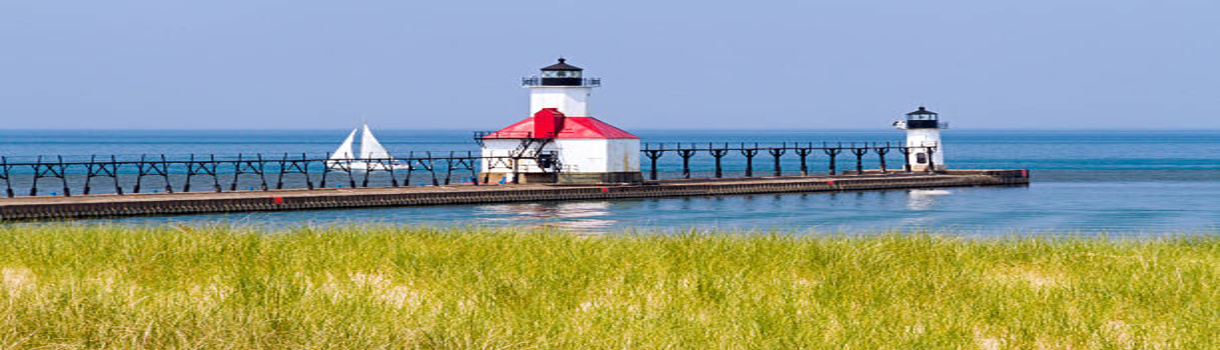
Lake Michigan's eastern shore defines the western edge of Southwest Michigan and shapes the culture, economy, and residential appeal of everything within an hour of the water. The lake here runs cold and clear, with sand dunes rising along its shoreline, and sunsets that face west over open water in a way that no other freshwater body in the United States can replicate.
Van Buren State Park, Warren Dunes State Park in Berrien County, and Silver Beach County Park in St. Joseph represent anchor public access points along a coastline that also includes smaller beaches, private frontage, and the kind of everyday waterfront access that residents of landlocked metros travel for hours to find. The Kal-Haven Trail, a 33.5-mile crushed-limestone rail trail, connects Kalamazoo to South Haven through orchards and countryside and is one of the most consistently used trail corridors in Michigan. The Paw Paw River water trail and Black River water trail add paddling and kayaking options that take users through genuinely scenic terrain without leaving the region.
Inland, Southwest Michigan holds more than 1,000 lakes and a network of rivers and streams that support fishing, boating, and swimming from roughly May through October. The fruit belt, a microclimate band running along the lake's eastern shore that is unusually hospitable to tree fruit, produces cherries, blueberries, peaches, and wine grapes at a scale and quality that has made Southwest Michigan a nationally recognized wine and agritourism destination. More than 40 wineries operate within the region, concentrated in Berrien and Van Buren counties, and the farm market culture tied to that agricultural abundance shapes the food environment in ways residents experience weekly.
Brewing, Food, and Arts
Kalamazoo's brewing reputation is legitimate and documented. Bell's Brewery, founded in 1985 and now one of the largest craft breweries in the United States, put Kalamazoo on the national brewing map and established a culture of quality independent beverage production that spread across the region. Kalamazoo Brewing Co., WMU's fermentation science program, and dozens of taprooms and cideries across the region now exist in an ecosystem that Bell's created. The American Homebrewers Association has recognized Kalamazoo as one of the top craft beer cities in the country across multiple years.
The food environment has grown alongside the brewing culture. Downtown Kalamazoo holds a concentration of independent restaurants, chef-driven concepts, and food businesses that reflects a community willing to support serious cooking. The Kalamazoo Farmers Market, active since 1912, is one of Michigan's oldest and largest, and the farm-to-table connection it supports runs through a meaningful portion of the city's dining scene. St. Joseph and South Haven have their own dining and culinary identities shaped partly by the Chicago visitor economy and partly by the agricultural character of their surrounding counties.
The Kalamazoo Institute of Arts, the Kalamazoo Symphony Orchestra, Miller Auditorium at Western Michigan University hosting Broadway touring productions, and the Art Hop monthly gallery walk give Kalamazoo a cultural program that surprises people unfamiliar with mid-sized Midwest cities. The Krasl Art Center in St. Joseph hosts the annual Krasl Art Fair on the Bluff, recognized nationally as one of the top outdoor fine art fairs in the country.



Economy
Life Sciences and Pharmaceutical Manufacturing
Southwest Michigan's pharmaceutical and life sciences concentration is unusual for a region of its size and gives the economy a structural depth that insulates it from single-industry cycles. Pfizer has operated a major research and manufacturing presence in Kalamazoo since 1952 and employs roughly 4,000 people locally in research, manufacturing, and administrative roles. Stryker Corporation, a global leader in medical technology, is headquartered in Kalamazoo and employs thousands in the city and surrounding region. Zoetis, the world's largest animal health company, traces its origins to Pfizer's animal health division and maintains significant operations in Kalamazoo County. Together these three companies represent a pharmaceutical and life sciences employment base that has shaped Kalamazoo's professional workforce and economic character for three generations.
Healthcare
Bronson Methodist Hospital and Ascension Borgess Hospital are the two major healthcare systems anchoring Kalamazoo's medical economy. Western Michigan University's Homer Stryker M.D. School of Medicine, opened in 2014, adds a research and academic medicine dimension that has raised the quality and breadth of clinical services available in the region and supports a growing population of medical professionals who train and then choose to build careers locally. Corewell Health, Michigan's largest health system, operates facilities across Berrien County and the broader region, including Lakeland hospitals in St. Joseph and Niles, and employs clinical and administrative professionals throughout southwest Michigan.
Food Manufacturing and Consumer Products
Kellogg Company has been headquartered in Battle Creek since W.K. Kellogg founded it in 1906, and despite ownership changes that shifted some corporate functions, the company maintains a substantial operational presence in Calhoun County. Whirlpool Corporation, the world's largest manufacturer of major home appliances, has been headquartered in the Benton Harbor area since 1911 and remains one of Berrien County's most significant employers. Post Holdings maintains manufacturing operations in Battle Creek, sustaining the city's century-old cereal and breakfast food production legacy alongside Kellogg.
Education and the University Presence
Western Michigan University, with approximately 20,000 students, is one of the largest universities in Michigan and Kalamazoo's single largest employer. WMU's research programs in engineering, aviation, education, and health sciences generate partnerships with regional employers and support a professional workforce pipeline that keeps talent in the region. Kalamazoo College, a nationally recognized liberal arts institution with roughly 1,400 students, contributes a smaller but culturally significant academic presence to the city. Kalamazoo Valley Community College and Lake Michigan College in Benton Harbor round out a regional higher education system that serves both traditional students and working adults across the full county footprint.
The Kalamazoo Promise
The Kalamazoo Promise, announced in 2005 and funded by a group of anonymous donors, guarantees up to 100 percent of tuition at Michigan's public colleges and universities for graduates of Kalamazoo Public Schools who meet residency and attendance requirements. It is the first program of its kind in the United States and has been studied and replicated by communities nationwide. For families with children considering a move to Kalamazoo, the Promise is a genuine and specific financial benefit worth understanding carefully. Buying a home within Kalamazoo Public Schools district boundaries makes a child potentially eligible for a scholarship that could be worth tens of thousands of dollars. The W.E. Upjohn Institute for Employment Research maintains ongoing research on the Promise's economic and educational effects.
Remote Work and Relocation Incentives
The region has actively positioned itself for remote worker in-migration. Berrien County's Cornerstone Alliance has run a remote worker relocation program offering meaningful financial incentives including mortgage assistance to remote workers who purchase homes in the St. Joseph area. The state of Michigan's Make MI Home initiative designated Southwest Michigan as one of 10 pilot program communities, providing additional resources for recruitment and community integration. For remote workers employed by companies based in Chicago, New York, or other high-cost markets who want to extend their housing dollar while maintaining their salary, Southwest Michigan's combination of Lake Michigan access, cultural amenity depth, and significantly lower cost of living has made it a compelling destination.
Cost of Living
How Southwest Michigan Compares
Southwest Michigan has been recognized nationally as one of the most affordable regions in the United States, and the data supports that designation. The overall cost of living across the region runs roughly 10 to 18 percent below the national average depending on specific county and community, with housing providing the largest savings relative to national benchmarks. Compared to Chicago, where the cost of living runs approximately 7 percent above the national average, the difference in purchasing power for a household relocating from that market is substantial and immediate.
Southwest Michigan First, the region's economic development organization, notes the region's consistent recognition on national affordability rankings as a core part of its case for business and residential relocation. The region has appeared on multiple Top 100 Best Places to Live lists in part because its combination of affordability and amenity depth is unusual at the national level.
Housing Costs Across the Region
Kalamazoo's housing market offers affordability that surprises households arriving from coastal or major-metro markets. Median home prices in the city of Kalamazoo run approximately $205,000 as of 2025, well below the national median. One-bedroom apartments in the city average $900 to $1,100 per month. Portage, Kalamazoo's adjacent suburb and the county's most family-oriented community, carries somewhat higher prices reflecting school quality and newer construction, with medians running closer to $265,000 to $300,000.
Berrien County's St. Joseph shows a median home value around $305,000, reflecting its Lake Michigan location, school quality, and the premium buyers assign to its small-city coastal character. Benton Harbor's median runs significantly lower at approximately $112,000, reflecting its distinct challenges and economic history but also representing genuine ownership opportunity for buyers willing to invest in the community's ongoing revitalization. Van Buren County's South Haven carries a median around $320,000, reflecting seasonal demand and lake proximity, while Paw Paw runs closer to $250,000. Calhoun County's Battle Creek median runs approximately $160,000 to $190,000, and Marshall, the county's most architecturally distinctive town, carries values in the $200,000 to $240,000 range.
Michigan's Tax Environment
Michigan levies a flat state income tax of 4.25 percent, which is lower than many neighboring states and provides predictability for households budgeting a relocation. Property taxes in Michigan are assessed and levied at the county and local level, and rates vary meaningfully across jurisdictions. Buyers should request the specific taxable value and current millage rate for any property under consideration rather than estimating from regional averages. Michigan does not tax Social Security income, and pension income from public sector employment is treated preferentially under state law. A qualified Michigan tax professional can clarify how these provisions apply to specific household circumstances. Grocery purchases are generally exempt from Michigan sales tax, which provides modest but consistent savings relative to some neighboring states.
Practical Daily Life
A personal vehicle is a practical necessity throughout most of Southwest Michigan. Kalamazoo has a functioning metro bus system with reasonable coverage of the city proper, and the Amtrak connection at Kalamazoo Station gives train travelers a Chicago option. Beyond the Kalamazoo urban area, personal transportation is required for most daily activities. Winters in Southwest Michigan are real, with lake-effect snow from Lake Michigan producing significant accumulations in Berrien and Van Buren counties particularly, and heating costs that households from southern climates should factor into annual budgets. Summer delivers the payoff: warm temperatures moderated by lake breezes on the western shore, and a June-through-September outdoor living season that drives the region's tourism economy and rewards year-round residents.
Real Estate Market
Market Conditions
The Southwest Michigan real estate market has shown consistent appreciation over the past several years, driven by in-migration from Chicago, pandemic-era remote worker relocation, and sustained demand from local households whose incomes have grown alongside the region's pharmaceutical and healthcare sectors. The Kalamazoo metro, which includes Kalamazoo County, has experienced tighter inventory in the most desirable neighborhoods and the Kalamazoo Public Schools district boundary areas, where the Kalamazoo Promise creates additional buyer demand.
The Lake Michigan shoreline communities, particularly South Haven, St. Joseph, and the coastal areas of Berrien County, have seen demand from out-of-state and Chicago-area buyers that has pushed prices above what local incomes alone would sustain, creating a two-tier market dynamic familiar in resort-adjacent real estate. Inland and rural communities throughout the region offer more accessible price points and more buyer-friendly market conditions, particularly in Calhoun County, eastern Kalamazoo County, St. Joseph County, and the rural areas of Cass and Branch counties.
Architectural Range
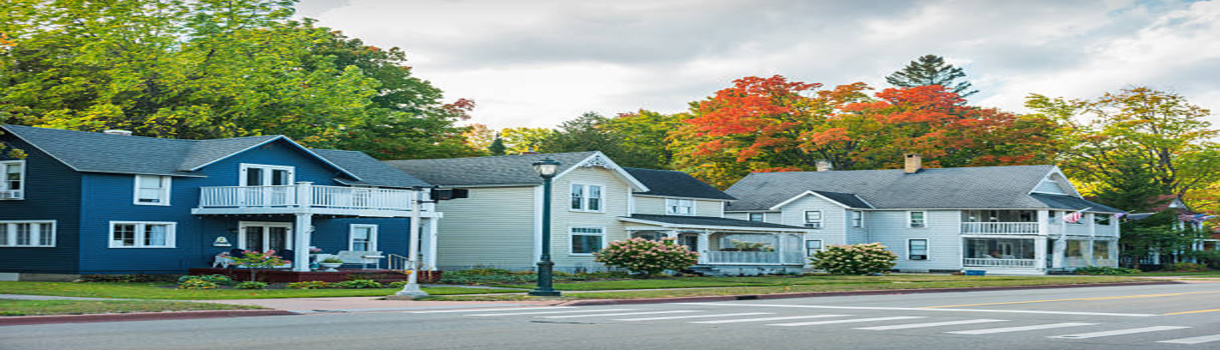
The region's housing stock covers a remarkably wide architectural range, from the historic Victorian and Italianate homes of Marshall's National Historic Landmark District to the mid-century ranches of Portage's post-war suburban development to the craftsman bungalows of Kalamazoo's Vine and Stuart neighborhoods to the lakefront cottages and dune-side retreats lining Van Buren County's Lake Michigan shoreline. Buyers moving from architecturally repetitive suburban markets frequently note the quality and variety of the region's older housing stock. Buyers seeking newer construction find active builder markets in Portage, Mattawan, Richland, and the St. Joseph County suburban growth corridors.
Where in Southwest Michigan?
Southwest Michigan distributes residential life across seven counties with genuinely distinct characters, price points, and everyday rhythms. A clear understanding of those differences shapes a relocation decision in ways that property-level research alone cannot accomplish.
Kalamazoo County
Kalamazoo County is the economic and cultural anchor of Southwest Michigan, home to the region's largest city, its most significant university, and its deepest concentration of professional employment. The county holds roughly 270,000 residents across the city of Kalamazoo, the city of Portage, and a ring of townships and smaller communities that provide the full range of residential options from dense urban walkability to acreage and rural quiet.
For most professional households relocating to Southwest Michigan for employment or choosing the region as a remote work base, Kalamazoo County is the logical first area of focus. The employment depth, the cultural infrastructure, the university presence, and the Kalamazoo Promise all make the county the region's most compelling single destination.
Downtown Kalamazoo and the Vine and Stuart Neighborhoods
Downtown Kalamazoo has invested seriously in its own identity for more than two decades, and the result is a walkable urban core with a density of independent restaurants, taprooms, live music venues, galleries, and professional offices that most cities three times Kalamazoo's size cannot match. The Kalamazoo Mall, the nation's first outdoor pedestrian shopping mall, runs through the commercial heart of downtown. The Kalamazoo State Theatre hosts national touring acts and local productions in a beautifully preserved 1927 venue. The Arcadia Ales Brewing Co., Bell's Brewery's Eccentric Cafe, and dozens of independent restaurants within walking distance have made downtown a genuine dining and social destination.
The Vine neighborhood, one square mile of historic homes, local businesses, and community parks directly adjacent to downtown, is consistently described by residents as the city's most walkable and characterful urban neighborhood. Homes here date to the 1840s, and the Vine Area Historic District is listed on the National Register of Historic Places. The neighborhood holds an eclectic mix of artists, young professionals, families, and long-term residents who value genuine urban texture. Median sale prices in Vine run approximately $155,000, representing extraordinary value relative to comparably characterized urban neighborhoods in larger markets. The Stuart neighborhood immediately north, also on the National Register, holds Queen Anne and Italianate homes from the late 19th century on streets with significant historic character. These two neighborhoods suit buyers and renters who want walkable urban life, historic architectural character, proximity to WMU and Kalamazoo College, and community engagement at a price point that would be impossible in any major coastal city.
Portage
Portage, the county's second city with approximately 49,000 residents, sits directly south of Kalamazoo and functions as the region's premier family suburb. The city has consistently ranked among the best places to live in Michigan on Niche and comparable platforms, driven by a school system that draws families from a wide area, an extensive parks network including the 152-acre Bishop's Bog Preserve, and a commercial corridor that provides the daily conveniences that suburban households need without requiring a trip into Kalamazoo proper.
Portage is home to Pfizer's largest manufacturing facility globally, a 1,300-acre campus that employs thousands and anchors the southern Kalamazoo County employment economy. The Celery Flats Historical Area, named for the agricultural history of this corner of the region, provides a distinctive park and interpretive site. New construction activity in Portage has been consistent, with multiple active builder communities offering options from entry-level townhomes to larger single-family homes in the $300,000 to $450,000 range. Portage suits families who want excellent schools, suburban convenience, proximity to Kalamazoo employment and cultural amenities, and newer housing options at a predictable price point.
Mattawan, Richland, and the Eastern Townships
The townships and small communities east of Kalamazoo, including Mattawan, Richland, Galesburg, and Vicksburg, provide the county's most rural and lake-oriented residential options while remaining within a practical commute of Kalamazoo employment centers. Gull Lake and the Sister Lakes area offer inland waterfront living with all-sports lake access that year-round and seasonal residents use for boating, fishing, and swimming. Home prices in these communities run from the $200,000s for inland properties to well above $500,000 for lakefront homes with direct water access.
These communities suit households who want more land, more quiet, and lake access as a genuine daily amenity rather than a premium feature, and who are willing to accept a 20-to-35-minute commute to Kalamazoo in exchange for that rural and waterfront character. They also attract retirees and remote workers who want the Southwest Michigan lifestyle without urban proximity.
Berrien County
Berrien County occupies the southwestern corner of Michigan, where the state meets Indiana along Lake Michigan's eastern shore. The county is the region's primary lake destination, holding miles of Lake Michigan frontage, two major harbor cities, Warren Dunes State Park, and a tourism and second-home economy built around the proximity to Chicago. Whirlpool Corporation's global headquarters in the Benton Harbor area gives the county a Fortune 500 anchor that provides economic stability alongside its tourism and agricultural base.
Berrien County also sits within the Great Lakes Wine and Craft Beverage Trail corridor, with dozens of wineries, cideries, and farm-to-table operations drawing visitors and supporting a year-round food and beverage culture that benefits permanent residents as much as visitors. The Pokagon Band of Potawatomi Indians operates Four Winds Casino and Resort, providing employment and visitor traffic at its Berrien County facilities.
St. Joseph and Stevensville
St. Joseph, the county seat, sits at the mouth of the St. Joseph River where it meets Lake Michigan, giving the small city a natural setting that is genuinely difficult to find elsewhere at its price point. The bluff above the lake holds Silver Beach, a beloved public beach and splash pad, and the Krasl Art Center, whose annual art fair draws nationally recognized artists and audiences from across the region. The historic downtown holds independent boutiques, restaurants, and galleries along streets with preserved 19th-century commercial architecture. Amtrak's Pere Marquette stops in St. Joseph, providing a daily direct connection to Chicago's Union Station.
Stevensville, the commercial community just east of St. Joseph along I-94, holds the practical retail and service infrastructure that St. Joseph's boutique downtown cannot provide: grocery stores, home improvement retail, medical offices, and the national service chains that daily life requires. The combination of the two communities serves most residential needs within a short drive. Median home values in St. Joseph run around $305,000, with lakefront and bluff properties commanding significant premiums. These communities suit families who want strong schools, Lake Michigan access as a daily reality, small-city character with Chicago accessibility, and a community identity built on 200 years of continuous settlement.
Niles and the Southern County
Niles, Berrien County's second-largest city, sits in the county's southern corner near the Indiana border and has a distinct character from the lake communities. The city holds a well-preserved downtown, a manufacturing employment base, and a location that draws commuters to both South Bend, Indiana, and the broader Berrien County employment market. Housing in Niles is among the most accessible in the county, with median values running considerably below St. Joseph, making it an entry-level option for buyers who want a Berrien County address without the lake premium. Niles suits first-time buyers, value-oriented purchasers, and households employed in either the Michigan or Indiana portions of the Michiana commute corridor.
Van Buren County
Van Buren County stretches north from the Berrien County line along Lake Michigan's eastern shore before turning inland through the fruit belt and river valleys toward the center of the Southwest Michigan region. The county holds South Haven, its county seat and Lake Michigan harbor town, and a range of smaller inland communities including Paw Paw, a small wine-country town at the center of the county's vineyard culture, and Mattawan on the Kalamazoo County border.
Van Buren County's combination of Lake Michigan access, working agricultural landscape, winery culture, and accessible price points relative to Berrien County has made it an increasingly attractive destination for buyers from Chicago and the Kalamazoo metro who want lifestyle value that neither market can provide at comparable cost.
South Haven
South Haven is a harbor town at the mouth of the Black River where it enters Lake Michigan, and it operates one of the most charming small-city waterfronts in the Great Lakes region. The downtown is compact and walkable, with independent restaurants, coffee shops, ice cream stands, and boutiques concentrated around the marina and lakeshore. The South Haven Center for the Arts provides gallery space and programming. South Haven's beaches, including the North Beach and South Beach flanking the harbor entrance, are among the finest in Southwest Michigan and draw a summer population that multiplies the year-round resident base many times over.
The Kal-Haven Trail begins in South Haven and runs 33.5 miles through orchards and fields to Kalamazoo, making the town the western anchor of one of Michigan's most popular recreational trails. Median home values in South Haven run approximately $320,000, with lakefront and harbor-proximate properties well above that figure and inland properties in the $200,000 to $280,000 range. South Haven suits buyers who want harbor-town character, genuine beach access, a functioning arts and dining scene, and a year-round community with the seasonal energy of a resort town without the resort-town insularity. Chicago-area second-home buyers, remote workers, and retiring professionals represent a significant share of recent in-migration here.
Paw Paw and the Wine Country
Paw Paw sits at the center of Van Buren County's wine country, surrounded by vineyards and within driving distance of more than a dozen wineries that produce Riesling, Pinot Gris, Cabernet Franc, and other varietals suited to the Great Lakes microclimate. The town has a small downtown on the Paw Paw River with a courthouse, independent businesses, and the community character of a county seat that has not been overwhelmed by commercial development. St. Julian Winery, Michigan's oldest winery, is based in Paw Paw and has shaped the regional wine culture since Prohibition.
Median home values in Paw Paw run approximately $250,000, providing accessible ownership in a community with genuine character and outdoor recreation access through the Paw Paw River water trail, multiple inland lakes, and the surrounding fruit belt landscape. Paw Paw suits buyers who want vineyard-country living, a small-town community identity, and reasonable access to both Kalamazoo and South Haven without paying either market's premium. It suits retirees, remote workers, and households drawn to Michigan's agricultural heritage as a daily backdrop.
Calhoun County
Calhoun County lies east of Kalamazoo County along the I-94 corridor, anchored by Battle Creek and Marshall, and bridges the Southwest Michigan region with south-central Michigan's broader economic landscape. The county's cereal manufacturing legacy runs deep: Kellogg Company, founded in 1906, shaped Battle Creek's identity and economy for more than a century, and the food production culture it established remains present in the city's workforce, institutions, and community character.
Calhoun County offers the region's most accessible housing prices and some of its most architecturally distinguished older stock, particularly in Marshall, whose historic downtown and surrounding residential neighborhoods represent a remarkably intact example of 19th-century small-city Michigan.
Battle Creek
Battle Creek is a mid-sized city of roughly 52,000 residents with a manufacturing and food production economy, two regional healthcare systems, and a civic infrastructure built around the legacy of W.K. Kellogg, whose foundation remains one of the most significant philanthropic organizations in Michigan and continues to invest in the city's development. The downtown has seen continued investment from the W.K. Kellogg Foundation and civic partners in parks, arts facilities, and community development, and the Calhoun County Land Bank has been active in building and renovating housing in neighborhoods that experienced disinvestment during earlier economic transitions.
Housing in Battle Creek is among the most affordable in the Southwest Michigan region, with median values ranging from approximately $160,000 to $190,000 for established neighborhoods. The city suits first-time buyers working within tight budgets, investors seeking rental income properties, and households employed in the Battle Creek manufacturing and healthcare sectors who want ownership at accessible cost. The Lakeview and Pennfield school districts in the surrounding township areas carry stronger academic reputations than Battle Creek Public Schools for families whose school quality considerations are primary.
Marshall
Marshall, Calhoun County's most architecturally distinguished community, is a small city of roughly 7,000 residents whose historic downtown and surrounding residential neighborhoods are listed as a National Historic Landmark District, one of the few entire communities in the United States to hold that designation. The architectural integrity of Marshall's Victorian, Italianate, and Greek Revival homes on tree-lined streets is extraordinary, and the downtown holds independent businesses, restaurants, and community institutions that have served the city for generations.
Marshall sits on the I-94 corridor between Kalamazoo (30 minutes west) and Battle Creek (15 minutes east), giving residents access to both markets while maintaining the community character and quiet of a well-preserved small town. Median home values in Marshall run approximately $200,000 to $240,000, representing exceptional value for the quality and historical integrity of the housing stock available. Marshall suits buyers who value authentic architectural character, small-town community life, practical I-94 access to larger employment markets, and the kind of civic investment in place that takes generations to accumulate. It draws professionals who want a working commute to Kalamazoo, history-conscious buyers who cannot afford comparable stock in larger markets, and retirees seeking the character of small-town Michigan at a manageable cost.
St. Joseph County
St. Joseph County lies south of Kalamazoo County and east of Berrien County, forming the southeastern anchor of the Southwest Michigan commuter region. The county is primarily rural, with Sturgis and Three Rivers serving as its two principal cities and a landscape dominated by farmland, inland lakes, and the river systems that give the region its outdoor recreation character.
St. Joseph County provides the region's most rural residential options at accessible price points within a reasonable drive of Kalamazoo employment. Sturgis, home to Sturgis Motorcycle Rally memorabilia and a working manufacturing economy, holds housing in the $150,000 to $200,000 range. Three Rivers, the county seat, has a well-regarded school district and a small downtown with genuine community character. The inland lakes scattered throughout the county provide boating and fishing access that residents use as a regular seasonal amenity. St. Joseph County suits households who want acreage, quiet, inland lake access, and a genuinely rural lifestyle within reach of Southwest Michigan's broader professional economy. It also suits buyers for whom affordability is a primary criterion and who are willing to accept a longer Kalamazoo commute in exchange for land and a lower purchase price.

Next Steps
Let us help!
Southwest Michigan rewards research that goes beyond the listing search. The difference between a historic Craftsman bungalow in Kalamazoo's Vine neighborhood and a newer single-family home in Portage is not simply a question of price or square footage. It involves school district boundaries, commute patterns, the Kalamazoo Promise eligibility threshold, neighborhood culture, maintenance realities of older homes versus newer construction, and the particular texture of daily life that each community delivers for the people actually living it.
A family relocating for a Pfizer or Stryker position in Kalamazoo faces different research priorities than a Chicago-area remote worker choosing South Haven for its lake access and harbor character. A first-time buyer with a limited budget navigating Battle Creek or Benton Harbor needs different guidance than a retiring couple moving from the suburbs of a major metro who wants Marshall's architectural heritage and quiet small-town permanence. A household drawn by the Kalamazoo Promise for their children faces decisions about school district boundaries that require specific, current knowledge of which streets fall inside which boundaries.
PrimeStreet connects buyers and renters relocating to the Southwest Michigan region with experienced local real estate professionals who understand these distinctions from daily practice. Whether the goal is a walkable Kalamazoo urban neighborhood, a Portage family community with strong schools, Lake Michigan frontage in South Haven or St. Joseph, wine country living in Van Buren County, historic character in Marshall, or accessible rural land in St. Joseph or Cass county, the right agent makes the difference between a search that takes months and one that builds real confidence.
Call 855-531-5347 or click Find an Agent to connect with a Southwest Michigan area agent ready to listen to what matters and help match the right community to the life that belongs there.