

By Melanie Ortiz Reyes - Marketing Strategist - PrimeStreet.io
Move to San Diego
The first thing people learn about San Diego is that the weather is exceptional. The second thing, which takes considerably longer to absorb, is that the weather is almost beside the point. San Diego is a city with genuine substance beneath the sunshine. It has a border identity that shapes its food, architecture, and daily culture in ways that no other American metro can replicate. It has one of the most productive biotech and life sciences communities in the world. It has a military presence that runs so deeply through the local economy and social fabric that it functions as a defining civic institution. And it has a geography, 70 miles of Pacific coastline folding into inland valleys, mountains, and desert within an hour's drive of downtown, that gives residents an outdoor life with almost no ceiling.
San Diego County is a single-county metropolitan area, which is unusual among major American metros, and that administrative fact shapes how newcomers should think about choosing where to settle. There is no Williamson County equivalent across a county line offering different schools and lower land costs under a similar urban umbrella. The county is vast, covering more than 4,200 square miles, and its communities vary enormously in character, price, density, and lifestyle. Coastal La Jolla and inland El Cajon are both San Diego County, and they are not remotely the same place.
This guide is written for households making a serious decision about relocating to San Diego. It covers the economy, housing, cost of living, and the distinct character of the county's major regions in enough detail to support a real comparison among communities rather than a selection based on photographs or proximity to the beach.
What Makes San Diego Different?
A Border City With Its Own Identity
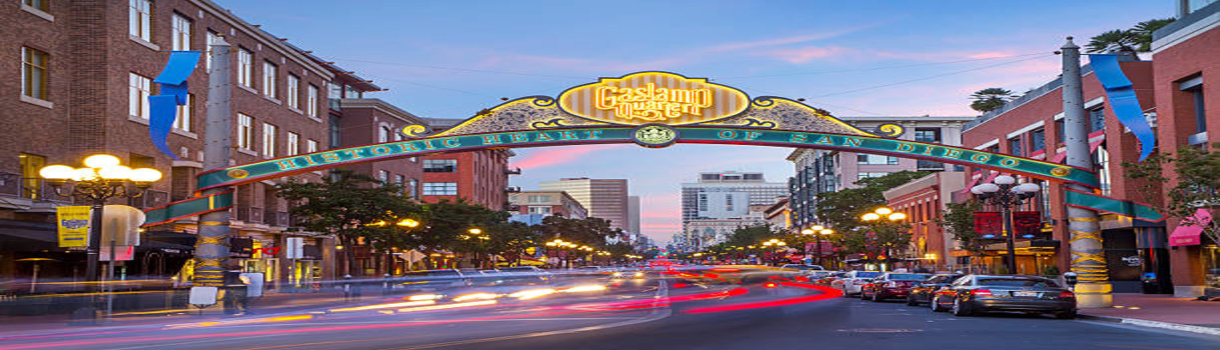
San Diego sits fourteen miles from Tijuana and operates one of the busiest land border crossings in the world at San Ysidro. That proximity has shaped the city's food, architecture, labor force, and daily rhythms over more than a century in ways that give San Diego a cultural texture unlike any other American coastal city. The influence is not superficial. It shows up in the restaurants that define the South Bay and Barrio Logan neighborhoods, in the bilingual commercial signage along National City's Highland Avenue, in the cross-border professional and family networks that are simply part of how the region operates.
Balboa Park, one of the largest urban cultural parks in the country, sits at the edge of downtown and contains the San Diego Zoo, fifteen museums, multiple performing arts venues, and more than a thousand acres of gardens and canyon trails accessible by foot from central-city neighborhoods. The park is genuinely used by residents rather than set aside for tourists, and that daily relationship with an institution of that quality distinguishes San Diego from cities of comparable size.
The Coastline and What It Actually Means
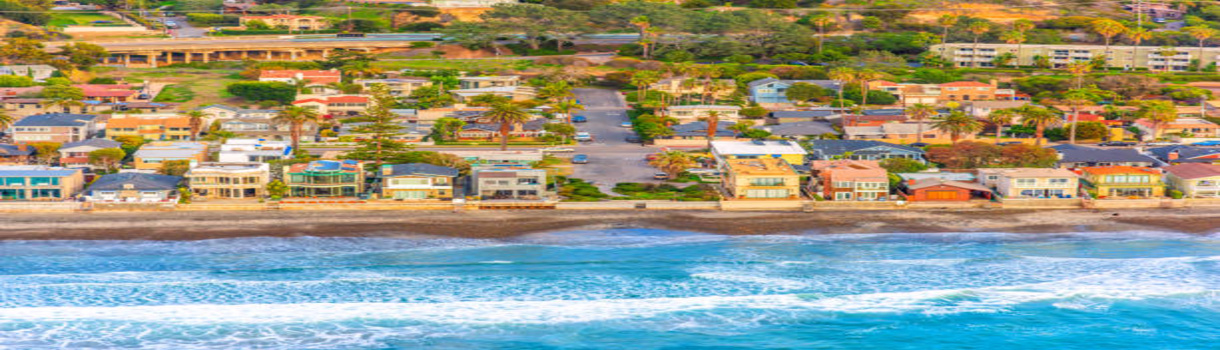
Seventy miles of Pacific coastline sounds like a single amenity. It is not. The experience of living in La Jolla is completely different from living in Ocean Beach, which is different from living in Carlsbad, which is different from living in Oceanside, and each reflects a distinct relationship to the water. La Jolla's cove and reef provide world-class snorkeling and sea kayaking in a wealthy, architecturally polished enclave. Ocean Beach is a working-class beach town with a genuine counterculture history and a Wednesday farmers market on Newport Avenue that has been running since 1988. Carlsbad has wide, uncrowded state beach access and a resort hotel that anchors the lagoon area. Oceanside has a long pier, a surfing culture with deep roots, and the social dynamics that come with a large Marine Corps base nearby.
The Anza-Borrego Desert State Park begins less than an hour east of the coast and covers 600,000 acres of Colorado Desert terrain with slot canyons, wildflower blooms in spring, and dark skies that are almost impossible to find at comparable proximity to a major American metro. The Cleveland National Forest lies between the coast and the desert and offers a forested mountain environment with hiking, camping, and winter snowfall that surprises people who assume San Diego is uniformly flat and dry. Residents who explore the full geography of the county discover that they are living in one of the most varied natural environments in the continental United States.



Economy
Defense and the Military Economy
The United States military is the largest employer in San Diego County by almost any measure that matters. Naval Base San Diego, Marine Corps Air Station Miramar, Marine Corps Base Camp Pendleton, Naval Air Station North Island on Coronado, and a cluster of smaller installations collectively support tens of thousands of active-duty service members, a civilian defense workforce, and a defense contracting sector that feeds hundreds of companies with facilities throughout the county. The military economy is not merely large. It is stable in a way that insulates San Diego from the full severity of national economic downturns and provides a reliable rental and purchasing demand base that has supported the regional housing market for generations.
Households relocating to San Diego with military connections, whether active duty, reserve, retired, or civilian defense employees, find a community that understands their circumstances and has spent decades developing the infrastructure, the lending expertise, and the agent networks to serve them effectively. The VA loan market in San Diego is one of the most active in the country, and lenders and real estate professionals who specialize in military relocation are widely available.
Biotech, Life Sciences, and Research
San Diego's Torrey Pines Mesa, roughly bounded by La Jolla, Sorrento Valley, and Carmel Valley, is one of the three most significant biotech and life sciences clusters in the world alongside the San Francisco Bay Area and the Boston-Cambridge corridor. Illumina, Neurocrine Biosciences, Dexcom, and dozens of pharmaceutical, genomics, and medical device companies call the area home. The Salk Institute for Biological Studies and the Sanford Burnham Prebys Medical Discovery Institute conduct basic research that feeds the surrounding commercial ecosystem. UC San Diego's relationship to this cluster is foundational in the way that MIT and Harvard's relationship to the Kendall Square corridor is foundational, providing both the talent pipeline and the early-stage research that commercial companies turn into products.
For professionals in biomedical engineering, computational biology, clinical research, pharmaceutical development, regulatory affairs, and related fields, the San Diego cluster represents a career environment with depth and variety comparable to the country's most recognized science and technology centers, with a quality of life and cost of living that compares favorably to the Bay Area alternatives.
Technology, Tourism, and the Port
A growing technology sector, anchored by companies like ServiceNow, Qualcomm, and a dense community of software and hardware startups, has added employment depth beyond the defense and biotech anchors. The Port of San Diego manages maritime commerce, cruise operations, and waterfront development along San Diego Bay and generates employment across shipping, logistics, and hospitality. Tourism, which flows through a hospitality infrastructure of major hotels, the convention center, and the beach communities, employs a significant portion of the county's workforce and provides an economic base that has proven resilient through multiple cycles.
Cost of Living
Housing and What the Budget Actually Buys
San Diego's housing costs are high by most national comparisons and substantially below San Francisco and significant parts of Los Angeles by California comparisons. That framing shapes the experience of buyers and renters arriving from different origin markets. A household relocating from coastal Connecticut or suburban New Jersey will experience sticker shock. A household relocating from the Bay Area or westside Los Angeles will feel, in relative terms, that they are getting more for their money.
Median home prices in coastal communities, including La Jolla, Del Mar, Coronado, and Encinitas, have routinely exceeded one million dollars for the better part of a decade. North County inland communities like San Marcos, Vista, and Escondido offer meaningfully lower entry points while maintaining reasonable commute access to the coastal employment corridors. East County communities, including El Cajon, Santee, and Lakeside, represent the county's most affordable owner-occupied tier and deliver considerably more square footage and lot size per dollar than anything available near the water.
Average rents for a one-bedroom apartment in central San Diego and the coastal communities run $2,200 to $2,800 per month depending on location and vintage. North County inland and East County markets run below those figures and provide the most practical rental entry point for households arriving without an immediate purchase plan. Military families using Basic Allowance for Housing should model specific community costs against their BAH rate, as the allowances vary by pay grade and dependents status and cover different shares of market rent across the county's submarkets.
California Taxes and the Full Picture
California's state income tax is among the highest in the country, with marginal rates that apply to income levels well below what the term high income suggests in a national context. Households relocating from no-income-tax states, including Texas, Florida, or Washington, should model the impact carefully before treating California's housing prices as the primary cost comparison. Property taxes in California are structured under Proposition 13 in a way that limits annual increases for existing owners but produces purchase price assessment that reflects current market values for new buyers.
Wildfire insurance is a genuine and growing cost consideration for properties in East County, inland valley, and mountain communities. Insurance availability has contracted in parts of the county as carriers have reassessed their California exposure, and buyers evaluating properties in fire-prone areas should confirm current insurance options and costs during due diligence rather than assuming coverage will be straightforward to obtain.
Real Estate Market
What Buyers Find Today
San Diego's housing market absorbed considerable appreciation during the pandemic years and has since stabilized without the dramatic price corrections that some analysts anticipated. Demand from the military community, the biotech workforce, and relocating households from higher-cost California markets provides a persistent buyer base that has kept inventory tight relative to most national markets. The shift toward higher interest rates has moderated monthly payment affordability and slowed transaction volumes, but it has not produced the buyer's market conditions that some incoming households expected to find.
New construction in San Diego County is limited by geography and by the regulatory environment that governs development in coastal California. Most new residential development occurs in the northeastern corridors of the county, in communities like Rancho Penasquitos, Carmel Mountain Ranch, and the newer developments east of Escondido, where land constraints are less severe than in the coastal and central zones. Buyers seeking new construction at accessible price points generally find their options in the inland communities rather than anywhere near the water.
Architectural Character
The older coastal neighborhoods, particularly Mission Hills, Kensington, North Park, and South Park, hold a remarkable inventory of Craftsman bungalows, Spanish Colonial Revival homes, and mid-century modern properties that reflect San Diego's development history across the first half of the twentieth century. These neighborhoods have been extensively renovated and command significant premiums over comparable square footage in newer suburban developments, but they offer a character and walkability that newer communities cannot replicate.
The suburban communities built primarily between the 1970s and 2000s, including Clairemont, Mira Mesa, Scripps Ranch, and Santee, offer larger lots, more storage, and generally better freeway access than the older coastal neighborhoods at price points that remain below the coastal and historic district markets. East County and South Bay communities provide the county's most accessible ownership entry points for first-generation buyers and households relocating on more constrained budgets.
Life in San Diego
San Diego's outdoor recreation options are genuinely extraordinary by any measure. Balboa Park provides museum-quality cultural institutions, walking trails, and public gathering spaces within a few miles of the city's densest residential neighborhoods. Torrey Pines State Natural Reserve offers coastal chaparral hiking above dramatic sandstone cliffs with unobstructed Pacific views. Mission Trails Regional Park, one of the largest urban parks in the country, sits within the city limits and provides more than 60 miles of hiking and mountain biking trails in canyon and grassland terrain. The water provides its own long list of options, from surfing and stand-up paddleboarding on the coast to sailing on the bay, kayaking in the La Jolla coves, and fishing from piers and rocky points throughout the county.
The food scene reflects the city's cultural geography with particular accuracy. The taco shops that line nearly every commercial corridor in the county are a genuine San Diego institution with their own regional style, distinct from both the interior Mexico traditions and the Tex-Mex adaptations of other border regions. Craft beer culture, anchored by pioneering local breweries and expanded over the past decade into a countywide network of taprooms, has made San Diego one of the recognized centers of American craft brewing. The farmers markets, the seafood landed at the sportfishing docks in Point Loma and Oceanside, and the cross-border culinary influence that shows up in even the most mainstream restaurants give San Diego a food identity that rewards exploration.
La Jolla
La Jolla occupies the bluffs and canyons above a stretch of coastline that includes the protected cove at Children's Pool, the reef break at Windansea, and the Black's Beach access below the Torrey Pines cliffs. The permanent residential community here is small, affluent, and protective of the neighborhood's walkable village character centered on Prospect Street and Girard Avenue. UC San Diego sits at La Jolla's northern edge and generates a research-sector employment base that anchors much of the professional population. Properties range from mid-century ranch homes on canyon lots to oceanfront estates, and the price floor is high by any regional measure.
Ocean Beach, Mission Beach, and Pacific Beach
These three communities along the central coast of San Diego are beach towns in a more working and social sense than La Jolla. Ocean Beach, with its independent shops on Newport Avenue and its longstanding community of renters, musicians, and tradespeople, carries a local identity that has survived decades of rising prices better than most comparable communities up and down the California coast. Pacific Beach is louder, more oriented toward nightlife, and younger in its demographic composition. Mission Beach, sandwiched between Mission Bay and the Pacific on a narrow spit, is among the densest residential environments in the county and attracts buyers and renters who prioritize beach proximity above all other considerations.
Coronado
Coronado sits on a peninsula connected to the mainland by the iconic San Diego-Coronado Bridge and accessible by ferry from the downtown waterfront. The Naval Air Station North Island occupies the northern half of the peninsula, and the permanent residential community on the southern half is one of the most desirable in the county. The Hotel del Coronado anchors the commercial and social center of the beach community. Properties on Coronado rank among the most expensive in San Diego County, and the island community's quiet, maintained character is a significant part of what buyers are paying for.
North County
North County encompasses the communities running from Del Mar and Solana Beach northward along the coast through Encinitas, Carlsbad, and Oceanside, and extending inland through Escondido, San Marcos, and Vista. It is where the majority of families with school-age children land when they evaluate the full county and weigh school district performance, square footage per dollar, and commute distance to employment in a single calculation.
Carlsbad and Encinitas
Carlsbad and Encinitas offer the combination of coastal access and family community quality that drives North County demand. Both cities have maintained lower-density residential character despite the growth pressure that has built up the I-5 corridor, and both have school districts that consistently rank among the county's strongest. The flower fields north of Carlsbad Village, the surf culture anchored by Swami's reef in Encinitas, and the walkable village commercial districts in both cities give residents a quality of life that justifies the price premium over East County and inland communities.
San Marcos, Vista, and Escondido
These three inland North County cities provide the most housing value in the northern half of the county. San Marcos has grown substantially around California State University San Marcos and has developed retail and dining infrastructure along Twin Oaks Valley Road that serves a growing permanent population. Vista has a walkable downtown with a craft brewery scene and a community character shaped by agriculture and light manufacturing. Escondido, the largest city in North County by population, provides urban-scale services at pricing that reflects its distance from the coast. All three offer considerably more home for the budget than anything available within a mile of the water.
East County
El Cajon, Santee, La Mesa, Lemon Grove, Spring Valley, and Lakeside make up the inland eastern tier of San Diego County and collectively provide the county's most accessible housing for first-time buyers and households relocating on constrained budgets. The communities are predominantly suburban in character, built largely in the postwar decades along the freeways that connected them to downtown San Diego employment, and they carry a working-class identity that the coastal communities' prices have reinforced over time.
The trade-off for affordability in East County is summer heat, which runs significantly hotter than the coast, longer commute distances to coastal employment centers, and wildfire risk in the canyon and mountain communities at the eastern edge of the settled area. Lakeside and Alpine in particular sit in terrain where fire history is well-documented and where insurance costs should be researched carefully before any purchase commitment.
South Bay
Chula Vista, National City, and the communities running south along the bayfront to the San Ysidro border crossing make up the South Bay. The region is the most culturally diverse in the county and carries the deepest roots of the cross-border community that defines San Diego's relationship with Tijuana and northwestern Baja California. The food along Third Avenue in Chula Vista and Highland Avenue in National City reflects that heritage in a way that is authentic rather than curated.
Eastern Chula Vista has developed into one of the county's most active new construction markets, with master-planned communities in the Otay Ranch and Eastlake areas offering newer homes, community amenities, and school options at price points well below the coastal and North County equivalents. Buyers relocating with families who want new construction, HOA-managed community amenities, and reasonable school quality without North County price tags consistently find strong value in this part of the county.
Inland and Rural San Diego County
Further east, Ramona, Julian, Pine Valley, and Alpine shift the county's character entirely into rural and mountain terrain. Julian, a former gold mining town on the eastern slope of the Cuyamaca Mountains, is best known for its apple orchards and cider season in the fall, but it also supports a small permanent population who value the four-season climate, the community's human scale, and the dark skies that the elevation and distance from urban light pollution provide. Properties in these communities typically involve acreage, well water, and septic systems, and they require buyers with specific experience or professional guidance to evaluate properly.

What Now?
Let us help!
San Diego rewards households who take time to understand the county's geography before settling on a target community. The difference between a home in North Park and a home in Santee is measured in more than miles. It is measured in commute patterns, school assignments, fire risk profiles, community character, and the particular version of daily life that each setting produces.
A military family using a VA loan whose service member is assigned to Miramar faces a completely different location decision than a biotech researcher whose lab sits in Torrey Pines. A couple retiring from the Pacific Northwest who want walkability and coastal access has different priorities than a family of five relocating from Texas who needs four bedrooms, a garage, and a high school with a strong engineering program. A buyer drawn to a Craftsman bungalow in Kensington carries different research needs than one evaluating new construction in Chula Vista's Otay Ranch.
PrimeStreet connects relocating buyers and renters with experienced San Diego County real estate professionals who understand these distinctions from daily practice. Whether the priority is a coastal community near the Torrey Pines research corridor, a North County neighborhood with top-ranked schools, an affordable East County or South Bay entry point, or a rural property in the mountains, the right local agent is the difference between a search that exhausts and one that delivers. Call 855-531-5347 or click Find an Agent to connect with an expert agent who specializes in the San Diego area.