
By Melanie Ortiz Reyes - Marketing Strategist - PrimeStreet.io
Move to Raleigh
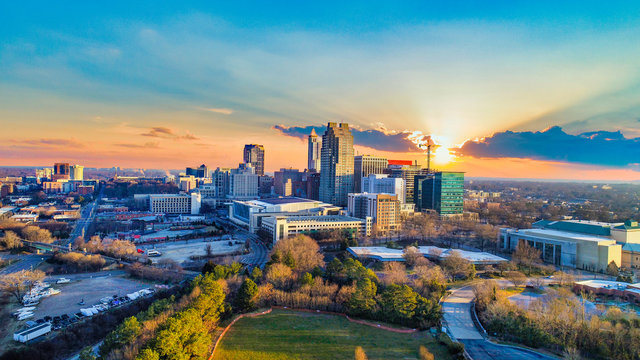
Raleigh earns its nicknames honestly. The City of Oaks wears its tree canopy like a crown, with white oaks and willow oaks shading neighborhood streets from Five Points to North Hills. The Research Triangle capital carries the weight of that title with genuine substance, three major research universities within thirty miles generating an intellectual and economic current that runs through every part of daily life here. And the people who actually settle in Raleigh, who tailgate at Carter-Finley Stadium in the fall and walk the greenway along Crabtree Creek on a Sunday morning, tend to describe it the same way: a city that feels larger than it is and friendlier than it has any right to be.
The Raleigh metro anchors the Research Triangle, a region defined by the triangle formed between NC State University in Raleigh, Duke University in Durham, and the University of North Carolina at Chapel Hill. Wake County, home to Raleigh proper and its growing ring of towns, holds roughly 1.2 million residents. The broader metro, spanning Wake, Durham, Orange, Johnston, and Chatham counties, reaches approximately 1.5 million people and stands as one of the fastest-growing regions in the United States, adding population year after year at a pace that its infrastructure continually races to match.
What makes the Triangle work as a place to live is the rare combination it has assembled: a genuine research economy that generates high wages without concentrating them in a single employer, a cost of living that remains accessible by the standards of peer metros, a climate with four recognizable seasons none extreme enough to dominate the conversation, and a setting within a few hours of both the Blue Ridge Mountains and the Atlantic coast. The people who relocate here and stay rarely cite a single factor. They cite the whole arrangement.
Raleigh sits roughly 170 miles south of Washington, D.C., 160 miles northeast of Charlotte, and a short drive from Raleigh-Durham International Airport, one of the Southeast's most connected regional airports with nonstop service to major hubs on every coast. For households weighing the Southeast's options, the Triangle has become one of the hardest cases to argue against.
What Makes Raleigh Special?
The Research Triangle and the University Ecosystem
NC State University has occupied the western edge of downtown Raleigh since 1887, and its 34,000-student population shapes the city's personality in ways that go well beyond football Saturdays at Carter-Finley. The Centennial Campus, a 1,334-acre research park built on former farmland adjacent to the main campus, hosts more than 70 companies and government agencies working alongside university researchers in a model that has become a national template for university-industry collaboration. Research in biotechnology, computing, materials science, and agricultural technology flows through the corridor connecting Centennial Campus to Research Triangle Park in a continuous chain.
Research Triangle Park itself, a 7,000-acre planned research campus straddling the Wake-Durham county line, has housed major corporate research operations since IBM arrived in 1965. GlaxoSmithKline, Biogen, Cisco Systems, Red Hat, and the Environmental Protection Agency all maintain significant presences here. The Park has evolved over sixty years from a collection of isolated campuses into a more connected research community, and a major reinvestment effort underway in the 2020s is adding walkable amenities, housing, and public spaces to what was long a purely car-oriented environment.
Duke University in Durham and UNC-Chapel Hill together add a depth to the regional talent pool that few metros can match. Duke's medical and research enterprise, ranking consistently among the top medical programs in the country, generates a pipeline of physicians, researchers, and healthcare professionals who choose to remain in the region after training. UNC's journalism, public health, and pharmacy schools contribute a different and complementary professional stream. Together, the three universities award more than 30,000 degrees annually, and a meaningful fraction of those graduates stay.
The Climate and the Outdoors
North Carolina's piedmont runs on a subtropical calendar that newcomers from the Northeast and Midwest sometimes find disorienting in the best way. Spring arrives in late February with dogwoods, redbuds, and Japanese cherry blossoms. Summer stretches warm and humid through September, with afternoon thunderstorms providing regular relief and the Blue Ridge just three hours west offering genuine escape from heat. Fall arrives in October and runs through November in a sustained display of hardwood color that the surrounding forests produce generously. Winter is mild by most definitions, averaging highs in the 50s, with occasional ice storms that shut the city down for a day and occasional snows that coat the oaks for a morning before melting.
William B. Umstead State Park, 5,579 acres of piedmont forest bisected by the highway between Raleigh and RDU airport, provides trail running, mountain biking, and fishing within fifteen minutes of downtown. The American Tobacco Trail, a 22-mile rail trail running from Durham south through Wake County to the Johnston County line, has become the region's most popular multi-use path. Falls Lake State Recreation Area north of Raleigh offers 26 miles of hiking, boating, and swimming on an 11,000-acre reservoir. Eno River State Park west of Durham provides a wilder, less developed alternative for hikers and paddlers. The coast lies two hours east; the mountains lie three hours west. For households that want outdoor access without building an entire identity around it, the Triangle's position is genuinely enviable.
Food, Beer, and the Table
The Triangle has arrived as a serious food region, and Raleigh's own contribution to that reputation is no longer riding on the coattails of Durham's better-publicized restaurant scene. The Glenwood South corridor along Glenwood Avenue runs from downtown north through a gauntlet of restaurants, bars, and breweries that fill every night of the week. Person Street in the Five Points area anchors a quieter but equally serious dining environment with locally owned spots that have operated for years. The NC State Farmers Market on Centennial Parkway, open year-round, connects residents directly to the farms of the piedmont and coastal plain, and what arrives there in season, sweet potatoes, muscadine grapes, fresh peanuts, heirloom tomatoes, reflects a food culture that still runs close to its agricultural roots.
North Carolina's barbecue tradition runs deep and honestly complicated. Eastern-style whole-hog barbecue with vinegar-based sauce and western Piedmont-style pork shoulder with a tomato-touched sauce represent a genuine regional divide that locals take seriously and that newcomers discover with the enthusiasm of converts. Raleigh has serious representatives of both traditions, and several newer spots have pushed the conversation about what North Carolina barbecue can be without abandoning what it has always been.
The craft beer scene deserves specific mention. Wake County supports more than thirty craft breweries, with concentrations in downtown Raleigh's Warehouse District and along the Morgan Street Food Hall corridor. Trophy Brewing, Crank Arm Brewing, and Gizmo Brew Works have become neighborhood anchors. The city's food hall ecosystem, including Transfer Co. Food Hall in the former Ford dealership on Person Street, has provided infrastructure for a rotating cast of independent food vendors that reflects the metro's genuine diversity.
Arts, Culture, and College Sports
The North Carolina Museum of Art, one of the South's strongest art institutions, occupies a purpose-built facility on Blue Ridge Road with a permanent collection spanning five thousand years and a 164-acre outdoor sculpture park that functions as a public gathering space throughout the year. The North Carolina Museum of Natural Sciences downtown is the largest natural history museum in the Southeast and draws more than a million visitors annually. The North Carolina Museum of History, directly across Bicentennial Plaza, provides context for everything from Cherokee culture to the state's Civil Rights legacy. These three institutions, all free and open to the public, give Raleigh a cultural infrastructure that consistently surprises visitors expecting a second-tier capital city.
The Duke Energy Center for the Performing Arts houses multiple performance venues, including Meymandi Concert Hall, home of the North Carolina Symphony, and the BTI Center for the Performing Arts. The Carolina Theatre in Durham and the Durham Performing Arts Center, consistently one of the top-grossing performing arts venues in the country for its size, contribute to a regional performing arts calendar that runs year-round at a level disproportionate to the population.
College basketball in the Triangle is not a hobby. The rivalry between Duke, NC State, and UNC, collectively known as Tobacco Road, is one of the most intense and historically rich in American sports. PNC Arena, which Raleigh shares between the NC State Wolfpack and the Carolina Hurricanes of the NHL, fills for both, and the energy around a State-Carolina game or a Hurricanes playoff run is something transplants from cities with more professional sports infrastructure often describe as more intense than anything they experienced in larger markets.



Economy
Research Triangle Park and the Tech Sector
Research Triangle Park has anchored the regional economy since the 1960s, but the past decade has seen its center of gravity shift as the surrounding communities developed their own employment clusters. Downtown Raleigh, Downtown Durham, and the university campuses have become legitimate employment destinations in their own right, and the result is a metro with more distributed economic geography than the Park-centric narrative suggests. That distribution is good news for households whose commuting calculus involves more than a single workplace.
IBM, Cisco Systems, Red Hat (now part of IBM), Lenovo's North American headquarters, and Epic Games are among the major technology employers anchoring the Triangle's tech sector. Epic Games, the creator of Fortnite, has occupied a growing campus in Cary since the late 1990s and represents a significant game development and interactive entertainment presence that adds a creative industry dimension to the region's economic profile. SAS Institute, the world's largest privately held software company, has operated its global headquarters on 900 acres in Cary since 1976 and employs roughly 5,000 people in the Triangle in a corporate culture frequently cited as among the best in American business.
Life Sciences and Pharmaceutical Research
The life sciences sector in the Triangle has grown into one of the country's most significant pharmaceutical and biotechnology concentrations. GlaxoSmithKline's North American headquarters in Research Triangle Park makes North Carolina one of the largest pharmaceutical employment states in the country. Biogen's operations in RTP focus on neuroscience research. Novo Nordisk, Bayer CropScience, and dozens of smaller biotech firms have established research and manufacturing operations in the region, supported by a talent pipeline from UNC's Eshelman School of Pharmacy and School of Public Health, Duke's medical enterprise, and NC State's life sciences programs.
For scientists, clinicians, regulatory professionals, and research administrators, the Triangle offers a career ecosystem deep enough to sustain multiple moves within the region over a career. The density of peer institutions and companies creates a horizontal job market that reduces the risk of relocating to any single employer.
Healthcare
WakeMed Health and Hospitals, UNC REX Healthcare, and Duke Raleigh Hospital collectively anchor Raleigh's healthcare employment, with Duke University Medical Center and UNC Medical Center in Durham and Chapel Hill extending the system's depth. The region maintains one of the highest concentrations of physicians per capita in the country, a direct result of the three major academic medical centers producing graduates who remain in the area. For nurses, physicians, allied health professionals, administrators, and healthcare technology workers, the Triangle's healthcare infrastructure offers stability and opportunity at a scale that smaller cities cannot match.
State Government and Education
As North Carolina's capital, Raleigh hosts the full apparatus of state government, including the General Assembly, the Governor's Office, and more than forty executive agencies and departments. State government employment provides a stable economic base that moderates the boom-and-bust cycles affecting more purely private-sector metros. The education sector, from Wake County Public Schools to the Triangle's eighteen colleges and universities, employs tens of thousands more in roles ranging from classroom teaching to research administration and facilities management.
Cost of Living Realities
North Carolina imposes a flat state income tax currently set at 4.5%, trending lower under legislation phasing it toward 2.49% over the coming years. For households relocating from states with high graduated income taxes, this structure represents a meaningful ongoing financial advantage. The state sales tax runs 4.75%, with county additions bringing the total in Wake County to 7.25%. There is no local income tax. Property taxes are assessed at the county level, with Wake County's effective rate around 0.83% of assessed value, a number that demands attention in the context of rapidly rising home valuations but remains below the rates in most northeastern and midwestern states.
Median home values in Raleigh proper sit around $440,000 to $455,000 as of late 2025. The suburban towns of Cary and Apex run higher, in the $540,000 to $575,000 range for Cary and slightly below for Apex. Durham's median of approximately $415,000 offers the most accessible entry point among the Triangle's core cities. The surrounding towns of Holly Springs, Wake Forest, and Fuquay-Varina provide new construction options in the $400,000 to $550,000 range with school quality that competes with anywhere in the metro.
Buyers relocating from Chicago, Boston, New York, and the Bay Area consistently describe Raleigh's pricing as not just reasonable but genuinely surprising. A 2,500-square-foot home in a good school district with a two-car garage and a real yard, the kind of property that defines comfortable family life in a competitive market, exists at a price point in Wake County that has no meaningful equivalent in the metros most arrivals are leaving. That comparison drives a significant share of the metro's inbound migration.
Renters in Raleigh pay around $1,400 to $1,700 per month for a one-bedroom apartment depending on location and vintage of construction, with downtown and North Hills commanding premiums and the suburban corridors offering more space per dollar. The overall cost of living in Raleigh runs about 5 to 8 percent below the national average when housing is included, a figure that reflects the state's broadly favorable cost environment without capturing the full advantage that housing costs alone provide relative to peer economies.
North Carolina does not require emissions testing statewide, though Wake County does require it for gasoline vehicles model year 1996 and newer. Vehicle property tax is assessed annually by the county, adding a cost that residents from states without vehicle property taxes sometimes encounter unexpectedly. Utilities run below the national average, benefiting from the state's mix of nuclear, natural gas, and renewable generation. Healthcare costs are above the national average, though the density of healthcare providers in the Triangle creates competitive pricing for many services compared to less medically rich regions.
Real Estate Market
The Triangle real estate market entered 2025 with momentum that has characterized the region throughout the post-2020 period and shows no structural sign of reversing. The combination of net in-migration running above 30,000 people annually to Wake County alone, constrained inventory in the most desirable school zones, and an employment base that has consistently grown through every economic cycle creates demand pressure that modest inventory increases have not yet resolved.
Median sale prices across Wake County ran around $450,000 to $470,000 entering 2025, with appreciation rates above the national average reflecting both the region's economic strength and the relative underbuilding of housing stock in the post-2008 decade. Durham County, with a median around $415,000, offers modestly more accessible entry points while still experiencing competition in its most sought-after neighborhoods near Duke University and downtown.
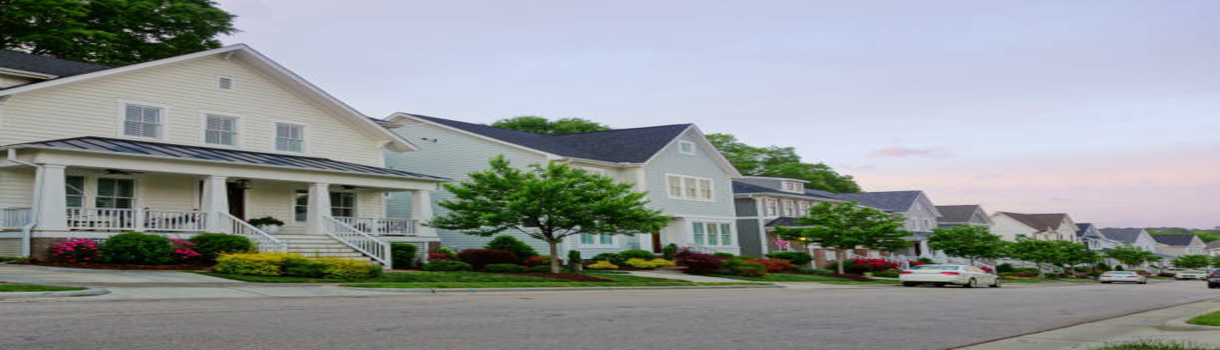
The architectural profile of the metro spans approximately 200 years. Raleigh's oldest surviving residential buildings include antebellum structures in the Mordecai neighborhood and Victorian-era houses throughout the Historic Oakwood and Five Points areas. The bungalows and Craftsman cottages of Boylan Heights and Cameron Park date to the early twentieth century. Mid-century ranch homes fill the postwar residential development around North Hills and Cameron Village. The suburban growth corridors of the 1990s and 2000s created the brick-and-vinyl neighborhoods that dominate western Wake County's landscape. New construction in Apex, Holly Springs, and Fuquay-Varina brings contemporary designs on planned lots within master communities that include pools, trails, and clubhouses.
The inside-the-beltline distinction, meaning neighborhoods within the I-440 loop that encircles Raleigh's core, carries real weight in the local real estate conversation. Homes inside the beltline command premiums for walkability, proximity to employment, and neighborhood character that suburban equivalents cannot replicate. Buyers making their first Triangle purchase often underestimate how much the inside-the-beltline designation affects price, and how quickly they develop strong feelings about it once they live here.
Where in Raleigh?
Choosing where to live in the Triangle involves variables that no single ranking can resolve: school assignment zones that shift periodically within Wake County's large unified district, commute patterns that depend entirely on where one works, preferences about urban density versus suburban space, and budget constraints that interact differently with each community's price floor. What follows is a county-by-county and neighborhood-by-neighborhood guide built from the ground up, grounded in what each place actually delivers to the people who live there.
Wake County
Wake County is the metro's anchor, the most populous county in North Carolina with 1.2 million residents and a footprint that contains Raleigh proper alongside eleven incorporated towns, each with its own character and development pattern. The county operates a unified school district, Wake County Public Schools, the fifteenth-largest in the nation, which means that school quality conversations happen at the individual school level rather than the district level since the district as a whole covers enormous variation in school performance and community character.
The City of Raleigh
Raleigh proper, with approximately 490,000 residents, offers the densest urban life in the metro, anchored by a downtown that has absorbed substantial investment since 2010 and now supports a walkable restaurant and entertainment environment centered around Fayetteville Street, the Warehouse District, and Glenwood South. The city has invested heavily in its greenway system, now exceeding 130 miles of paved paths connecting neighborhoods to parks, employment centers, and each other. The trade-offs are documented: parking and traffic in the most sought-after areas require patience, school assignment requires research at the individual school level, and certain areas of the city carry elevated crime concentrations that require neighborhood-level analysis rather than citywide averages.
Historic Oakwood and Mordecai
Historic Oakwood, the first neighborhood in Raleigh to receive historic district designation in 1974, sits just northeast of downtown and contains the city's most intact collection of Victorian-era residential architecture. Houses dating from the 1870s through the early 1900s line streets shaded by the oaks the city is named for. The annual Candlelight Tour in December and the Garden Club Tour in spring draw visitors from across the region, but residents experience the neighborhood's character daily: walk to downtown in fifteen minutes, browse the Historic Oakwood Cemetery's extraordinary collection of funerary sculpture any afternoon, stop at Yellow Dog Bread Company for pastries and coffee. Median home values now push above $750,000 in the most sought-after blocks, with renovation-ready properties available below that level for buyers prepared to invest. Mordecai, immediately to the north, carries similar historic character at modestly more accessible prices, drawing young professionals and creative households to its Person Street dining corridor.
Five Points
Five Points takes its name from the unusual intersection where Glenwood Avenue, Whitaker Mill Road, Fairview Road, and Glenn Avenue converge at a five-pointed star. The neighborhood, developed primarily in the 1910s and 1920s, occupies a sweet spot that locals describe with a shorthand phrase: inside the beltline and still affordable. That affordability is relative and declining, with median home prices now ranging from the mid-$500,000s to well above $1 million in the Hayes Barton and Bloomsbury sections, but the entry points available at the lower end remain competitive with anything comparable in the metro. The Rialto Theatre, the neighborhood's ninety-year-old movie house that still operates as an independent cinema, symbolizes Five Points' commitment to preserving what makes it worth the price. Lilly's Pizza, Hayes Barton Cafe, and a constellation of neighborhood spots along the main commercial corridor give the area a dining identity that residents return to weekly rather than saving for occasions.
Glenwood South and the Warehouse District
For renters and buyers who want urban Raleigh at its most active, the corridor from downtown north along Glenwood Avenue and east through the Warehouse District into the Person Street area delivers density of restaurants, bars, and cultural venues that no suburban address can replicate. Apartments and condos in this zone command premiums, with one-bedroom rents running above $1,800 in newer construction. The walkability and the proximity to employment, entertainment, and transit options represent the most genuinely urban lifestyle available in the metro and suit young professionals, empty-nesters, and anyone whose social life organizes around leaving the house on foot.
North Hills
North Hills, positioned along Six Forks Road just north of the I-440 beltline, has transformed over the past fifteen years from a traditional shopping mall into what its developers call an urban village, a mixed-use district with luxury apartments, upscale retail, independent restaurants, live entertainment venues, and corporate offices arranged around walkable streets. The residential offerings, concentrated in high-rise apartment towers and single-family homes in the surrounding neighborhoods, attract young professionals working at Research Triangle Park and tech companies along the US-1 corridor, executives who want proximity to everything without living downtown, and families drawn by the neighborhood's school options. Median home values in the single-family sections surrounding North Hills run above $700,000. It suits buyers who want a self-contained community with its own gravitational pull.
Brier Creek and Northwest Raleigh
Northwest Raleigh, centered on the Brier Creek and Leesville corridors near RDU airport, offers the metro's best combination of airport access, Research Triangle Park proximity, and family-oriented suburban living. The area holds low crime rates, strong school assignments, and established neighborhoods ranging from mid-century ranches to contemporary master-planned communities. Brier Creek Country Club's Arnold Palmer Signature golf course anchors the most premium section. Home values in the area run approximately 14 percent above the Raleigh citywide median. It suits families where one or both parents travel frequently for work, RTP employees who want a short reverse commute, and households that prioritize a quiet residential character without sacrificing access to the region's full amenity set.
Cary
Cary, with approximately 175,000 residents, is the largest incorporated town in North Carolina and one of the most consistently ranked communities in the country on quality-of-life measures that account for school performance, safety, job access, and housing quality together. The town shares Wake County Public Schools with Raleigh, and its school assignments consistently rank among the district's strongest. SAS Institute's presence as both a major employer and a civic institution committed to the town's quality of life gives Cary a corporate stewardship that few comparable communities enjoy.
The median home value in Cary sits around $557,000, with considerable variation between the town's older established neighborhoods near downtown and the newer master communities along the western and southern edges. Preston, Carpenter Village, and Amberly represent the town's planned community profile, with HOA-maintained amenities, pool clubs, and trail systems that families with children value. Downtown Cary, modestly scaled but genuinely walkable, has developed a restaurant and live music scene around the Cary Towne area that gives residents a community gathering point distinct from the suburban retail corridors. Cary fits families prioritizing school quality, the SAS employee who wants a short commute to the corporate campus, and relocating households who want a master-planned environment with every amenity accounted for.
Apex
Apex carries the nickname "The Peak of Good Living" with the earnestness of a town that actually believes it and can mostly back it up. Located fifteen miles southwest of downtown Raleigh on US-1 and NC-540, Apex has grown from a historic railroad town of a few thousand people to a community of more than 72,000 while preserving a downtown with genuine character. The brick commercial buildings on Salem Street, the Fourth of July parade where children line the sidewalks with bicycles decorated in red, white, and blue, the local restaurants that have occupied the same storefronts for a decade, these are not civic marketing but actual community life.
Apex earns strong school rankings within Wake County's unified system, and its low crime rates reflect a community where the density of families with children and the involvement of those families with local institutions creates a self-reinforcing safety culture. Home values in Apex run slightly below Cary's, with a median around $490,000 to $510,000 depending on the market segment, offering a few percentage points more affordability for essentially equivalent quality. The commute to Research Triangle Park runs twenty to twenty-five minutes on a good day. Apex suits families relocating specifically for school quality, buyers who want a small-town downtown alongside suburban amenity access, and households priced to the upper ranges of Wake County's middle market.
Holly Springs and Fuquay-Varina
Holly Springs, ten miles south of Apex in the southwestern corner of Wake County, has roughly doubled in population since 2010 and now holds around 55,000 residents in a community that has received the infrastructure investment its growth has required. The town's greenway network, its parks, and Harris Lake County Park, which provides boating, fishing, and camping access on a 4,000-acre reservoir, give Holly Springs an outdoor access profile that outperforms its suburban classification. School performance within the Wake County system runs strong, and the price floor for single-family housing remains modestly below Apex and Cary, making Holly Springs a strong choice for families who want competitive school assignments and more square footage per dollar. Median home values run in the $450,000 to $500,000 range.
Fuquay-Varina, further southwest and straddling the Wake-Harnett county line, offers the metro's most accessible new construction in a Wake County school district context. The town's rapid growth, roughly tripling in population since 2000, has attracted major homebuilders offering new construction below the metro average. The commute to Research Triangle Park and downtown Raleigh runs thirty to forty minutes on US-401 and I-540. Fuquay-Varina suits first-time buyers who need to maximize square footage within a Wake County school assignment, households willing to trade commute time for ownership costs, and buyers who want new construction with HOA-maintained community amenities at the most accessible price points the metro offers.
Wake Forest and Rolesville
Wake Forest, fifteen miles north of downtown Raleigh on US-1, carries a different energy than the southwestern Wake County suburbs. The town's historic downtown on White Street supports local restaurants, a farmers market, and Friday Night on White, a community gathering that has run during warm months for years and reflects the town's genuine investment in public life. Falls Lake sits minutes away, providing year-round hiking, boating, and camping access that the southern Wake County towns cannot match. The school system runs strong, the crime rate is low, and the town's growth trajectory, now above 100,000 residents, has brought sufficient retail and restaurant infrastructure to eliminate the historical need to drive to Raleigh for daily needs. Home values run around $430,000 to $470,000 on average, with significant variation by neighborhood and vintage.
Rolesville, northeast of Raleigh and now Wake County's second-oldest township, has been among North Carolina's fastest-growing municipalities for nearly two decades, adding population at rates that reflect buyers arriving from Raleigh proper and Wake Forest seeking newer construction at lower prices. The town lacks the commercial infrastructure of its western counterparts, requiring residents to drive to Raleigh or Wake Forest for most retail and restaurant needs, but the pricing reflects that trade-off. Entry-level new construction and mid-size family homes in the $380,000 to $450,000 range represent some of the most accessible Wake County school district options available.
Durham County
Durham County, home to approximately 330,000 residents centered on the Bull City, occupies a different cultural register than Wake County and wears that difference as a point of pride. Where Wake County projects efficiency, ambition, and family-friendliness, Durham projects creativity, grit, and an authentic urban culture that has drawn writers, artists, chefs, and entrepreneurs in meaningful numbers over the past twenty years. The American Tobacco Campus redevelopment, which converted a historic cigarette manufacturing complex into offices, restaurants, and public space, catalyzed a downtown transformation that has been genuine and sustained. The result is a city whose most interesting neighborhoods reward the people who choose them specifically.
Downtown Durham and the American Tobacco District
Downtown Durham has undergone a transformation since 2000 that puts it among the most successful urban revivals in the South. The Durham Performing Arts Center, consistently one of the top-grossing mid-size performing arts venues in the country, draws touring Broadway productions, major musical acts, and comedy shows to a building that feels at home in a neighborhood of converted brick warehouses and open-air plazas. Durham Bulls Athletic Park, home of the AAA affiliate of the Tampa Bay Rays, turns Durham's tobacco-country heritage into a genuinely enjoyable summer evening. The restaurant and bar scene around downtown Durham, driven by chefs of national reputation, has developed the kind of density and quality that makes a walkable neighborhood genuinely self-sufficient for a food-minded household. Apartments and loft conversions in the American Tobacco Historic District run above $2,000 per month for two bedrooms in renovated spaces, and condominium ownership has expanded as downtown investment has deepened.
Trinity Park
Trinity Park, a forty-block neighborhood of early twentieth-century homes immediately adjacent to Duke University's East Campus, is the Durham address that academics, physicians, and creative professionals return to first when they decide to stop renting. The tree-lined streets, the walkability to Brightleaf Square's dining and shopping, the proximity to Duke and to the Sarah P. Duke Gardens, and the strong community identity, block parties, neighborhood associations, and the kind of neighbor relationships that develop when people choose to stay for decades, create an environment that commands genuine loyalty. Home values reflect that loyalty, with prices now running from the mid-$600,000s into the $1 million range for the most sought-after properties. Trinity Park suits Duke-affiliated households, buyers who prioritize walkable urban character above all else, and anyone who has lived in comparable historic neighborhoods elsewhere and knows the premium is worth it.
Southpoint
Southpoint, in the southern section of Durham along I-40, anchors a part of the city that functions almost as a separate community from downtown Durham. The Streets at Southpoint, a major regional mall with over 150 stores, a theater, and serious dining, creates retail and entertainment infrastructure that makes southern Durham genuinely self-contained. The American Tobacco Trail has access points throughout the area, and Piney Wood Park provides additional outdoor space. Housing ranges from townhomes and condominiums in the $350,000 to $500,000 range to single-family homes running higher in the more established residential sections. Southpoint suits Research Triangle Park employees who want a shorter commute than northern or eastern Durham provides, young families who want new construction with retail convenience, and buyers whose primary criterion is the I-40 corridor commute pattern.
Hope Valley
Hope Valley, in southwestern Durham along the border with Chapel Hill, is Durham's most exclusive historic neighborhood, developed in the 1920s around the Hope Valley Country Club and built out through the mid-twentieth century in a mix of Tudor Revival, Colonial, and later ranch-style homes on substantial wooded lots. The neighborhood's median home price exceeds $1.8 million in its most sought-after sections, placing it among the most expensive residential enclaves in the Triangle. Hope Valley suits senior Durham professionals, faculty and administrators at Duke and UNC who prefer Durham's character to Chapel Hill's prices, and households whose social life centers on the country club's golf and tennis facilities.
Orange County
Orange County sits west of Durham and contains Chapel Hill, Carrboro, and Hillsborough in a county of roughly 150,000 residents defined by the University of North Carolina's 300-year presence, a progressive political culture that runs consistently left of even Durham and Wake, and a housing market that reflects the demand generated by one of the country's flagship public universities and the physicians, researchers, and faculty it attracts.
Chapel Hill
Chapel Hill is one of the smallest major university towns in the country, which means that the University of North Carolina's 30,000 students, the UNC Health system's tens of thousands of employees, and the various research institutes and affiliated organizations that cluster around the university occupy a town of only 60,000 permanent residents. That concentration generates an intellectual energy and a restaurant and arts scene that punches well above the town's size, but it also drives housing prices that reflect the competition between university-affiliated households and everyone else. The median home value in Chapel Hill runs from $600,000 to well above $1 million in the most sought-after sections near campus. Buyers who choose Chapel Hill are paying for proximity to UNC, the Franklin Street corridor's walkable retail and dining, the school system the Chapel Hill-Carrboro City Schools district consistently ranks among North Carolina's strongest, and a town identity that many residents describe as irreplaceable once they have experienced it.
Carrboro
Carrboro, directly adjacent to Chapel Hill and sharing its school district, has developed one of the Triangle's most distinctive neighborhood identities: a progressive small-town culture with a farmers market that operates year-round and anchors a community commitment to local food, a music scene centered around the ArtsCenter and Cat's Cradle, and a residential character that mixes faculty households with artists, longtime residents, and young families who find Chapel Hill's prices prohibitive. Carrboro's median home values run modestly below Chapel Hill's while delivering access to the same school district, making it the Triangle's most underappreciated geographic value for families committed to Orange County's school system.
Hillsborough
Hillsborough, the Orange County seat twelve miles north of Chapel Hill on Interstate 85, offers a historic downtown of genuine character, a growing arts community that has attracted writers, potters, and visual artists to the surrounding county, and housing prices that represent the Triangle's most accessible entry into the Orange County school system and community. The Eno River runs through the county, and Eno River State Park provides trail access that makes Hillsborough feel wilder and more spacious than its location thirty minutes from Durham would suggest. Median home values in Hillsborough run below $400,000 in most sections, representing real value in a region where comparable quality requires substantially more elsewhere.
Johnston County
Johnston County lies southeast of Wake County along I-40 and US-70, containing approximately 230,000 residents in a largely rural and small-town landscape anchored by Clayton, Smithfield, and Selma. The county has been among North Carolina's fastest-growing for over a decade, driven by buyers priced out of Wake County who accept a longer commute in exchange for significantly lower housing costs and a slower community pace. The county maintains its own school district, Johnston County Public Schools, separate from Wake County's system, a factor requiring careful research for families whose school assignment matters in the relocation decision.
Clayton
Clayton, the Triangle's southeastern gateway, has grown 277 percent in population between 2000 and 2020, making it one of the fastest-growing municipalities in North Carolina's recent history. The growth reflects a straightforward value proposition: single-family homes in the $350,000 to $500,000 range in a community with its own downtown character and a commute to Research Triangle Park of thirty to forty minutes depending on the route. The extension of NC-540 will eventually improve Clayton's highway connection to the western Triangle, a development that Clayton's existing homeowners are watching closely. Clayton suits first-time buyers who need to own rather than rent and can accommodate the Johnston County school district, households prioritizing square footage per dollar, and buyers whose workplaces are in the southeastern RTP corridor.
Smithfield
Smithfield, the Johnston County seat, sits further east along I-95 and US-70 and offers the county's most accessible housing market alongside a historic downtown that has received genuine revitalization investment. The Neuse River runs along the city center, providing riverfront parks and trail access. Premium outlet shopping at Smithfield's Carolina Premium Outlets draws visitors from the Triangle and beyond. For buyers who need maximum value and whose employment is in the eastern Wake County or Johnston County corridor, Smithfield provides ownership opportunities that have no equivalent in Wake County at comparable price points.
Chatham County
Chatham County, southwest of Wake County and south of Orange County, has transformed over the past two decades from a largely rural and agricultural county into one of the Triangle's most dynamic growth areas, driven by Jordan Lake, the Briar Chapel master-planned community, and the Chatham Park development in Pittsboro that represents one of the largest planned communities in the Southeast. The county maintains its own school system, and the areas closest to Chapel Hill benefit from proximity to Orange County's cultural and institutional ecosystem without Orange County's price premiums.
Pittsboro and Chatham Park
Pittsboro, the Chatham County seat, occupies a historic town center with independent restaurants, antique shops, and a farmers market that give it a character distinct from the suburban development surrounding it. Chatham Park, a master-planned community under development immediately adjacent to Pittsboro, has brought several thousand residential units and a projected full buildout of 22,000 homes to what was farmland, along with retail, office, and recreational infrastructure designed to create a self-contained community. The project's scale and ambition have transformed Pittsboro's housing market and continue to add inventory at a pace the Triangle's established communities cannot match. Jordan Lake State Recreation Area, a few miles south, provides boating, fishing, swimming, and camping on a 14,000-acre reservoir. Home values in the Chatham Park development start in the upper $300,000s for townhomes, with single-family homes ranging from the mid-$400,000s into the $700,000s in premium sections. Pittsboro suits buyers who want a genuine small-town character alongside new construction quality, remote workers who value green space and community planning, and families willing to invest in a school system that is growing alongside the community it serves.
Briar Chapel
Briar Chapel, a 1,500-acre master-planned community in northern Chatham County near Chapel Hill, was developed with a sustainability and walkability focus that gives it a physical character unlike most suburban communities in the Triangle. The neighborhood's trail network, its community gardens, its preserved natural areas alongside the Haw River, and its design intent reflect a planning philosophy that residents either embrace passionately or pass over entirely. The community suits outdoor-active households, remote workers drawn by the green space access, and families who find the Chapel Hill school proximity worth the Chatham County school assignment trade-off.
Franklin County
Franklin County, north of Wake County along US-1, has entered the Triangle's growth story later than Johnston and Chatham but is accelerating rapidly as Wake Forest expands northward and buyers seek options in a county with lower land prices and an improving connection to Raleigh employment. The county seat of Louisburg sits 34 miles northeast of downtown Raleigh, and the communities of Youngsville and Franklinton along the US-1 corridor are receiving substantial new residential development.
Youngsville and Franklinton
Youngsville, just north of Wake Forest across the Wake-Franklin county line, has been among North Carolina's fastest-growing small towns and offers new construction in the $300,000 to $420,000 range in a county with lower property taxes than Wake County and reasonable access via US-1 to Raleigh and Wake Forest employment. The Franklin County school system serves the area, and the community's growth has brought improving retail and service infrastructure without yet sacrificing the rural character that initially drew buyers north. Franklinton, several miles further north, provides similar value with a slightly more established small-town identity. These communities suit buyers who need to maximize ownership value in a school district they have researched and found acceptable, remote workers who value space and quiet over urban proximity, and households who have correctly identified the US-1 corridor's trajectory as a long-term appreciation story.

What Now?
Let us help!
Every county, every city, and every neighborhood in this guide exists within a web of trade-offs that no ranking system and no median price point can fully resolve. The right community for a Duke physician starting a joint practice at Duke Raleigh Hospital is not the right community for the SAS engineer buying a first home in Cary on a timeline defined by a Wake County school enrollment date. The right neighborhood for a creative professional relocating from Brooklyn and committed to urban walkability is not the right neighborhood for the family of five that arrived from suburban Dallas expecting a yard and a pool and a forty-five-minute commute.
PrimeStreet connects buyers and renters with experienced Triangle real estate professionals who know this market at the street level: which Wake Forest elementary is genuinely worth the school-choice application, which Clayton neighborhood will benefit from the 540 extension, which Oakwood block has had four sales in the past year and which has been quiet for three. Whether the goal is a Victorian in Mordecai, a master-planned community home in Apex, a Durham bungalow within walking distance of Ninth Street, a new construction house in Holly Springs with a Harris Lake kayak membership, or a Chatham County property with land and a Pittsboro farmers market habit, the right agent changes the outcome.
Call 855-531-5347 or click "Find an Agent" below. Someone will take time to understand the timeline, the school requirements, the commute constraints, and the version of Triangle living being imagined, then connect with an agent who has navigated those exact variables for people exactly like you.
Before committing, visit more than once. Drive Glenwood South on a Friday night and Five Points on a Sunday morning. Walk the Tobacco Trail from Southpoint to the American Tobacco Campus. Attend a Wolfpack game at PNC Arena and stand outside Carter-Finley on a fall Saturday to understand what this city sounds like when it is most itself. Drive the commute from Clayton to Research Triangle Park at 7:45 AM on a Tuesday. Eat at the NC State Farmers Market before you decide whether you can live without a farmers market. The Triangle rewards people who do their homework. It also rewards people who simply show up and pay attention. Come and see which kind you are.