

By Melanie Ortiz Reyes - Marketing Strategist - PrimeStreet.io
Move to Portland, ME
Portland, Maine has a way of earning its residents. That observation comes up regularly among people who have made the move, usually within the first winter, after they have worked through the cold and discovered what the city quietly delivers in return: a food scene that punches well above its population size, a waterfront that genuinely shapes daily life, neighborhoods with the kind of character that takes decades to accumulate, and a surrounding region whose natural beauty never stops being surprising.
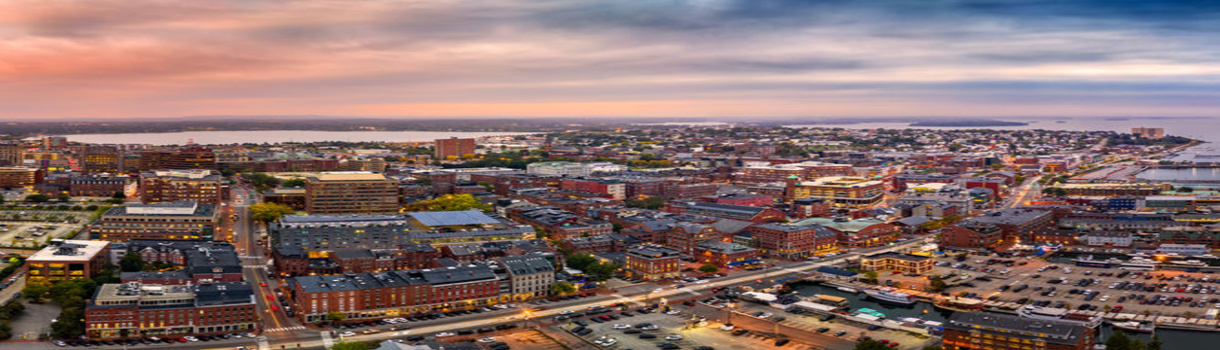
Maine's largest city sits on a rocky peninsula overlooking Casco Bay, where lobster boats and sailing vessels still share water with ferries heading to the outer islands. Portland proper is home to roughly 68,000 people, but the metro area spreads across multiple counties and reaches well beyond the peninsula's borders, drawing in towns and communities with their own distinct identities, landscapes, and reasons to put down roots.
The greater Portland region spans Cumberland County at its core and extends outward into York County to the south, Sagadahoc and Androscoggin counties to the north and west, and beyond, each carrying different terrain, community character, and price points. From the walkable peninsula neighborhoods and historic West End to the saltmarsh coastline of Cape Elizabeth, the college-town energy of Brunswick, the emerging affordability of Lewiston-Auburn, and the coastal charm of Kennebunk in York County, the options are genuinely varied.
This guide is written for people making a real decision. It covers the economy, cost of living, the housing market, and the neighborhoods and counties that define daily life across the region so that the choice, when made, rests on accurate ground.
What Makes Portland Different?
A Food City That Keeps Earning Recognition
Portland's culinary reputation is not hype built on a single memorable meal. It is the product of sustained, serious investment by independent chefs who have chosen a small coastal city over bigger markets and built something that holds up under repeated scrutiny.
Bon Appetit named Portland the Best Restaurant City in America in 2018, a designation that surprised some and confirmed what residents already knew. The James Beard Foundation has nominated and awarded Portland-area chefs and establishments across multiple categories over many years. Sam Hayward of Fore Street won Best Chef: Northeast from the James Beard Foundation in 2004, and Portland has maintained a consistent presence in the awards ever since, with Eventide Oyster Co., Allagash Brewing Co., Standard Baking Co., and multiple other establishments earning national recognition across successive years. The 2025 James Beard Award semifinalists included Portland chefs across Best Chef: Northeast, Outstanding Professional in Beverage Service, and Outstanding Professional in Cocktail Service categories.
For people moving from major metros, the food scene is often the first genuine surprise. The volume, variety, and quality of independent restaurants, bakeries, coffee roasters, and craft beverage producers concentrated in a city of this size is unusual. The peninsula holds more serious dining options per block than many neighborhoods in cities ten times Portland's size, and the surrounding towns are producing their own momentum, with Biddeford drawing particular attention as a second wave of culinary talent has put down roots there.
The Water and the Outdoor Life
Casco Bay is not a backdrop. It is a working part of Portland's daily identity. The Casco Bay Lines ferry system connects the peninsula to six year-round island communities, including Peaks Island, Great Diamond, and Chebeague Island, each with its own character and each accessible to city residents as a routine part of life rather than a special occasion. In summer, kayakers launch from East End Beach and paddle through the bay's outer islands. In winter, the waterfront takes on a quieter intensity that many residents describe as the season that earns their loyalty.
The Eastern Promenade, designed by the Olmsted Brothers and wrapping the eastern edge of Munjoy Hill, is perhaps the city's finest public space: two miles of trail connecting park land, water views, a small public beach, and some of the most expansive views of Casco Bay available from land. The Back Cove Trail loops the tidal basin behind the peninsula and connects to the Eastern Prom trail for a combined multi-mile circuit that is central to how a significant portion of Portland's population starts or ends each day.
The surrounding region extends these outdoor options considerably. Sebago Lake, about 45 minutes from downtown Portland, provides swimming, boating, and lakefront living that city residents access as a reliable seasonal resource. The White Mountains of New Hampshire sit less than two hours away. The Maine coast stretches in both directions from Portland's peninsula, with beaches, headlands, kayaking routes, and hiking trails accessible within 30 minutes by car in almost any direction.
Arts, Culture, and Community Depth
Portland Art Museum, founded in 1882, holds a permanent collection of American, European, and Maine-specific art that anchors the city's cultural calendar year-round. The museum serves both the serious art community and casual visitors with an accessibility that reflects the city's character.
The Portland Symphony Orchestra, one of New England's established orchestras, performs at Merrill Auditorium, a restored City Hall-adjacent venue whose acoustics and programming draw audiences from across the region. Portland Ovations brings national touring productions to the same venue. Independent theaters, live music venues, gallery walks on First Fridays, and an arts district anchored by the Congress Street corridor give the city a cultural density that residents from smaller markets notice quickly and those from larger ones still find surprisingly substantive.
The outdoor recreation community, the culinary community, the creative industries, and the professional class that has relocated to Portland from Boston, New York, and beyond have produced a social environment that is both welcoming to newcomers and genuinely rooted in place. That combination is rarer than it might seem.



Economy
Healthcare: The Region's Largest Employer
MaineHealth, the state's largest health system, is headquartered in Portland and operates Maine Medical Center as its flagship facility, one of the largest hospitals in New England. Maine Medical Center functions as a regional tertiary care center drawing patients from across the state and serving as a teaching hospital affiliated with Tufts University School of Medicine. MaineHealth employs tens of thousands of clinical and administrative professionals across its network of hospitals, primary care practices, and specialty clinics. Mercy Hospital, a Northern Light Health member facility in Portland, adds acute care capacity and its own community of healthcare professionals to the city's employment base.
For nurses, physicians, clinical specialists, healthcare administrators, and a wide range of allied health professionals, Portland offers a genuine employment market with multiple system options, competitive wages relative to the cost of living, and the professional culture of a serious academic medical community.
Financial Services and Technology
WEX, a Portland-based financial technology company specializing in fleet card payments, corporate payments, and healthcare financial services, trades on the New York Stock Exchange and employs a substantial professional workforce in technology, operations, and finance at its Portland headquarters. IDEXX Laboratories, headquartered in Westbrook just outside Portland, is an S&P 500 company and global leader in veterinary diagnostic and healthcare technology, employing thousands in professional and technical roles across its campus. Unum Group and TD Bank maintain significant operational presences in the Greater Portland area, and the financial services sector as a whole contributes meaningful white-collar employment to a professional economy that is more diversified than the city's size might suggest.
Education and the University Presence
The University of Southern Maine operates its primary campus in Portland's Woodfords and Oakdale neighborhoods, with a second campus in Gorham and a law school in Portland's downtown. USM employs a substantial academic and administrative staff and generates the surrounding economic activity, community programming, and cultural energy that comes with an urban university presence. The Maine College of Art and Design, located in Portland's Arts District, contributes a creative industry workforce and graduate population that shapes the city's gallery culture, design sector, and independent business community.
Remote Work and Portland's Positioning
Maine has actively pursued remote worker relocation through the state's Remote Worker Welcome Program, offering financial incentives to qualified remote workers who establish Maine residency. Portland has been a primary beneficiary of this program and of the broader post-pandemic shift toward location-flexible professional work. The combination of broadband infrastructure, a genuinely livable urban environment, lower costs than Boston and New York, and a quality of life that is difficult to replicate has drawn a steady stream of remote professionals who work for employers based elsewhere while building lives in the Portland area.
Portland sits about 100 miles from Boston and maintains Amtrak Downeaster service connecting to Boston's North Station, making it a practical option for professionals who need to travel to Boston periodically without commuting daily. The Portland International Jetport provides direct service to major hubs, further supporting the professional population with national employment connections.
Cost of Living
How Portland Compares
Portland sits at a particular position in the Northeast cost spectrum. It is significantly more affordable than Boston, New York, and most of coastal Massachusetts and Connecticut, while being more expensive than most of inland Maine and many comparable-sized cities outside New England. A 2025 cost-of-living analysis places Portland approximately 25 percent less expensive than Boston and 43 percent less expensive than New York, figures that matter considerably for households relocating from those markets.
The national comparison is less flattering. Portland's overall cost of living runs roughly 14 percent above the national average, with housing carrying most of the premium. For households relocating from major metros, this remains a meaningful improvement. For households moving from lower-cost regions of the country, it requires honest budgeting.
Housing: The Defining Variable
The average home value in Portland proper has reached approximately $576,000 as of early 2026, reflecting sustained demand from in-migration, limited peninsula inventory, and the desirability of city neighborhoods. Median sold prices in the city run somewhat below average asking prices, with the market showing signs of modest balance returning after several years of intense competition.
The surrounding communities offer a meaningful range. South Portland and Westbrook, adjacent cities within easy commute distance of Portland's employment centers, carry median prices in the $485,000 to $500,000 range. Scarborough and Falmouth, both Cumberland County towns favored by families for their school systems, tend to run higher. York County communities including Saco and Biddeford offer more accessible entry points in the $350,000 to $450,000 range, with their own growing character that draws buyers who have been priced out of Cumberland County. Sagadahoc County towns including Bath and Topsham run in the $340,000 to $430,000 range. Lewiston and Auburn in Androscoggin County represent the region's most accessible price points, with median home values around $300,000 to $325,000.
Rental costs in Portland reflect the tight market. One-bedroom apartments in the city average approximately $2,200 per month, with significant variation by neighborhood, building quality, and distance from the peninsula. Rents drop considerably in the surrounding towns and especially in Androscoggin County, where one-bedroom units in the Lewiston-Auburn market start in the $950 to $1,300 range.
Maine's Tax Environment
Maine levies a state income tax with rates ranging from 5.8 percent to 7.15 percent depending on income level, which households should factor into salary comparisons with lower-tax states. Property taxes in Portland and Cumberland County are meaningful, and buyers should request current tax assessments on specific properties before making purchase decisions. Maine taxes most retail purchases, but household items essential to daily life are generally handled differently. Consulting a qualified tax professional familiar with Maine law is a practical step for households making a relocation decision, particularly those with investment income, retirement distributions, or self-employment arrangements.
Practical Daily Expenses
A personal vehicle is a practical requirement throughout most of the Greater Portland region outside the peninsula itself, where car-free living is feasible for many households. Suburban and county communities require personal transportation for work, school, and daily errands, and commute distances in outlying areas can be significant. The Greater Portland Metro bus system serves Portland and surrounding communities including Westbrook, Falmouth, and Gorham, but service frequency and coverage are limited compared to major metropolitan transit systems. Winters in Maine require winter tires, weatherproofing, and heating costs that households from southern climates should budget for honestly. The cold months are real, but so is the reward of a Maine spring.
Real Estate Market
Market Conditions
The Portland real estate market has experienced significant appreciation over the past decade, driven by in-migration, limited housing supply on and near the peninsula, and sustained demand from both local buyers and those relocating from higher-cost markets. The market has shown signs of moderation in late 2024 and early 2025, with days on market increasing and inventory rising year-over-year, offering buyers more options than the extreme seller's market of 2020 through 2023. Experts project continued, more measured price growth in the Portland metro going forward.
The peninsula neighborhoods compete for a constrained supply of existing homes. New construction on the peninsula is limited by geography and zoning, meaning buyers in Old Port, West End, Munjoy Hill, and other city neighborhoods are almost always competing for existing homes. The surrounding towns offer more new construction activity, particularly in Scarborough, Falmouth, and the Sagadahoc County communities of Topsham and Brunswick, where national and local builders have been active.
Architectural Range
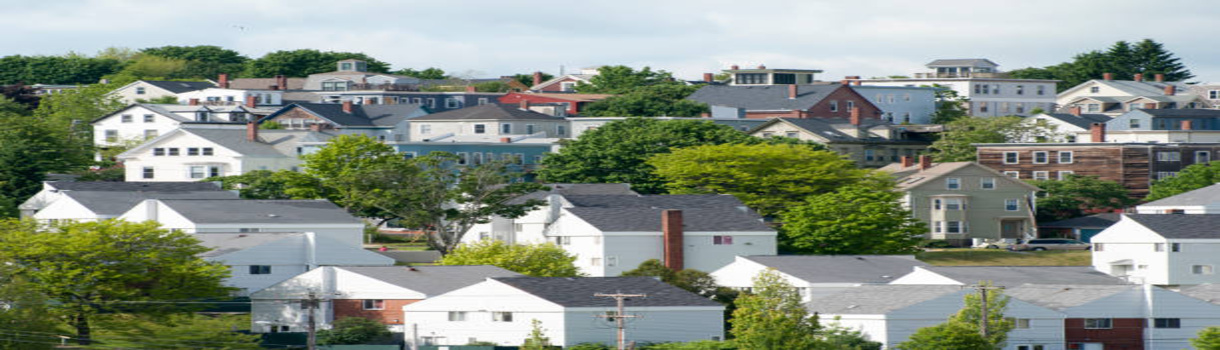
Portland's residential housing stock encompasses a genuine range of historical periods and styles. The West End holds some of the finest Victorian and Federal-period architecture in New England, with brick rowhouses, mansard-roofed Italianate homes, and stately single-family residences on tree-lined streets. Munjoy Hill and the East End carry densely settled triple-deckers and two-family homes alongside newer condominium conversions and infill development. The peninsula's Midtown neighborhoods offer Craftsman bungalows, Colonial Revivals, and mid-century ranches on quieter residential streets. Buyers moving from architecturally undistinguished suburban markets often find the quality and character of Portland's housing stock genuinely striking.
The surrounding towns range from the stately Colonial-era homes of Cape Elizabeth and Falmouth to the mill-town architectures of Westbrook and Biddeford, where brick mill buildings are being converted to residential and mixed-use developments. Sagadahoc County's Bath holds well-preserved sea captains's homes and Federal-period architecture reflecting the city's 19th-century shipbuilding prosperity.
Where in the Portland Area?
The Greater Portland region distributes residential life across five counties with genuinely different characters, price points, and everyday textures. Understanding those distinctions shapes a relocation decision in ways that property searches alone cannot accomplish.
Cumberland County
Cumberland County is the most populous county in Maine and holds Portland at its center. The county encompasses the city itself along with the surrounding towns that function as its residential suburbs, including Cape Elizabeth, Falmouth, Scarborough, Westbrook, South Portland, and Gorham. It is the region's economic and institutional core, home to Maine Medical Center, the University of Southern Maine, IDEXX Laboratories, WEX, major retail and healthcare infrastructure, and the highest concentration of professional employment in the state.
Most buyers and renters relocating to Portland will spend the majority of their search time within Cumberland County's boundaries. The range of options within the county alone, from city peninsular walkability to quiet lakeside Sebago communities, is wide enough that a thorough understanding of the county's internal geography is valuable before narrowing.
The Old Port and Downtown Portland
The Old Port, Portland's most iconic district, sits at the bottom of the peninsula where cobblestone streets run toward the waterfront and 19th-century brick commercial buildings house the restaurants, bars, boutiques, and galleries that define the city's public identity. Commercial Street along the waterfront, Exchange Street, and the surrounding blocks represent the most tourist-trafficked area of the city but also hold genuine residential options, particularly in the form of upper-floor condominiums and loft conversions in historic buildings.
Living in or adjacent to the Old Port suits buyers and renters who prioritize walkability above almost everything else and are prepared to pay a significant premium for it. Street parking is limited and dense. Nightlife noise is a genuine factor on weekend evenings. In exchange, the harbor, the best restaurant concentration in Maine, and the ferry terminal to the Casco Bay Islands are steps away. This neighborhood is best suited for young professionals, empty nesters who want genuine urban texture, and buyers whose lifestyle is centered on the city's cultural and culinary offerings.
Munjoy Hill and the East End
Munjoy Hill, the elevated peninsula neighborhood overlooking Casco Bay to the east and Portland Harbor to the south, is one of the most historically layered and currently desirable residential areas in the city. The neighborhood runs from Washington Avenue on the west to the water on all other sides, its streets densely settled with two- and three-story homes, triple-deckers, and an increasing number of condominium conversions and new infill developments.
The Eastern Promenade rings the neighborhood's edge, providing the park space, trail access, and water views that anchor daily life for thousands of residents. East End Beach, a small public beach at the foot of the hill, is a summer gathering point for kayakers, families, and dog owners. The Portland Observatory, the last remaining marine signal tower in the United States, sits at the crest of the hill and defines the neighborhood's skyline.
Munjoy Hill carries a well-documented history as a working-class immigrant neighborhood that has experienced significant gentrification over the past two decades. Median condominium prices in some buildings now exceed one million dollars, though the neighborhood's dense mix of housing types means that more accessible options exist alongside the premium units. This neighborhood is well-suited to buyers who value urban walkability, Casco Bay proximity, community character, and access to the independent restaurant and cafe scene on Washington Avenue. Families with children use the East End Community School. Remote workers and young professionals have driven much of the recent in-migration here.
The West End
Portland's West End is the city's most architecturally distinguished residential neighborhood, a largely preserved collection of brick sidewalks, Victorian and Federal-period mansions, stately rowhouses, and tree-canopied streets that run from the commercial core of Congress Street toward the Western Promenade and its sweeping views across the Fore River.
The neighborhood's building stock includes some of the finest 19th-century residential architecture in Maine, homes built during Portland's 19th-century commercial prosperity by merchants, shipping magnates, and professionals who invested in the city's grandest residential street. Many have been divided into condominiums or multi-unit conversions, making them accessible to buyers who could not afford them as single-family homes. The West End suits buyers who love historic architecture, value a quieter residential environment within walking distance of the city's cultural institutions, and are drawn to a neighborhood with deep identity and genuine permanence. It also suits buyers with the patience for older home maintenance realities.
Deering and North Portland
The Deering neighborhoods, including East Deering, North Deering, Oakdale, Woodfords Corner, and Deering Center, occupy the mainland portion of Portland north of the Back Cove and represent the city's most family-oriented, quieter residential areas. These neighborhoods were developed primarily in the late 19th and early 20th centuries as the former independent town of Deering was annexed by Portland, and they carry a settled suburban character very different from the peninsula's urban density.
North Deering in particular has spacious yards, quiet streets, a mix of single-family homes and condominiums, ample green space, and access to walking trails and multiple school options. Oakdale sits immediately adjacent to the University of Southern Maine campus, giving it a consistent student and academic population. Woodfords Corner is undergoing active investment and development along Forest Avenue. These neighborhoods suit families prioritizing more space and quieter surroundings while maintaining a Portland address and access to city amenities, as well as buyers who want a genuine neighborhood feel without the premium pricing of the peninsula.
Cape Elizabeth
Cape Elizabeth, a separate town immediately south of Portland across the Fore River, is one of the most sought-after family communities in Maine. Its school district consistently ranks among the strongest in the state, its coastline includes Portland Head Light (one of the most visited and photographed lighthouses in the country) and Two Lights State Park, and its residential character combines ocean proximity with genuine quiet and community stability.
Housing in Cape Elizabeth carries a corresponding premium, with median prices well above the Portland metro average. Single-family homes dominate the stock, lots tend to be generous, and the town's physical separation from Portland's peninsula contributes to a suburban character that is distinct from the city's neighborhoods. Cape Elizabeth is best suited to families for whom school quality is a primary consideration, buyers seeking coastal New England character with serious community infrastructure, and households from Boston-area suburbs who recognize the quality and want more land for the money.
Falmouth and Scarborough
Falmouth, on the north side of Portland along Casco Bay, is another family-destination community with a well-regarded school district, a range of waterfront and inland neighborhoods, and a residential character balancing natural beauty with suburban convenience. The town holds access to Casco Bay shoreline, trails at Mackworth Island State Park, and a community identity that is quieter and more established than the growth corridors to the south.
Scarborough, south of Portland toward Old Orchard Beach, is the county's most active new-construction market and holds the Maine Mall and substantial retail and service infrastructure along Route 1. Its schools are well-regarded, its price points run somewhat below Cape Elizabeth and Falmouth, and its location gives reasonable access to both Portland employment and York County beaches. Scarborough suits families seeking newer construction at somewhat more accessible price points while maintaining Cumberland County school quality and Portland proximity.
York County
York County lies south and southwest of Cumberland County and forms the southern reach of the Greater Portland commuter region. The county runs from the beaches of Old Orchard Beach south to Kittery on the New Hampshire border and west toward Sanford, encompassing a range of community characters from tourist-economy coastal towns to working-class cities to the genuinely prestigious historic communities of the southern coast.
For buyers priced out of Cumberland County, or for those who value ocean access and small-town character over urban proximity, York County represents the metro's most important affordability option.
Saco and Biddeford
Saco and Biddeford sit side by side along the Saco River, about 15 miles south of Portland on I-95, and together represent one of the most actively evolving real estate markets in the Greater Portland region. Biddeford in particular has attracted significant attention as young chefs, artists, and independent business owners have claimed space in its historic mill buildings, following a pattern of urban revitalization visible in its emerging restaurant scene, converted loft residences, and growing community of creative professionals.
The 2025 James Beard Award semifinalists included Jason Eckerson and Kate Hamm from Biddeford's Fish and Whistle in the Emerging Chef category, a recognition that reflects how seriously the culinary community is watching this city. Median home prices in Saco and Biddeford cluster in the $350,000 to $450,000 range, representing meaningful savings compared to Cumberland County communities at comparable distances from Portland. These cities suit buyers who want urban character, proximity to beaches, and an ownership opportunity within a commutable distance of Portland employment. Young professionals, first-time buyers, and creative-industry households have been the primary drivers of recent in-migration here.
Kennebunk and the Southern Coast
Kennebunk and neighboring Kennebunkport represent a different end of York County's residential spectrum: historically prosperous coastal communities with well-preserved 19th-century architecture, a summer resort legacy, and a year-round population that has invested seriously in the quality of its schools, civic institutions, and coastal environment. The Rachel Carson National Wildlife Refuge and Kennebunk Plains, with 1,500 acres of nature trails and rare coastal heathland, give the area outdoor resources that residents access as a daily amenity.
Kennebunk is served by Regional School District 21 alongside Kennebunkport and Arundel, a district with a strong academic reputation. Housing here trends higher than Saco and Biddeford, with a range from more accessible historic in-town properties to substantial waterfront and coastal homes at the premium end of the market. Kennebunk suits buyers who want historical depth, coastal quality of life, strong schools, and are comfortable with a Portland commute of about 30 to 40 minutes. Retiring couples and families with deep appreciation for New England's coastal heritage have historically driven this market.
Old Orchard Beach and Southern York County Affordability
Old Orchard Beach, the traditional family beach resort of southern Maine, sits between Saco and the Scarborough border and offers one of the most affordable entry points into a coastal Maine address in the entire metro region. The town is genuinely seasonal in character, with a summer economy built around its seven-mile beach, its historic pier, and the vacation visitor traffic that defines July and August. Year-round residents experience a quieter and more affordable version of Maine coastal living during the other nine months.
Properties in Old Orchard Beach include everything from seasonal cottages and beach condominiums to year-round single-family homes and small multi-family buildings, with price points running meaningfully below the metro median. For buyers who prioritize beach access and coastal character at accessible cost, and who accept the trade-off of a tourist-economy environment during peak summer weeks, Old Orchard Beach offers genuine value. It suits first-time buyers, seasonal-to-year-round converters, and small investors looking for entry-level Maine coastal real estate.
Sagadahoc County
Sagadahoc County sits north and east of Cumberland County, across the Androscoggin River, and anchors the mid-coast corridor connecting Portland to the broader Maine coastline. The county's two principal cities, Bath and Brunswick, each carry deep historical identity: Bath as one of the great shipbuilding cities of the 19th century, Brunswick as a college town whose character is shaped by Bowdoin College's 200-year presence. Together with the growing community of Topsham directly across the Androscoggin from Brunswick, Sagadahoc County represents a genuinely distinct residential option within Portland's commuter range.
Brunswick and Bowdoin College
Brunswick is the cultural and commercial anchor of the mid-coast corridor, a small city whose personality is inseparable from Bowdoin College, one of New England's most respected liberal arts institutions. The college's presence shapes everything from the quality of the local arts and lecture calendar to the community's tolerance for new ideas and people. The Bowdoin College Museum of Art and the Pickard Theater provide cultural programming that draws from both the college community and the surrounding region. Maine Street's independent businesses, cafes, and restaurants give the commercial district genuine character.
Brunswick is served by the Amtrak Downeaster, which provides direct rail service to Portland and onward to Boston's North Station. This connection gives Brunswick residents a car-optional commute option to Portland that most surrounding communities cannot offer. Median home prices in Brunswick run approximately $470,000 as of 2025, below Portland's peninsula prices while offering a college-town quality of life that many buyers find more appealing. Brunswick suits remote workers who want genuine cultural life and rail access, academic and college-affiliated households, buyers drawn to New England small-city character, and those who want Portland proximity without Portland density.
Bath
Bath carries one of the most distinctive identities in Maine: a small city whose connection to shipbuilding runs from the 17th century to the present day, where Bath Iron Works continues to build Navy vessels as part of General Dynamics and employs a large skilled-trades workforce. The historic downtown holds a well-preserved collection of 19th-century commercial and residential architecture that reflects the city's shipbuilding prosperity, and the Kennebec River waterfront anchors a civic space that residents have invested in meaningfully over the past two decades.
Bath is described by residents as a hidden gem: small enough to feel personal, substantive enough to offer genuine community infrastructure, and situated with access to Popham Beach and the Phippsburg Peninsula's remarkable coastline within a 20-minute drive. Median home prices in Bath run approximately $340,000 to $425,000, making it one of the more accessible mid-coast options. Bath suits buyers who value shipbuilding culture and working-waterfront character, skilled-trades professionals employed at Bath Iron Works or related industries, and buyers seeking historical integrity and coastal access at a price point below Cumberland County.
Topsham
Topsham sits directly across the Androscoggin River from Brunswick and functions as the county's most active suburban growth community, with newer housing developments alongside a well-regarded school system and the practical amenities of the Topsham Fair Mall commercial corridor. The town has invested in trail infrastructure, with the Androscoggin Riverwalk, Cathance River Nature Preserve, and Whiskeag Trail providing outdoor access that is both varied and genuinely good.
Topsham's proximity to Brunswick, its school quality, and its somewhat lower price points relative to Brunswick proper make it a practical option for families who want mid-coast access, good schools, newer housing options, and a reasonable commute to either Portland or Bath. Median prices in Topsham run around $425,000. The town suits families prioritizing schools and newer construction, professionals employed in the Bath-Brunswick corridor, and buyers who want outdoor access and community infrastructure without the college-town premium.
Androscoggin County
Androscoggin County anchors the northwestern edge of the Greater Portland commuter region, about 35 miles from downtown Portland along the Maine Turnpike. The county's twin cities of Lewiston and Auburn represent the most affordable urban real estate market within the region, with a history rooted in textile manufacturing and a present shaped by significant demographic diversity, civic reinvestment, and a growing recognition of the value available to buyers willing to look beyond Cumberland County's borders.
Lewiston-Auburn
Lewiston and Auburn sit on opposite banks of the Androscoggin River and function as a single economic and social unit despite being separate cities. Lewiston, Maine's second-largest city, has undergone significant reinvestment in its downtown and historic mill district over the past decade, with Bates Mill and other 19th-century textile manufacturing buildings converted to mixed-use spaces housing businesses, cultural organizations, and some residential units. Bates College, a nationally ranked liberal arts institution comparable in quality to Bowdoin, gives Lewiston an intellectual and cultural dimension that newcomers often find surprising.
The Lewiston-Auburn real estate market is among the most affordable within commuting range of Portland. Median home prices in Lewiston run approximately $300,000 to $325,000, with one-bedroom rentals starting well below $1,300 per month, figures that represent a dramatic difference from Portland peninsula pricing. The 2025 Maine housing market outlook identifies the Lewiston-Auburn market as projecting strong price appreciation, suggesting that buyers who enter now may benefit from relative value before the gap with Portland narrows further.
Lewiston-Auburn suits buyers with genuine budget constraints who still want access to the broader Portland metro region's employment base, families prioritizing ownership at accessible price points, investors seeking rental value, and remote workers who want a genuine community for the money they have. The drive to Portland is approximately 35 minutes under normal conditions.

Next Steps
Let us help!
Greater Portland rewards careful research. The difference between a West End Victorian condominium and a new-construction home in Topsham is not simply a matter of price or proximity to downtown. It is a question of neighborhood culture, school assignments, commute patterns, housing maintenance realities, seasonal rhythms, and the particular texture of daily life that each setting produces for the people living it.
A family drawn to Cape Elizabeth for its schools has entirely different research priorities than a remote worker who chose Portland for its food scene and wants to walk to the Old Port. A first-time buyer stretching to enter the market in Saco faces different questions than a Boston family relocating to Falmouth with a substantial equity deposit. A retiree drawn to Bath's historic character and coastal proximity needs different guidance than a Bowdoin affiliate settling in Brunswick.
PrimeStreet connects buyers and renters relocating to the Portland area with experienced local real estate professionals who understand these distinctions from daily practice. Whether the priority is a walkable peninsula neighborhood, a Cape Elizabeth or Falmouth family community, mid-coast character in Bath or Brunswick, accessible entry in Lewiston-Auburn, or York County coastal living, the right agent makes the difference between a search that exhausts and one that builds confidence.
Call 855-531-5347 or click Find an Agent to connect with a Greater Portland area agent ready to listen to the full picture of what matters and help match the right community to the life that belongs there.