
By Melanie Ortiz Reyes - Marketing Strategist - PrimeStreet.io
Moving There
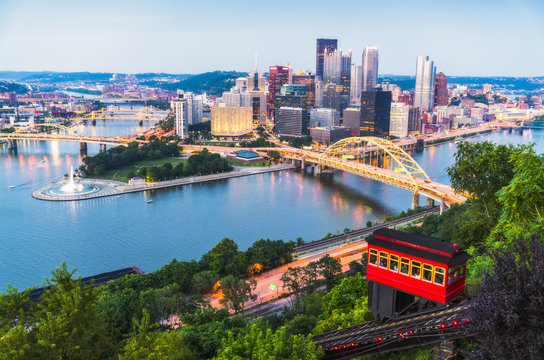
Most people's mental image of Pittsburgh was formed sometime between 1960 and 1990, during the decades when the steel industry collapsed and the city lost nearly half its population. That image is forty years out of date. The Pittsburgh that exists today bears only the most architectural relationship to the city that picture describes, and newcomers who arrive expecting a tired industrial landscape find instead one of the most genuinely livable mid-size cities in the country, with housing prices that make the comparisons almost embarrassing.
Pittsburgh sits at the confluence of the Allegheny, Monongahela, and Ohio rivers, a geography that the steel industry chose for practical reasons that now provide one of the city's most distinctive qualities. The hills, valleys, and river systems that made Pittsburgh difficult to build in gave it a topographic variety and a collection of distinct neighborhood identities that flat cities with more obvious growth conditions simply cannot manufacture. The neighborhoods here did not develop as subdivisions. They developed as separate communities that the city gradually absorbed, and many of them still carry that independent character in ways residents describe as the city's defining social quality.
The greater Pittsburgh metro area spans six counties and extends from the dense urban fabric of Allegheny County outward into the farmland and river valleys of Butler, Beaver, Washington, Westmoreland, and Armstrong counties. This guide covers the economy, housing, cost of living, and the county-by-county character of the region in the detail that a serious relocation decision requires.

What Makes Pittsburgh Different?
A City That Rebuilt Itself
The transformation Pittsburgh has undergone since the mill closures of the 1980s is not an accident or a natural recovery. It was the product of deliberate investment in specific sectors that the region's research universities made possible. Carnegie Mellon University and the University of Pittsburgh together employ more than 14,000 people and generate research in fields including artificial intelligence, robotics, computational biology, and medicine that has seeded a commercial innovation economy the envy of many peer cities. The autonomous vehicle research community that has made Pittsburgh an internationally recognized center of that technology grew directly from Carnegie Mellon's Robotics Institute and the industry relationships it developed over decades.
The University of Pittsburgh Medical Center, known throughout the region as UPMC, is one of the largest healthcare systems in the country and Pennsylvania's largest employer. It operates 40 hospitals, more than 700 outpatient locations, and a research enterprise that includes a significant transplant medicine program with a global reputation. UPMC's size and growth trajectory have reshaped the regional economy in ways comparable to what a major defense installation does for a military community, providing a stable, high-wage employment base that is effectively anchored to the city regardless of national economic conditions.
The Neighborhoods and What Makes Them Work
Pittsburgh's municipal fragmentation is unusual. Allegheny County contains more than 130 incorporated municipalities, each with its own elected government, tax structure, and service delivery. That fragmentation is both a challenge for newcomers trying to understand the system and the structural reason why Pittsburgh's neighborhoods retained such distinct characters through decades of broader urban change. When a borough has its own council, its own identity, and its own relationship to the city, it tends to fight for that identity in ways that produce real neighborhood distinctiveness rather than the gradual homogenization that centralized municipal government often accelerates.
The result is a city where the quality of specific blocks and specific neighborhoods matters enormously, and where the difference between two addresses a ten-minute drive apart can be substantial. Squirrel Hill's Jewish cultural institutions and walkable commercial district are not replicated in any neighboring community. Mount Washington's incline railways and panoramic views of the downtown confluence are a feature of that specific ridge and nowhere else. The Strip District's Saturday market culture, where the wholesale produce history of Penn Avenue has evolved into one of the country's best food corridors, is its own thing entirely.


Economy
Healthcare, Education, and Research
UPMC and Highmark, the two dominant health systems in western Pennsylvania, together employ more people in the Pittsburgh metro than any other sector. The breadth of clinical roles across 40-plus hospitals and hundreds of outpatient facilities means that virtually every healthcare specialty has employment options within a reasonable commute of any county in the metro. For nurses, physicians, pharmacists, physical therapists, medical technologists, and hospital administrators, Pittsburgh offers career depth comparable to much larger metros with a cost of living that significantly increases take-home purchasing power.
Carnegie Mellon and Pitt anchor a university research economy that attracts federal grant funding, venture capital, and industry partnership at levels that most cities their size cannot approach. The technology transfer activity from both institutions has created a startup ecosystem in the East End and Oakland neighborhoods that, while smaller than those in coastal cities, has produced meaningful companies in robotics, AI, healthcare technology, and advanced materials. For professionals relocating in research, software engineering, machine learning, or biomedical fields, Pittsburgh's employment options are more varied than the city's national profile typically suggests.
The Industrial Economy That Remains
Manufacturing did not disappear from the Pittsburgh region. It transformed. Specialty steel, aluminum, glass, and advanced materials production continue in modernized facilities, particularly in the Mon Valley communities south of the city and in Beaver County along the Ohio River. The Shell chemical plant in Beaver County's Potter Township, one of the largest industrial investments in the region's recent history, has added significant chemical process employment and created supply chain activity that reaches into multiple counties. Construction has maintained one of the region's most consistent employment bases, driven by healthcare campus expansion, technology company office development, and a residential market that has sustained demand throughout the metro.
Cost of Living
Housing and What the Budget Actually Buys
Pittsburgh's housing costs are the feature that most surprises households relocating from coastal markets. Median home prices in Allegheny County run well below national averages and dramatically below peer metros in the Northeast and Mid-Atlantic. A budget that buys a dated condominium in Washington, D.C., or a starter home in Northern Virginia buys a substantial single-family home in one of Pittsburgh's most sought-after neighborhoods. That purchasing power differential is real, and it is one of the primary reasons that Pittsburgh has appeared on so many relocation destination lists over the past decade.
The outlying counties extend the affordability ladder further. Westmoreland County and Washington County offer home prices below Allegheny County's averages with reasonable highway access to the city's employment centers. Beaver County provides river valley living at some of the region's lowest price points. Butler County's Cranberry Township has developed into an employment submarket in its own right, making it possible for households to find housing that is affordable relative to the employment corridor they need to reach.
Average apartment rents in Pittsburgh's most desirable neighborhoods, including Shadyside, Squirrel Hill, and the South Side Flats, run $1,300 to $1,900 per month for a one-bedroom unit. Rents in the surrounding municipalities and the outlying counties sit below those figures and provide the most practical entry point for households arriving without an immediate purchase plan. The rental market serves a large university student population, which creates competitive conditions in specific neighborhoods near Pitt and CMU during the late summer leasing season.
Pennsylvania Taxes and Municipal Complexity
Pennsylvania levies a flat 3.07 percent state income tax on earned income, and virtually every municipality and school district in Allegheny County adds a local earned income tax on top of that. The combined burden varies by municipality and is one reason that understanding the specific borough or township of a prospective address matters as much as understanding the county. Property taxes in Allegheny County are collected by the county, the municipality, and the school district, and the aggregate effective rate varies considerably across the county's 130-plus municipalities. Buyers who compare two homes in different school districts on a purchase price basis alone may be overlooking meaningful differences in annual carrying costs.
Real Estate Market
What Buyers Find Today
Pittsburgh's real estate market did not experience the same degree of pandemic-era appreciation that reshaped Sun Belt and coastal markets between 2020 and 2022. The city's existing affordability provided less room for dramatic compression, and the region's demographics, with a flatter population growth trajectory than the metros that saw the most dramatic price moves, moderated demand. The current market is balanced in most submarkets, with buyers able to conduct proper due diligence, negotiate inspection responses, and make decisions grounded in information rather than urgency.
Well-priced properties in Allegheny County's highest-demand municipalities, particularly the South Hills communities of Mt. Lebanon and Upper St. Clair, the East End neighborhoods of Squirrel Hill and Shadyside, and the North Hills suburb of Fox Chapel, continue to attract competitive buyer attention. The market for mid-price homes in Butler County's Cranberry Township corridor has also remained active given the employment growth in that submarket. Buyers who need to sell elsewhere before purchasing in Pittsburgh have more time and negotiating capacity than they would have found in 2021 or 2022.
Architectural Character and Neighborhood Types
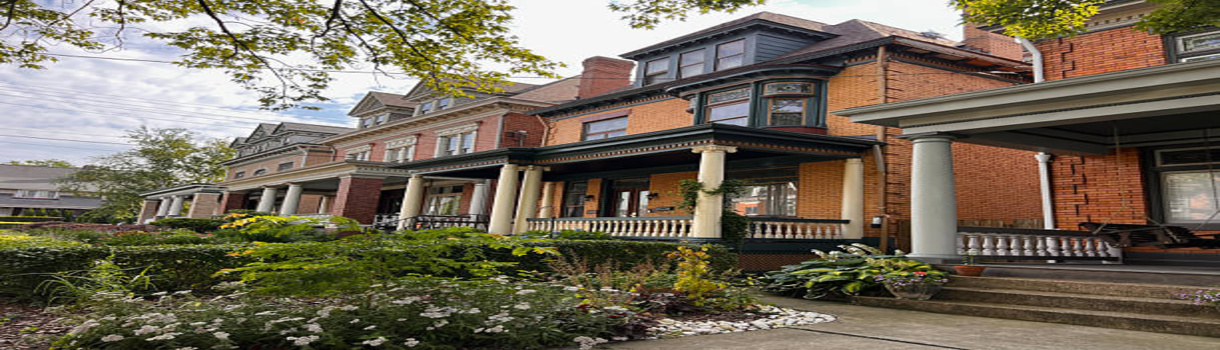
Pittsburgh's older neighborhoods contain a remarkable collection of Victorian, Edwardian, and early 20th-century residential architecture. The brick rowhouses of the South Side, the craftsman homes of Lawrenceville, the Romanesque Revival mansions along Millionaire's Row in the East End, and the limestone-clad houses on the tree-lined streets of Squirrel Hill and Shadyside give the established neighborhoods a visual richness that newer construction cannot replicate. These properties attract buyers who value character and walkability, and they come with the mechanical systems, maintenance requirements, and historic preservation considerations that older construction involves.
The municipalities surrounding Pittsburgh's core contain the postwar suburban housing built between the 1940s and 1980s that serves buyers seeking more space, newer mechanical systems, and larger lots without the premium of the historic East End neighborhoods. Mt. Lebanon, Upper St. Clair, Peters Township, and the North Hills communities of Allison Park and McCandless offer this market segment in Allegheny and Washington counties at prices that still compare favorably to suburban equivalents in nearly any other major metro. New construction in the Pittsburgh market concentrates in Butler County and in the eastern Allegheny County municipalities where land for subdivision development remains available.
Where in the Pittsburgh Area?
The Pittsburgh metropolitan area covers six counties and encompasses terrain ranging from the dense urban streetscapes of the city's historic neighborhoods to the river valley farmland of Armstrong County and the wooded ridgelines of Westmoreland County. Each county offers a distinct version of western Pennsylvania life, and understanding those distinctions is the foundation of a relocation decision that holds up over time.
Allegheny County
Allegheny County is Pittsburgh. The city proper is the county's largest municipality, but it is surrounded by more than 130 independent boroughs and townships, each with its own identity, governance, school district, and price structure. The county is the cultural, economic, and demographic core of the metro, and choosing a specific municipality within it requires more research than simply choosing the county itself. Zip codes and neighborhood names are starting points. The borough or township, its school district, and its specific tax levies are the information that supports a real decision.
The East End: Squirrel Hill, Shadyside, and Lawrenceville
The East End neighborhoods, anchored by the Squirrel Hill and Shadyside commercial corridors and extending into the rapidly developing Lawrenceville district along Butler Street, represent Pittsburgh's most sought-after residential territory for young professionals and established households who value walkability and neighborhood character. Squirrel Hill carries a strong Jewish cultural identity rooted in institutions that have served the community for a century, including synagogues, delis, and community organizations that give the neighborhood a social cohesion remarkable for an urban district in a mid-size American city. Shadyside's Walnut Street offers boutique retail and dining of a quality that surprises visitors who arrive with modest expectations. Lawrenceville has developed from a working-class strip into one of the most active independent restaurant and creative business corridors in the region.
The South Hills: Mt. Lebanon and Peters Township
The South Hills communities, reached from downtown Pittsburgh via the light rail system known locally as the T, represent the most consistent choice for families prioritizing school quality and neighborhood stability. Mt. Lebanon, served by a school district that routinely ranks among Pennsylvania's strongest, offers walkable commercial districts in the Castle Shannon and Beverly Road corridors, housing stock ranging from brick colonials to Victorian foursquares, and a community culture with deep roots in the parish and civic organizations that have anchored the neighborhood for generations. Peters Township in Washington County, just south of the Allegheny County line, has grown into a competitive alternative with newer construction, strong schools, and access to the emerging employment base along the US-19 and I-79 corridors.
The North Shore and the Strip District
The North Shore, developed along the Allegheny River adjacent to PNC Park and Acrisure Stadium, has become a mixed-use district where newly constructed apartment buildings and a growing restaurant and entertainment scene serve a population that values proximity to downtown without city living intensity. The Strip District, a ten-minute walk east of downtown along Penn Avenue, has evolved from its wholesale produce and meat market origins into one of the most distinctive food and retail corridors in the region. Saturday mornings at the Strip are a Pittsburgh institution, drawing residents from every neighborhood and county for a combination of specialty grocers, butchers, bakeries, coffee roasters, and restaurants that reflects the region's ethnic heritage more directly than almost any comparable destination.
Butler County
Butler County sits north of Allegheny County along the I-79 corridor and has become the metro's primary growth frontier for households seeking newer construction, lower land costs, and access to an expanding submarket employment base without the complexity of Allegheny County's municipal fragmentation. Cranberry Township has attracted corporate campuses, medical facilities, and retail development that have made it a self-contained employment and services destination for a substantial portion of the county's population.
Cranberry Township and the I-79 Corridor
Cranberry Township is the most active residential market in Butler County and one of the most active in the metro for new construction at accessible price points. The community's position at the intersection of I-79 and PA-228 gives it direct highway access to downtown Pittsburgh, Pittsburgh International Airport, and the growing employment nodes along the corridor itself. School quality in the Seneca Valley School District has made Cranberry Township a consistent choice for families relocating from outside the region who need to make a quick decision in an unfamiliar geography and want a defensible starting point.
Butler City and Surrounding Communities
Butler, the county seat, carries a working small-city character with a functioning downtown, a community college, and a healthcare infrastructure that serves the county's broader population. The surrounding communities of Zelienople, Harmony, and Saxonburg offer a more rural character at price points well below the Cranberry Township market, appealing to households who prioritize land, community scale, and a pace of daily life that the township's commercial intensity cannot provide.
Beaver County
Beaver County occupies the Ohio River valley west of Pittsburgh and carries a community character shaped by the manufacturing and river commerce history that defined western Pennsylvania for more than a century. The county has experienced economic pressure as traditional industry contracted, but the Shell chemical complex in Potter Township represents a significant reinvestment in the county's industrial base and has brought infrastructure attention and employment that has stabilized portions of the local economy.
Communities like Beaver Falls, Ambridge, and Aliquippa offer housing at some of the metro's most accessible price points for buyers who want a manageable commute to Pittsburgh employment and are comfortable with the working-community character that these river towns maintain. The county's position along the Ohio River, with its recreational boating, fishing, and scenic valley landscapes, is an underappreciated quality-of-life asset that residents consistently mention as a reason they stay.
Washington County
Washington County lies south of Pittsburgh along the I-79 and US-19 corridors and provides a combination of suburban growth areas and genuinely rural character that accommodates a wide range of household needs. Peters Township, in the county's northern tier adjacent to the Allegheny County line, has developed as one of the metro's most sought-after family destinations with new construction, strong schools, and a community investment in parks and recreation that reflects the growth-era population arriving from other parts of the region and from outside Pennsylvania.
Canonsburg, Washington itself, and the communities in the county's central and southern sections carry a more traditional small-city character with commercial corridors that have been shaped by both the decline of older industries and the new natural gas activity that has brought Marcellus Shale development to the county's subsurface geology. For households that want land, rural character, and eventual proximity to Pittsburgh, the southern portions of Washington County provide options at price points unavailable anywhere closer to the city.
Westmoreland County
Westmoreland County stretches east of Pittsburgh along the Pennsylvania Turnpike corridor and offers a balance of established suburban communities near the highway and genuinely rural landscapes in its eastern and southern sections. Greensburg, the county seat, functions as a small city with its own employment base, downtown commercial district, and healthcare infrastructure in the Excela Health system. Murrysville, in the county's western tier adjacent to Allegheny County, has developed as a suburban destination with strong schools and a community character that attracts families seeking more space than the inner-ring communities provide.
The Laurel Highlands, in the county's eastern sections, offer a mountain landscape with state parks, ski resorts, and recreational properties that appeal to buyers seeking acreage and natural amenity access within a reasonable drive of the Pittsburgh employment base. Falling Water, Frank Lloyd Wright's masterwork along Bear Run in the Laurel Highlands, draws visitors from around the world and sits within a region that year-round residents consider one of the most scenic in the eastern United States.
Armstrong County
Armstrong County lies northeast of Pittsburgh along the Allegheny River and represents the metro's most rural reach. Kittanning, the county seat, is a small city on the Allegheny River with a community hospital, a functioning downtown, and a surrounding landscape of wooded ridges, creek valleys, and farmland that attracts households seeking acreage and rural quiet within a commutable distance of Allegheny or Butler county employment centers.
Housing and land prices in Armstrong County are among the most accessible in the metro, and buyers who can absorb a 45-to-60-minute commute to the city find properties here with acreage, outbuildings, and rural character at price points that are exceptional by any regional comparison. The Allegheny River corridor through the county offers fishing, paddling, and camping access that rewards the residents willing to live far enough out to experience it as a routine part of their week rather than an occasional excursion.

Next Steps
Let us help!
Pittsburgh rewards households who take the time to understand the specific municipality rather than just the broader neighborhood name or county. The difference between two addresses in adjacent boroughs can mean completely different school districts, tax rates, and service levels. The difference between Allegheny County's urban neighborhoods and Butler County's Cranberry Township corridor is measured in more than miles. It is measured in commute patterns, community character, housing vintage, and the particular quality of daily life that each environment produces.
A family relocating for a UPMC position at the Shadyside campus faces a different location calculation than a software engineer whose office sits in a Cranberry Township corporate park. A couple retiring from the Mid-Atlantic who want walkability and cultural access has different priorities than a family of four that needs four bedrooms, a garage, and a school district with strong AP programming. A buyer drawn to the Victorian character of a Lawrenceville rowhouse carries different research requirements than one evaluating a new construction home in Peters Township.
PrimeStreet connects relocating buyers and renters with experienced Pittsburgh-area real estate professionals who understand these distinctions from daily practice. Whether the priority is a walkable East End neighborhood close to the university research corridor, a South Hills community with top-ranked schools, an affordable Beaver County or Westmoreland County entry point, or an Armstrong County acreage property with river access, the right local agent is the difference between a search that exhausts and one that delivers. Call 855-531-5347 or click Find an Agent to connect with one of our top Pittsburgh agents.