
By Melanie Ortiz Reyes - Marketing Strategist - PrimeStreet.io
Move to New Haven
Your Complete Relocation Guide to Connecticut's Elm City
New Haven answers to several names. Locals call it the Elm City, a nod to the towering canopy that once covered its gridded streets and still shades its parks. The university crowd calls it Yale's backyard. Food writers call it the apizza capital of America. And the people who actually live here, who walk through East Rock on October mornings and wait for a table at a Wooster Street pizzeria on a Friday night, tend to call it one of the best places they have ever landed.
The New Haven metro stretches across New Haven County and into surrounding communities that range from Long Island Sound shoreline towns to inland valley cities. The metro's population sits at roughly 580,000 people. At its core is a dense, walkable city shaped by Yale University's 320-year presence, a medical research economy that ranks second in New England, and a neighborhood culture that resists easy categorization. This is not a college town in the familiar sense, nor a quiet New England village, nor a scaled-down version of Boston or New York, though it shares DNA with all three.
What draws people to New Haven is something harder to package than a single amenity. The arts scene operates at a level that surprises newcomers from much larger cities. The restaurant landscape is genuinely serious, anchored by the coal-fired pizza tradition that put the city on national food maps decades ago. Two miles of shoreline at the edge of the city open toward Long Island Sound. And the streets themselves, laid out in a nine-square colonial grid that dates to 1638, give daily life a sense of order and walkability that residents take for granted until they move somewhere else.
New Haven sits roughly 80 miles from midtown Manhattan and 140 miles from Boston. Metro-North and Amtrak service from Union Station makes the city a legitimate option for remote workers and hybrid commuters who want a richer urban life at a fraction of what the tri-state area costs.
What Makes New Haven Special?
Yale and the University City Experience
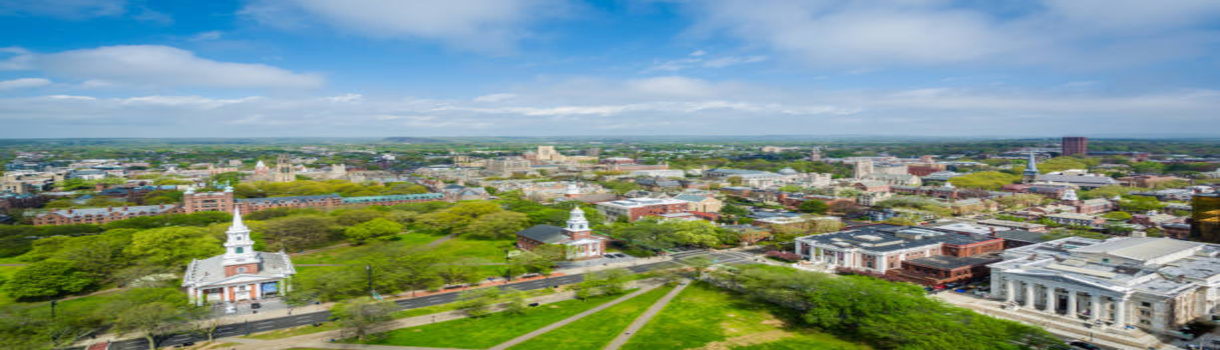
Yale University has occupied the center of New Haven since 1701, making it the third-oldest university in the United States. Its campus is not separated from the city behind gates but woven through downtown blocks, with Gothic stone buildings and open courtyards that residents use as shortcuts and lunch spots. The Beinecke Rare Book and Manuscript Library, a windowless marble box housing one of the world's great rare book collections including a Gutenberg Bible, sits open to the public on a central plaza. The Yale University Art Gallery, the oldest university art museum in the Western Hemisphere, offers free admission to work by Monet, Picasso, Hopper, and Warhol.
The Yale Center for British Art, directly across Chapel Street, holds the largest collection of British art outside the United Kingdom, also free and open to the public. The Yale Peabody Museum reopened in 2024 after a major renovation, restoring one of New England's finest natural history institutions to full operation. These are not weekend tourist stops but everyday resources for people who live in New Haven, and residents use them accordingly.
Beyond the buildings, Yale generates an intellectual and social energy that saturates the city's life. Lectures, performances, gallery openings, and public symposia happen constantly. The Yale Repertory Theatre and Yale School of Drama produce work that regularly transfers to Broadway. The Yale School of Music fills Woolsey Hall with concerts. The result is a city where the pace of public ideas runs faster than its size would suggest, and where a curious person can fill a week with genuinely stimulating cultural encounters without spending money.
Apizza, the Food Scene, and the Plate in Front of You
New Haven's culinary identity begins and ends with apizza, the coal-fired thin-crust style that the city developed in the early twentieth century and still executes better than anywhere else. Frank Pepe Pizzeria Napoletana has operated on Wooster Street since 1925. Sally's Apizza, just down the block, opened in 1938. Modern Apizza on State Street, the third of the city's founding trio, has held its place since 1934. These are not heritage restaurants preserved in amber but genuinely beloved institutions that draw lines on weeknights, have devoted regulars who have eaten there for forty years, and continue to set the standard against which every other pizza in America is measured.
The newer generation of Wooster Street restaurants builds on that foundation without being trapped by it. Gioia, which opened in the former Tony and Lucille's space at 150 Wooster Street, brings wood-fired meats, fresh pasta, and a gelateria to a neighborhood already rich with Italian food history. Across the city, the restaurant landscape runs from Claire's Corner Copia, the vegetarian institution on Chapel Street that has served New Haven since 1975, to the elevated hotel dining at Heirloom at the Study at Yale.
Westville's restaurant corridor along Blake Street has quietly developed into one of the city's most interesting food destinations, with Dominican bakeries, Middle Eastern kitchens, and neighborhood spots that reflect the diversity of the community around them. The Atticus Bookstore Cafe on Chapel Street has fed the literary crowd since 1975. Toad's Place, the legendary live music venue on York Street, has hosted everyone from U2 to Bob Dylan in an era when it was still possible to see a world-famous act in a room that holds under a thousand people.
Neighborhoods as Places to Actually Live
East Rock is the neighborhood that residents from other parts of the country most often cite when they explain why they stayed in New Haven. The 425-acre park for which it is named anchors the community at the north end, with a basalt ridge that rewards the thirty-minute climb with views that take in Long Island Sound on clear days. The streets below are lined with Victorian houses, two-family homes, and apartments occupied by a mix of Yale graduate students, hospital employees, families, and longtime residents who have watched the neighborhood appreciate from the inside.
Wooster Square sits between downtown and East Rock, occupying the blocks around a formal park planted with Japanese cherry trees that bloom in early April and draw a neighborhood festival each year. The architecture is nineteenth-century Italianate and Greek Revival, preserved in a historic district that prevented the demolition that took much of New Haven's older housing stock in the mid-twentieth century. The streets within walking distance of the park contain some of the city's most consistently desirable housing.
Westville, on the western edge of the city, carries a reputation as New Haven's art neighborhood. Galleries, studios, and an antique district along Whalley Avenue share blocks with coffee shops and longtime family restaurants. The West River runs along its eastern edge, and the neighborhood's mix of homeowners and renters skews toward creative professionals, educators, and families who want more space than East Rock offers at a somewhat more accessible price.
Parks, Water, and Getting Outside
East Rock Park's summit trail is the most dramatic outdoor experience within the city, but it is far from the only one. West Rock Ridge State Park on the city's western border offers additional climbing and trail running in a landscape that feels genuinely wild within minutes of downtown streets. Edgerton Park, a nine-acre formal garden preserved from a Gilded Age estate, opens each spring with restored greenhouses and trails through a planted landscape. Lighthouse Point Park, on the eastern shore of New Haven Harbor, provides a public beach, a historic carousel, a raptor migration observation point, and a picnic lawn that fills on summer weekends.
The Long Island Sound shoreline becomes a full recreational resource once you move into the surrounding towns. Short Beach in Branford, Hammonasset Beach State Park in Madison with its two miles of public sand, and multiple town beaches along the Guilford and Madison coastlines give residents of the metro area genuine beach access during the summer months. The Quinnipiac River and its associated marshes support kayaking and birding within minutes of downtown.
The New Haven Green, the original town common at the center of the nine-square grid, functions as the city's public living room. Three churches from the eighteenth and early nineteenth centuries frame its eastern edge. Farmers markets, summer concerts, political gatherings, and quiet lunch hours all happen on the same sixteen-acre rectangle that has served this purpose for nearly four centuries.
Theater, Music, and the Arts
The Shubert Theater on College Street has presented touring Broadway productions since 1914. Shows including Oklahoma, My Fair Lady, and The Sound of Music had their world premieres here before heading to New York. The theater still operates as a major presenter of touring productions and one-night performances. Long Wharf Theatre, a regional professional company, has earned a Tony Award for outstanding regional theater and produces seasons of new and classic work. Yale Repertory Theatre, the professional wing of the drama school, stages productions directed and designed by faculty and students who include some of the most active working artists in American theater.
The International Festival of Arts and Ideas each June fills the city with two weeks of free and ticketed performances, lectures, and installations from artists around the world. The New Haven Jazz Festival draws performers and audiences to the Green each summer. ARTSPACE, the contemporary art gallery on Orange Street, has supported emerging and mid-career artists for decades. The city's gallery density on Chapel Street and through the Ninth Square neighborhood makes First Fridays a legitimate evening activity for people who take visual art seriously.



Economy
New Haven's economy organizes itself around two dominant anchors that together account for a majority of high-wage employment in the region. Yale University employs over 15,000 people directly, making it one of Connecticut's five largest private employers. Yale New Haven Health System, the clinical arm affiliated with the university, employs over 29,000 people across its hospital network and ranks as the state's second-largest private employer. Together, these two institutions give the city an economic stability that most comparably sized American cities do not have.
The stability matters because Yale and Yale New Haven Health do not lay people off en masse during recessions, do not relocate their operations in search of lower costs, and do not depend on commodity prices or quarterly earnings cycles. They are, in the most literal sense, permanent institutions. That permanence shapes everything from housing demand to retail patterns to the kinds of professional services that find a market in the city.
Bioscience: New England's Second Hub
Yale's research enterprise has seeded the city's bioscience cluster over several decades. New Haven now ranks as the second-largest bioscience hub in New England, trailing only the Boston-Cambridge corridor. The region ranks fourth in the country per capita in bioscience patents and third in academic research and development spending. Science Park, built on the footprint of the former Winchester Arms factory, has been converted into a research incubator hosting more than 70 companies and laboratories. The 136-acre Yale West Campus provides additional lab space for research spinouts.
Alexion Pharmaceuticals, the rare disease drug developer acquired by AstraZeneca, maintains significant operations in New Haven. Arvinas, a Yale spinout developing targeted protein degradation therapies, has grown from a university startup into a publicly traded clinical-stage company with hundreds of employees. BioHaven, the migraine drug developer, was acquired by Pfizer in 2022 in a transaction that validated the region's ability to develop globally significant pharmaceutical companies. The Connecticut bioscience sector attracted roughly $635 million in investment in 2023, and Yale separately committed $150 million to AI research in medicine and life sciences.
For scientists, clinicians, biostatisticians, regulatory professionals, and research administrators, New Haven offers career depth that few cities of its size can match. The pipeline of graduate talent from Yale School of Medicine, Yale School of Public Health, and the cluster of partner institutions creates a labor market unusually well-suited to life sciences careers at every level.
Healthcare Employment Across the Metro
Yale New Haven Health operates Yale New Haven Hospital, Bridgeport Hospital, Greenwich Hospital, Lawrence and Memorial Hospital, and Westerly Hospital. The system's footprint across Connecticut and Rhode Island creates employment across clinical, administrative, technology, and research functions that distribute throughout the region rather than concentrating solely in New Haven proper. The Yale School of Medicine trains physicians and researchers who, at meaningful rates, remain in the region after completing their training. Griffin Hospital in Derby, MidState Medical Center in Meriden, and Milford Hospital serve communities across New Haven County.
Manufacturing, Defense, and the Naugatuck Valley
New Haven County's manufacturing heritage runs deep. Eli Whitney invented the cotton gin and pioneered interchangeable parts manufacturing here. The Winchester Repeating Arms Company operated at what is now Science Park for over a century. That tradition continues in the Naugatuck Valley communities of Derby, Ansonia, Shelton, and Seymour, where precision manufacturing, defense contracting, and industrial production remain significant employers. Kaman Aerospace, headquartered in Bloomfield but with substantial operations throughout the state, represents the kind of advanced manufacturing that draws on Connecticut's long technical workforce tradition.
The education sector beyond Yale employs thousands more across Southern Connecticut State University, Quinnipiac University, University of New Haven, Gateway Community College, and multiple private secondary schools. These institutions collectively serve as economic anchors in their own communities while providing pipeline employment for educators, administrators, and support staff throughout the county.
Cost of Living Realities
Connecticut consistently ranks among the more expensive states in the country, and New Haven County sits in that tradition without apology. The cost picture is nuanced, though, in ways that matter for relocation decisions. The city of New Haven itself, with a median home value around $325,000 to $365,000 depending on the data source and timing, actually sits below the national median. Suburban towns like Madison, Guilford, and Woodbridge carry significantly higher price tags. The county average of roughly $395,000 reflects the premium that attaches to strong school systems and shoreline access in those outlying communities.
Buyers relocating from New York City, Boston, or even Fairfield County frequently discover that New Haven's urban core offers remarkable value relative to comparable walkable neighborhoods in those markets. A Wooster Square Victorian that would list for well over a million dollars in Brooklyn sells for a fraction of that price in New Haven.
Connecticut's property taxes require careful attention before any purchase decision. The state's effective property tax rate of roughly 1.92 percent ranks third-highest in the country. In the city of New Haven, the mill rate generates tax bills that can be substantial even on moderately priced homes. Suburban towns vary considerably: lower mill rates in towns like North Haven and Orange reflect stronger commercial tax bases and often mean lower actual tax bills despite similar or higher home values. The calculation of what you will actually pay requires looking at the specific mill rate in the specific municipality, not county averages.
State income tax runs on a graduated scale from 2 percent to 6.99 percent, with a top rate that kicks in at relatively modest income levels compared to some neighboring states. Connecticut does not have local income taxes, and the state sales tax is a flat 6.35 percent with no local additions. Groceries are exempt. Prepared food is taxable. The overall state and local tax burden, measured as a share of household income, runs meaningfully above the national average.
The transit picture provides genuine cost relief for households positioned to use it. Metro-North's New Haven Line runs express trains to Grand Central Terminal, with peak-period trips ranging from 80 to 100 minutes. Amtrak's Northeast Regional and Acela service through Union Station adds options for Boston and Washington travel. Shore Line East provides east-west commuter rail service to shoreline towns. For households that reduce or eliminate a car, the transit access meaningfully offsets housing and tax costs. Within the city, parking is generally available and often free in residential neighborhoods outside the immediate downtown core.
Utilities run near or slightly above national averages, reflecting New England's energy costs. Heating bills in winter are a real budget item that residents relocating from the South or California may underestimate. Renter costs within the city average roughly $1,600 to $2,000 for a two-bedroom apartment depending on neighborhood and unit quality, with downtown and East Rock commanding premiums. Waterfront and shoreline towns carry the region's highest rents.
Real Estate Market
The New Haven County real estate market entered 2025 with momentum that has characterized Connecticut more broadly since 2020. Median sale prices in the county climbed to roughly $395,000, up nearly 10 percent year over year. Well-priced homes in desirable neighborhoods sell in days, frequently above asking price. The city of New Haven itself, somewhat buffered from the most heated suburban competition, shows a median closer to $325,000 to $365,000 with longer average days on market than the county's more sought-after suburban towns.
Inventory has gradually increased from the historic lows of 2021 and 2022, giving buyers marginally more choices and negotiating room. But this remains a seller-favorable market in most price ranges across most neighborhoods. Buyers entering from outside Connecticut sometimes underestimate how quickly good properties move, particularly in Guilford, Madison, Hamden, and Branford, where demand from families with school-age children is consistent and intense.
The migration patterns driving Connecticut's market include significant inflow from New York City and suburbs, with New Haven County capturing buyers who want shorter commutes or work remotely and need more space than the tri-state area provides at comparable cost. Yale-affiliated relocations add a steady stream of buyers who arrive with specific neighborhood preferences and defined timelines. Bioscience and healthcare employment growth brings professionals from across the country who discover the market's relative affordability compared to Boston.
Architectural Character Across the Metro
New Haven's housing stock tells three hundred and eighty years of architectural history in concentrated form. The city's oldest surviving residential buildings date to the eighteenth century. Victorian-era triple-deckers and two-family homes fill the working-class neighborhoods that developed around manufacturing employment after the Civil War. Queen Anne and Craftsman houses line the streets of East Rock and Westville. Wooster Square's intact nineteenth-century streetscapes earned National Register recognition in 1971. Downtown's Ninth Square neighborhood mixes converted nineteenth-century commercial buildings with newer residential construction.
Suburban architectural character shifts by decade of development. Hamden and North Haven carry substantial mid-century ranch and split-level stock from the 1950s and 1960s. Orange and Woodbridge feature colonials and Capes on wooded lots that feel separated from suburban density. The shoreline towns of Guilford and Madison mix historic New England center-chimney colonials, Greek Revival farmhouses, and twentieth-century beach cottages alongside newer construction. Branford's Short Beach neighborhood clusters small cottages that began as seasonal homes and have been increasingly converted to year-round use.
Where in New Haven?
The question of where to live in the New Haven metro involves more trade-offs and nuance than the geography might suggest. School district quality, commute patterns, property tax rates, proximity to Yale or the hospitals, and personal preferences about urban density all point toward different communities. Here is what each area offers.
The City of New Haven
The city itself, with its nine-square downtown grid and surrounding neighborhoods, offers the metro's most walkable, culturally dense, and transit-accessible living. Residents walk to restaurants, galleries, university buildings, the farmers market on the Green, and Union Station for train travel. The trade-offs are well-documented: New Haven's public schools require careful research by neighborhood and program, and certain areas of the city carry elevated crime rates that concentrate in specific corridors rather than spreading uniformly. Prospective residents should examine specific neighborhood data rather than city averages.
East Rock and Wooster Square
These two neighborhoods hold the city's most consistently desirable residential real estate. East Rock's Victorian housing stock, proximity to the park, and mix of long-term owners and Yale-affiliated renters creates a neighborhood with genuine stability and character. Two-family homes here serve owners who rent one unit to offset carrying costs, a strategy common across the city's older housing stock. Wooster Square's historic district status protects its streetscape and contributes to values that have appreciated steadily. The neighborhood's proximity to downtown and to the pizza institutions of Wooster Street make it a starting point for many people exploring New Haven living.
Westville
Westville offers more space per dollar than East Rock, a slightly calmer street environment, and a neighborhood arts identity that has survived real estate pressure. The Westville Village Historic District along Blake Street and Whalley Avenue provides walkable retail and dining that residents rely on daily. The neighborhood draws educators, artists, and families who want the walkability of East Rock without the premium pricing. West Rock Park, accessible directly from several Westville streets, provides hiking immediately outside the door.
Fair Haven and The Hill
Fair Haven, along the Quinnipiac River, offers some of the city's most affordable housing with an active revitalization effort underway. The neighborhood's Latin American and Caribbean cultural character shapes its restaurants, markets, and community events. First-time buyers willing to invest in the neighborhood's trajectory often find older homes at price points that have disappeared elsewhere in the city. The Hill, one of New Haven's oldest neighborhoods adjacent to Yale New Haven Hospital and the medical school campus, has seen renewed investment tied to the hospital's growth and the city's Hill-to-Downtown redevelopment plan.
Inner Suburbs: Hamden, West Haven, and East Haven
Hamden
Hamden, directly north of New Haven along several major corridors, serves families seeking better-rated public schools and more residential space while maintaining easy access to Yale and the hospitals. The town covers a large area with distinct characters: Whitneyville, the historic neighborhood around Eli Whitney's factory site, carries a walkable small-town feeling. Spring Glen runs toward North Haven with larger lots and newer construction. Hamden's school system, while not the county's top performer, consistently outranks New Haven's and offers magnet school options. Housing runs from mid-century ranches and splits to colonials and newer construction.
West Haven
West Haven sits directly west of New Haven along Long Island Sound, offering beach access, lower entry prices, and a city of 55,000 with its own identity that includes the University of New Haven campus. The city's beach neighborhood at Savin Rock provides a waterfront community with a park, restaurants, and a public beach that residents use year-round. Housing costs are the most accessible of the immediate suburbs, attracting buyers who prioritize value and beach proximity over school district reputation. Commutes into New Haven remain very short.
East Haven
East Haven occupies the shoreline east of New Haven, offering similar value positioning to West Haven with a somewhat different character. The town features Short Beach and other water access points, established suburban neighborhoods, and housing costs below the county average. The Annex neighborhood, historically part of New Haven, sits along the Quinnipiac River and carries a working-class residential character. East Haven attracts buyers who want manageable costs and harbor access without a long commute, including healthcare workers at Yale New Haven Hospital who find the reverse commute straightforward.
North Haven CountyNorth Haven County: North Haven, Wallingford, and Meriden
North Haven
North Haven sits directly north of Hamden along Interstate 91, providing convenient highway access to both New Haven and Hartford employment. The town has maintained a residential character without the commercial sprawl that characterizes some other corridor communities. School quality consistently earns high marks, and housing includes a full range from mid-century ranch homes to newer construction. The town's commercial tax base keeps property tax rates meaningfully below New Haven's city rate despite comparable home values in many price ranges.
Wallingford
Wallingford straddles the midpoint between New Haven and Hartford, making it a logical choice for households with one person commuting to each city. The town's Choate Rosemary Hall boarding school gives it an educational identity beyond its public system. Downtown Wallingford has invested in streetscape improvements and supports local dining and retail alongside chain options. Housing runs considerably more affordable than the shoreline towns at comparable or better square footage, and the school system earns strong ratings. The Wallingford Electric Division, the town's municipal utility, keeps electricity rates below the regional average, a genuine budget advantage that residents notice over time.
Meriden
Meriden, the largest city in the northern portion of New Haven County, offers the region's most accessible entry-level housing. The city is undergoing gradual downtown revitalization, with the completion of a major flood control and park project along the Quinnipiac River creating new public green space in the city center. For buyers who need maximum value and can tolerate a longer commute to coastal employment, Meriden delivers single-family homes at prices that represent a fraction of shoreline costs. Meriden's location at the intersection of Interstate 91 and Route 15 makes it accessible to both New Haven and Hartford employment corridors.
Shoreline Towns: Branford, Guilford, and Madison
The towns east of New Haven along Long Island Sound represent the metro's most desirable and most expensive suburban communities. Consistent demand from families with school-age children, retirees downsizing from larger properties, and buyers attracted by coastal access has pushed prices in these communities well above the county average. All three towns earn strong school ratings, maintain historic village centers, and provide beach access as a part of daily life rather than a weekend destination.
Branford
Branford begins just east of New Haven and provides the shortest shoreline commute for Yale or hospital employees. The town center around the Branford Green maintains genuine New England village character with a farmers market, local shops, and restaurants. The Stony Creek neighborhood, built around a small harbor that serves the Thimble Islands, provides one of the region's most distinctive addresses with summer ferry access to the tiny inhabited islands offshore. Housing in Branford runs from modest older colonials in inland neighborhoods to waterfront properties commanding significant premiums along Pine Orchard and other coastal areas.
Guilford
Guilford's town green, surrounded by colonial and federal-era buildings and anchored by a Congregational church that has occupied the space since the seventeenth century, provides a context for daily life that people who move here often describe as the reason they stayed. The town's school system earns consistently strong ratings. The shoreline, with private and semi-private beach access points, makes summer weekends feel like a different kind of vacation from the city. Housing prices reflect this desirability: Guilford is among the county's most expensive suburban markets, with colonial and Cape-style homes on wooded lots and waterfront properties well above the county median.
Madison
Madison carries Guilford's character at similar prices with the addition of Hammonasset Beach State Park, Connecticut's largest public beach, accessible to all residents. The two-mile beach and surrounding marshland provide outdoor recreation on a scale that private beach access cannot replicate. Madison Center, the compact village with its green, library, and local shops, functions as a genuine community gathering place rather than a commercial strip. The town's school system ranks among the county's strongest. Retirees and families with children compete for the same limited housing stock, which keeps inventory tight and prices firm.
Naugatuck Valley: Derby, Ansonia, Shelton, and Naugatuck
The communities along the Naugatuck River valley to the northwest of New Haven offer the county's most affordable housing within the larger metro reach. These are working-class industrial cities and towns with manufacturing heritage, recent investment in downtown revitalization, and housing costs that allow buyers with modest budgets to achieve homeownership with manageable commutes to New Haven employment.
Derby and Ansonia, the valley's two smallest cities, have undertaken downtown revitalization with some success. Shelton, across the river in Fairfield County, offers newer suburban development at accessible prices with a Housatonic River setting and growing restaurant scene. Naugatuck provides single-family homes in residential subdivisions at prices that represent the low end of the broader county market. Buyers willing to drive thirty to forty minutes reach New Haven's full employment and cultural resources from communities where a family budget goes considerably further.

What Now?
Let us help you find your place here
After reading through what the New Haven metro offers, the practical question is always the same: which community actually fits your life, your school needs, your commute, your budget, and the version of New England living you have in mind? There is no universal right answer. A bioscience researcher joining a Yale spinout may want East Rock for the walk to the lab. A family relocating from New York may be looking at Guilford for the school system and the shore. A healthcare worker at Yale New Haven Hospital may find West Haven's combination of cost and beach access exactly right.
PrimeStreet connects buyers and renters with experienced local real estate professionals who know this market at the neighborhood level, not just the county average. Whether the goal is a Victorian two-family in Wooster Square, a colonial in Guilford with a view of the Sound, a starter home in Wallingford, or a New Haven city condo within walking distance of everything, the right agent makes a significant difference in what you find, how quickly you find it, and what you pay.
Call 855-531-5347 or click "Find an Agent" below. A team member will take time to understand your timeline, your priorities, and the specific trade-offs you are working with, then connect you with an agent who has the depth of local knowledge to guide you well.
Before you decide, visit more than once. Come on a weekday and a weekend. Walk the East Rock trail in the morning and wait for a table at Frank Pepe's that night. Drive the commute from the suburb you are considering at the time of day you would actually drive it. Talk to residents about what they find hard alongside what they love. The people who thrive in New Haven tend to be people who found it rather than people who settled for it. Come and see if it finds you.