
By Melanie Ortiz Reyes - Marketing Strategist - PrimeStreet.io
Move to Myrtle Beach
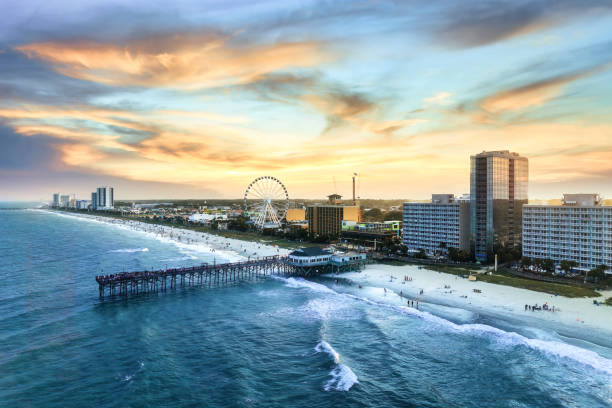
Myrtle Beach carries a reputation built on summer tourism, but the families, retirees, military veterans, and remote workers who have made the Grand Strand their permanent home know a different version of this place entirely. The Myrtle Beach metro area spans Horry County and reaches into Brunswick County, Columbus County, Marion County, and Georgetown County, forming a coastal corridor that holds far more depth, variety, and everyday livability than a week-long vacation ever reveals.
The Grand Strand stretches 60 miles of Atlantic coastline and supports one of the fastest-growing metro areas in the United States. Population growth here is not accidental. It reflects a genuine convergence of affordable housing costs relative to coastal peers, no state income tax on Social Security and favorable retirement tax treatment, a mild four-season climate, access to world-class healthcare, and a community infrastructure that has quietly matured alongside the residential growth that has reshaped the region over the past two decades.
People relocating to Myrtle Beach from the Northeast, the Midwest, or from higher-cost Southern metros like Charleston, Raleigh, and Charlotte consistently describe the same experience: they came expecting a beach town and found a real community. The golf courses are real. The seafood is real. The cost of living advantage is real. And the sunrises over the Atlantic, visible from neighborhoods just minutes from daily errands, become the kind of ordinary miracle that permanent residents stop remarking on and simply start depending on.
This guide is built for people making a real decision about relocating to the Myrtle Beach area. It covers the economy, the cost of living, the real estate market, the neighborhoods across multiple counties, and everything that shapes daily life here so that the move, when it happens, is made with clear eyes and genuine confidence.
What Makes Myrtle Beach Special?
A Coastal Community That Has Grown Into Itself
The Myrtle Beach of today is not the Myrtle Beach of 1995. A metro area that once leaned almost entirely on summer tourism revenue has diversified its economy, expanded its healthcare infrastructure, attracted year-round retail and dining anchors, and built out school systems, parks, and community institutions that serve permanent residents rather than visitors. The transformation has been steady rather than sudden, and the result is a place that functions as a genuine American city with the bonus of sixty miles of beachfront.
Coastal Carolina University, based in Conway, anchors the intellectual and cultural life of the region. The university enrolls more than 12,000 students and generates research activity, arts programming, and workforce pipeline connections that ripple across the entire Grand Strand. Horry-Georgetown Technical College provides vocational, associate degree, and workforce training programs that support the region's healthcare, hospitality, and construction industries.
The healthcare sector has expanded dramatically to serve the permanent population. Grand Strand Medical Center, McLeod Seacoast, and the growing network of specialty clinics and physician practices that have followed population growth give the region a medical infrastructure that matches or exceeds what many larger metros offer. For retirees selecting a permanent coastal home with an eye toward long-term healthcare access, this matters enormously.
The Beach Is the Backyard, Not the Destination
Permanent Grand Strand residents develop a relationship with the ocean that visitors never access. Early morning walks on nearly empty beaches before the summer crowds arrive. Fishing from the Cherry Grove Pier on a Tuesday afternoon. Watching pelicans work the surf line from the back porch of a home in Surfside Beach. Kayaking the tidal creeks behind Pawleys Island in October when the marsh grass turns gold and the summer heat has finally released its grip.
The beach is not a weekend trip. It is where residents walk the dog, clear their heads after a long week, and teach their children to read wave patterns. That daily, unremarkable access to the Atlantic is among the most consistently cited reasons permanent residents give for choosing the Grand Strand and staying.
The Intracoastal Waterway runs the full length of the Grand Strand, parallel to the ocean, creating a second water system that supports boating, kayaking, fishing, and waterfront living on calmer water than the open Atlantic. Communities along the Waterway offer a different coastal experience, one oriented toward sunsets over marshland rather than sunrise over waves, and both have their devoted communities of permanent residents.
Myrtle Beach State Park, Huntington Beach State Park, Brookgreen Gardens, and the ACE Basin National Wildlife Refuge to the south provide natural landscapes that counterbalance the commercial development along US-17. Brookgreen Gardens, located just south of Murrells Inlet on the Hammock Coast, holds the largest collection of American figurative sculpture in the world set within 9,100 acres of former rice plantation and living landscape. It is one of the Lowcountry's great underappreciated institutions, and it belongs to the daily life of Grand Strand residents in a way that tourism marketing rarely communicates.
Food, Community, and the Murrells Inlet Marshwalk
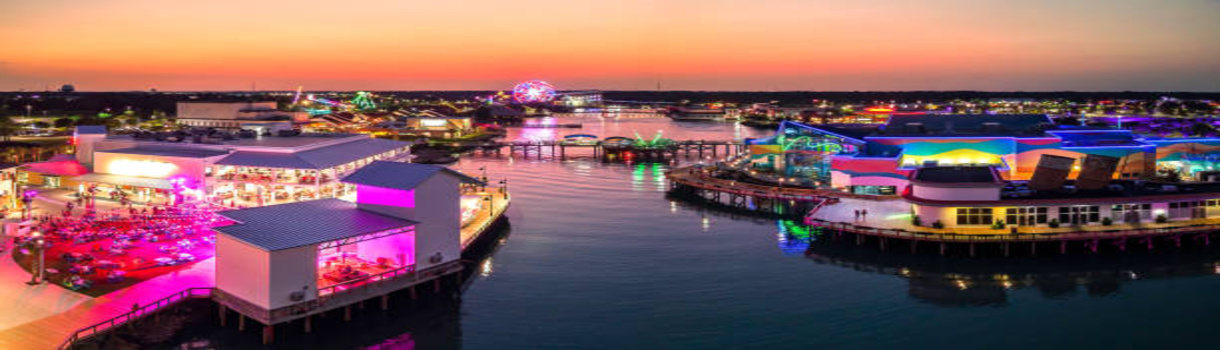
Myrtle Beach's culinary identity runs deeper than the seafood buffets that anchor the tourist corridors. The Murrells Inlet Marshwalk, a half-mile boardwalk along the saltmarsh in what locals call the Seafood Capital of South Carolina, holds a concentration of waterfront seafood restaurants, live music venues, and casual gathering spots that become the social center of gravity for residents across southern Horry County and northern Georgetown County. Drunken Jack's, Lee's Inlet Kitchen, and a rotating cast of newer additions give the Marshwalk staying power that tourist-dependent strips rarely achieve.
Conway, the historic seat of Horry County, has built a genuine dining and arts scene along its riverwalk. The Riverwalk Arts Center and the downtown gallery circuit support working artists, and restaurants like the Rivertown Bistro have earned regional recognition that draws diners from across the Grand Strand. Conway's historic preservation has protected a streetscape of Victorian and early-twentieth-century commercial buildings that anchor the community's identity in ways that newer coastal development cannot replicate.
North Myrtle Beach, Garden City Beach, Pawleys Island, and Litchfield Beach each maintain distinct community characters and dining traditions that reward residents who explore beyond the main tourism corridors. The oyster roasts and Frogmore stew traditions of the Lowcountry reach their northern range here, and the culinary culture of the Grand Strand reflects that heritage alongside the international flavors that a large retiree and transplant population brings.



Economy
A Tourism Foundation With Genuine Diversification
Horry County's economy generates approximately $5 billion annually in direct tourism spending, and the hospitality, food service, and retail sectors that tourism supports employ tens of thousands of Grand Strand residents year-round. The seasonality that once made full-year employment challenging has flattened considerably as the permanent population has grown and year-round demand for services has stabilized many businesses that once relied on summer peaks.
Healthcare has emerged as the single most significant driver of stable, high-wage employment across the Grand Strand. Grand Strand Medical Center, part of the HCA Healthcare network, operates a Level II trauma center and regional referral facility in Myrtle Beach. McLeod Seacoast in Little River provides additional acute care capacity on the northern Grand Strand. Conway Medical Center, an independent nonprofit community hospital, anchors healthcare services in the Horry County interior. The combined system employs thousands of clinical and administrative professionals and has attracted specialty physician practices across cardiology, oncology, orthopedics, and other high-demand disciplines that the aging permanent population requires.
Retail, Distribution, and the Logistics Corridor
The growth of the permanent population along the Grand Strand has attracted major retail investment. Coastal Grand Mall and Tanger Outlets serve a trade area that extends well into rural Horry and Marion counties. The US-501 and SC-31 corridors have seen sustained commercial development as major retailers, restaurants, and service businesses follow population growth northward and westward from the beachfront core.
Distribution and logistics operations have established a meaningful presence along the Interstate 95 and US-74 corridors that run through Columbus County and adjacent areas. The positioning of the Grand Strand between Charlotte and the Port of Wilmington creates logistical utility for companies needing coastal Southeast distribution capacity. This has created employment in warehouse operations, trucking, and supply chain management that diversifies the regional economy beyond its service sector base.
Technology, Remote Work, and the Coastal Relocation Dividend
The normalization of remote work has accelerated the Grand Strand's growth considerably. Professionals from financial services, technology, consulting, and other knowledge-economy sectors who are no longer tethered to specific office locations have relocated to Myrtle Beach in significant numbers, drawn by housing costs that represent a dramatic improvement over the Northeast and mid-Atlantic markets where their income was earned. This demographic brings purchasing power and community investment that has elevated the dining, arts, and retail scene considerably over the past several years.
Coastal Carolina University's technology and entrepreneurship programs are building a modest but growing startup and innovation community. The Myrtle Beach Tech Hub and various coworking spaces serve remote workers and small businesses. The region does not yet compete with Charlotte or Raleigh for technology employment, but the trajectory is positive and the quality-of-life advantage the Grand Strand offers for technology workers who have location flexibility is a genuine competitive asset.
Construction and Real Estate's Ongoing Engine
Population growth creates sustained construction employment. The Grand Strand has maintained one of the nation's most active residential construction markets for more than a decade, and the associated trades, from framing and electrical to plumbing and landscaping, represent a substantial and stable employment base. Commercial construction following retail and healthcare expansion adds further depth to this sector.
Cost of Living Realities
Housing as the Primary Advantage
The Grand Strand's cost of living runs approximately 8 to 12 percent below the national average, with housing representing the most significant source of savings for relocating households. Median home prices in Horry County cluster in the $280,000 to $320,000 range depending on proximity to the coast and community characteristics, representing considerable value compared to comparable coastal markets in Virginia, Maryland, Delaware, and Florida. Households relocating from the New York metro, Boston, Washington DC, or even Charlotte routinely find that their housing budgets stretch dramatically further along the Grand Strand.
Average one-bedroom apartment rents in the Myrtle Beach metro run approximately $1,200 to $1,400 per month, below national averages for comparable coastal markets. Renters seeking two- and three-bedroom units in suburban communities like Longs, Loris, and Tabor City find additional savings compared to beachfront and near-beach communities.
South Carolina's Favorable Tax Environment for Residents
South Carolina exempts Social Security income from state income tax entirely, making the Grand Strand particularly attractive for retirees on fixed incomes. Retirement income from pensions and other sources receives favorable treatment under state law. The state income tax top rate has been subject to reduction in recent legislative sessions. Property taxes for primary residences benefit from South Carolina's four percent assessment ratio for owner-occupied homes, which consistently produces effective property tax rates well below national averages for Horry County homeowners.
Horry County assesses among the lowest effective property tax rates in South Carolina, which is itself a low-property-tax state. For households relocating from New Jersey, New York, Massachusetts, or Illinois, the property tax reduction alone represents thousands of dollars annually in freed household income.
Grocery food is exempt from South Carolina's state sales tax. Flood insurance represents a meaningful additional cost for properties in coastal and low-lying flood zones, and buyers should carefully review FEMA flood zone designations before purchasing, particularly in communities adjacent to tidal creeks, the Intracoastal Waterway, and low-elevation areas near the coast.
Practical Daily Cost Considerations
Car ownership is essential throughout the Grand Strand. The metro's geography and the distribution of employment, retail, healthcare, and schools across a 60-mile coastal corridor means that most households maintain two vehicles and plan their residential location partly around commute routes. The SC-31 Carolina Bays Parkway provides north-south connectivity that has significantly improved commute times across the northern and central Grand Strand. US-501 and US-17 Business remain the primary surface routes through the tourist core and experience significant seasonal congestion.
Utility costs are moderate, though summer air conditioning represents a meaningful seasonal cost increase. Hurricane season awareness and the associated costs of storm preparedness, from shutters and generators to flood insurance premiums, are real considerations that residents manage as a normal part of coastal living. The Grand Strand is well below the hurricane exposure of southeastern Florida, and the storm history of the region reflects that, but coastal residents maintain appropriate preparation as a matter of routine.
Real Estate
Market Conditions and What Buyers Find
The Myrtle Beach real estate market has appreciated significantly since 2015, with the 2020-to-2022 period producing rapid price gains driven by remote worker relocation and retiree demand from Northern markets. The market has moderated from peak conditions, and buyers in 2024 and 2025 find an environment with more inventory choice and less competitive pressure than the peak years, though well-priced properties in sought-after communities continue to attract serious interest.
New construction activity remains robust throughout the Grand Strand, concentrated in master-planned communities in the US-31 corridor, the Carolina Forest area of Horry County, the Longs and Little River communities to the north, and the Pawleys Island and Litchfield Beach areas to the south in Georgetown County. National builders including D.R. Horton, Pulte, and Meritage have substantial presences in the market alongside regional builders with deep local knowledge.
The condominium market reflects the tourist economy's legacy. Oceanfront and near-oceanfront condominiums represent a significant segment of the market, and buyers should understand the distinction between units in complexes with short-term rental programs and those in communities that restrict or prohibit vacation rentals. HOA fees, rental restrictions, and building age and maintenance history require careful due diligence for condo buyers in ways that single-family home purchases in inland subdivisions do not.
Architectural Character and What the Market Offers
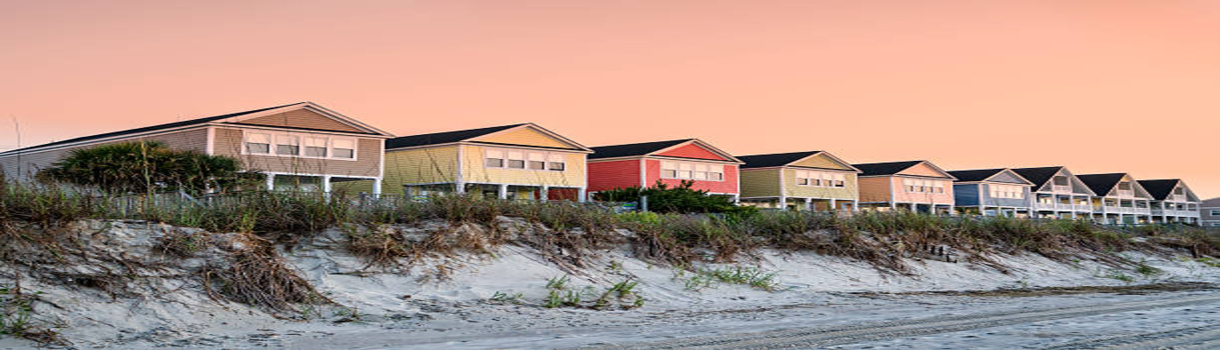
Grand Strand housing stock spans a wide range. The oldest residential communities in Conway's historic district feature Victorian and craftsman-era homes that attract buyers who value architectural character and downtown walkability. Pawleys Island maintains a tradition of elevated beach cottages and modest single-story homes that reflect the Lowcountry's vernacular building tradition, alongside newer luxury construction that has found its way to the island's quieter streets.
The dominant housing type throughout the suburban interior of Horry County is the single-story or two-story production home built between 2000 and 2025, with open floor plans, attached garages, and community amenity packages that include pools, fitness centers, and walking trails. These communities vary considerably in lot size, build quality, and HOA structure, and buyers benefit from working with agents who know the differences between comparable-looking subdivisions.
Luxury and semi-custom construction is concentrated in golf course communities, Intracoastal Waterway frontage properties, and oceanfront parcels. Communities like Barefoot Resort, Grande Dunes, and Wachesaw Plantation represent the upper end of the market and attract buyers who want custom amenities alongside the coastal lifestyle.
Where in Myrtle Beach?
The Grand Strand metro spreads across multiple counties, each with distinct community character, school systems, tax structures, and geographic relationships to the coast. Understanding these distinctions is the foundation of a good relocation decision.
Horry County
Horry County is the largest county in South Carolina by land area and the civic, commercial, and demographic center of the Grand Strand. The county seat sits in Conway, eight miles inland from the beachfront, and the county's geography spans from beachfront communities on the Atlantic to rural farmland and pine forests in the western interior. Horry County has grown by more than 100,000 residents since 2010 and shows no signs of slowing.
Myrtle Beach
The City of Myrtle Beach occupies the central Grand Strand coastline and serves as the metro's commercial and entertainment hub. The tourist infrastructure of Ocean Boulevard, Broadway at the Beach, and the Boardwalk coexists with the permanent residential neighborhoods that spread west of US-17 Business into communities that function as genuine year-round neighborhoods. Market Common, developed on the former Myrtle Beach Air Force Base property, represents the most successful example of urban-style mixed-use development in the metro, with walkable retail, restaurant, and residential buildings organized around a town center green space that serves as a gathering point for permanent residents.
The City of Myrtle Beach school system is separate from the Horry County school system, a distinction that matters for families with school-age children and one that prospective buyers should research carefully. City-operated schools serve the incorporated city area, while Horry County Schools operates across the unincorporated county and the other municipalities.
North Myrtle Beach
North Myrtle Beach, which includes the communities of Cherry Grove, Ocean Drive, Crescent Beach, and Windy Hill, functions as a distinct municipality with its own identity and a strong year-round residential base. Cherry Grove Beach and the Cherry Grove Pier are landmarks that give North Myrtle Beach a genuine neighborhood character. The Shag, South Carolina's state dance, was born on Ocean Drive, and the Carolina Beach Music tradition that grew up here is genuinely local rather than manufactured.
North Myrtle Beach has grown into one of the more sought-after areas for permanent residents who want beachfront proximity with somewhat less commercial intensity than central Myrtle Beach. Proximity to Little River and the Brunswick County communities of North Carolina gives North Myrtle Beach residents access to shopping, healthcare, and dining options in two states.
Carolina Forest and the US-31 Corridor
Carolina Forest has emerged as the Grand Strand's premier family-oriented suburban community, with top-performing Horry County schools, planned subdivisions with robust amenity packages, convenient access to the SC-31 parkway, and a concentration of retail, dining, and healthcare services that makes daily life genuinely convenient. The Forestbrook and Carolina Forest high school attendance zones consistently rank among the county's strongest academic performers.
The US-31 corridor communities of Longs, Little River, and Loris offer newer construction at generally lower price points than the beachfront communities, with quick highway access to the northern Grand Strand and reasonable commutes to North Myrtle Beach and Myrtle Beach employment centers.
Conway
Conway, the Horry County seat, has quietly developed one of the more authentic small-city living experiences on the Grand Strand. The Riverwalk along the Waccamaw River anchors a downtown with preserved historic architecture, locally owned restaurants and galleries, and a community identity that predates and exists independent of the tourist economy. Coastal Carolina University's campus lies within the Conway city limits, giving the community a year-round intellectual energy. Home prices in Conway run below the coastal communities, offering families and first-time buyers meaningful value within reasonable commuting distance of the coast.
Georgetown County
Georgetown County lies south of Horry County and encompasses the southern Grand Strand, the Hammock Coast, the Waccamaw Neck, and the historic port city of Georgetown at the confluence of five rivers. The county offers one of the most scenically beautiful stretches of the South Carolina coast, with fewer year-round residents, a quieter pace, and a stronger connection to the agricultural and maritime history of the Lowcountry.
Pawleys Island and Litchfield Beach
Pawleys Island is one of the oldest beach communities in the United States and carries a self-consciously unhurried character that its permanent residents guard with genuine care. The island itself is a narrow, four-mile barrier island with a tradition of modest beachfront cottages, hammock shops, and early-morning fishing that has persisted through the development pressures that have transformed less-protected stretches of the Carolina coast. The surrounding Litchfield Beach and Pawleys Island communities on the mainland hold newer residential development, golf course communities, and the Litchfield Beach and Golf Resort that serves both visitors and property owners.
Families choosing Georgetown County for its schools should research individual school performance carefully, as the county school system serves a smaller and more varied population than Horry County's larger suburban school infrastructure.
Murrells Inlet
Murrells Inlet sits in the northern portion of Georgetown County, just south of the Horry County line, and serves as the social and culinary anchor of the southern Grand Strand. The Marshwalk's concentration of waterfront restaurants, the Garden City Beach community to the north, and the residential neighborhoods that spread west of US-17 give Murrells Inlet a genuine year-round community alongside its tourist function. Residents here have easy access to both Myrtle Beach services to the north and the quieter Pawleys Island communities to the south.
Georgetown City
Georgetown, the county seat, is one of South Carolina's oldest cities and holds architectural and historical significance that extends well beyond its modest current size. The Front Street corridor along the Sampit River has seen meaningful restoration and new investment. Georgetown's position at the confluence of the Black, Pee Dee, Waccamaw, and Sampit rivers creates a maritime landscape that draws boaters, anglers, and history-minded residents. Housing costs in Georgetown are among the most accessible in the coastal region, offering substantial historical homes at prices that would be difficult to find in any comparable coastal Southern city.
Brunswick County, North Carolina
Brunswick County lies directly north of Horry County across the state line and functions as an integral part of the Grand Strand metro for residents who live along the northern coastal corridor. Communities including Calabash, Ocean Isle Beach, Sunset Beach, and Holden Beach offer North Carolina tax treatment alongside close geographic ties to the North Myrtle Beach and Little River communities to the south.
North Carolina has different income tax, property tax, and retirement income treatment than South Carolina, and buyers considering Brunswick County communities should review those distinctions with a financial advisor. For some households, the North Carolina side of the state line offers advantages; for others, South Carolina's retirement income tax treatment and property tax structure are preferable.
The Calabash dining corridor, famous across the Southeast for its Calabash-style fried seafood tradition, sits directly on the state line and represents one of the Grand Strand's genuine culinary institutions. Ocean Isle Beach and Sunset Beach are smaller, quieter beach communities with strong permanent residential populations and a more protected character than the more heavily developed Myrtle Beach core.
Marion County
Marion County lies northwest of Horry County in the Pee Dee region of South Carolina, and its western communities are gradually drawing buyers seeking maximum value within commuting distance of Grand Strand employment. The city of Marion holds a historic downtown with preserved antebellum and early-twentieth-century architecture. Housing costs in Marion County fall significantly below coastal Horry County prices, offering acreage, older homes with genuine character, and small-town community life at a fraction of the coastal market's price. The commute to Myrtle Beach employment centers runs 45 to 60 minutes depending on destination, which is workable for households that prioritize land and home size over proximity.
Columbus County, North Carolina
Columbus County sits to the northwest of Brunswick County in North Carolina and represents the furthest inland extension of the Grand Strand's commuter reach. Whiteville, the county seat, is a small city with a genuine downtown, Southeastern Community College, and a community character rooted in agriculture and manufacturing. Buyers who need maximum space and minimum price, and who are comfortable with a 60-to-75-minute commute to the northern Grand Strand, find acreage-based properties and older homes at prices that are genuinely exceptional by coastal standards.
The Lumber River, which flows through Columbus County, is one of North Carolina's most beautiful blackwater rivers, a state scenic river that supports fishing, kayaking, and camping for residents who want natural recreation close to home.

What Now?
Finding the Right Neighborhood for Your Life
The Grand Strand rewards the people who take time to understand it. The difference between a home in Carolina Forest and a cottage near Pawleys Island is not just a matter of price or distance to the beach. It is a question of which community's rhythms, school options, access patterns, and everyday character align with what a particular household actually needs to be happy.
An oceanfront high-rise condominium in Myrtle Beach and a Waccamaw Neck home backing to a tidal creek in Georgetown County are both coastal South Carolina properties, and they represent entirely different relationships to this place. A family relocating with school-age children faces different considerations than a couple retiring from New England who want walkable community life. A remote worker who needs reliable high-speed internet and proximity to a good coffee shop has different priorities than a retiree who wants a quiet beach community with excellent healthcare access.
PrimeStreet connects relocating buyers and renters with experienced Grand Strand real estate professionals who know these distinctions from daily practice rather than from a map. Whether the draw is a historic Conway home near the Waccamaw River, a master-planned community home in Carolina Forest with top-rated schools, a Pawleys Island cottage a short walk from the beach, or a waterfront property along the Intracoastal, the right local agent makes the difference between a search that exhausts and one that delivers.
Call 855-531-5347 or click "Find an Agent" to connect with a Grand Strand specialist who will take the time to understand your timeline, priorities, and vision for what life along the coast should actually look like.