

By Melanie Ortiz Reyes - Marketing Strategist - PrimeStreet.io
Moving There
Indianapolis rarely appears on the shortlist that households generate when they first start thinking about where to relocate. It does not have a coastline or a mountain range. It does not generate the cultural gravity of Chicago or the tech industry magnetism of Austin. What it has is something harder to manufacture and easier to underestimate: a genuine city with stable institutions, an economy built on multiple foundations, housing that gives households real purchasing power, and a community culture that knows how to welcome people who arrive without local history.
The Indianapolis metropolitan area sits near the geographic center of the eastern United States, a position that gives the city practical advantages that compound over time. Six interstate highways converge here, making it possible to reach Chicago, Cincinnati, Louisville, Columbus, Detroit, and St. Louis within a few hours by car. The international airport handles cargo volumes that rank it among the top freight facilities in the country. The city's location, which can feel like a liability to people accustomed to coasts, turns out to be a genuine asset for households with regional family connections, businesses with Midwest distribution needs, or professionals whose roles involve frequent travel within the eastern half of the country.
The metro area covers six counties and contains communities ranging from the walkable urban neighborhoods of central Indianapolis to the master-planned suburbs of Hamilton County, the quieter small cities of Johnson and Hendricks counties, and the rural character of Boone and Hancock counties on the outer ring. This guide is written for people making a serious relocation decision. It covers the economy, housing, cost of living, the county-by-county character of the region, and the texture of daily life that determines whether a place is genuinely livable over the long term.
What's Different About Indianapolis?
A City Built for Living, Not for Looking At
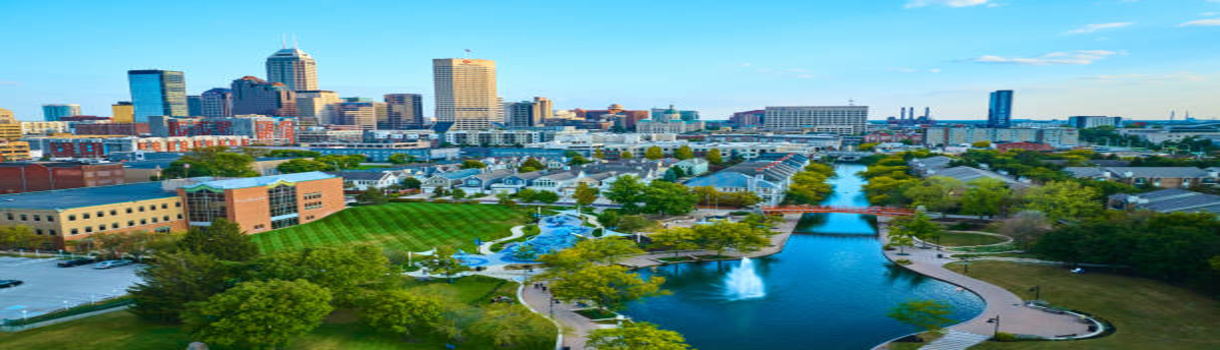
Indianapolis is not a city that announces itself with dramatic geography or iconic skyline moments. It is a city that reveals itself slowly through its neighborhoods, its institutions, and the quality of civic life that generations of residents have built and maintained. The downtown Monumental Mile along Meridian Street runs from the Soldiers and Sailors Monument south through a collection of hotels, restaurants, and cultural venues that serve the local population year-round rather than shutting down between convention seasons. The Indianapolis Museum of Art at Newfields sits on 152 acres in the northern part of the city with a greenhouse, a formal garden, a lake, and a lawn that hosts concerts and outdoor events that draw residents from every county in the metro.
The city's relationship with sport is genuine in a way that shapes community life rather than simply providing entertainment. The Indianapolis 500, run each Memorial Day weekend at the Indianapolis Motor Speedway in Speedway, has drawn racing enthusiasts for more than a century and produces a month-long community event in May, known locally as the Month of May, that generates a city-wide energy unlike anything the rest of the calendar produces. The Colts, the Pacers, and the NWSL's Racing Louisville collectively sustain a year-round sports culture that residents use as social infrastructure in the way that music scenes and food cultures serve that function in other cities.
The Physical City and Its Neighborhoods
Indianapolis is a physically large city that expanded through annexation over decades, producing a metropolitan core that covers a significant share of Marion County. The neighborhood structure within that expanse varies considerably, from the dense historic streets of the Old Northside and Herron-Morton Place to the retail and entertainment corridors of Mass Ave and Fountain Square to the established residential fabric of the Meridian-Kessler neighborhood and the Butler-Tarkington area on the near north side.
The White River runs through the western edge of the downtown and provides the setting for White River State Park, a 250-acre urban park that holds the Indianapolis Zoo, the Eiteljorg Museum of American Indians and Western Art, Victory Field minor league ballpark, and a network of trails and event spaces that function as the city's primary outdoor gathering infrastructure. The Monon Trail, a converted rail corridor that runs from the near north side through Broad Ripple and continuing into Hamilton County, has become the region's most used recreational spine and a linear community gathering place that draws cyclists, runners, and walkers from across the metro seven days a week.



Economy
Life Sciences and the Healthcare Economy
Indianapolis is the global headquarters of Eli Lilly and Company, one of the largest pharmaceutical companies in the world and the single largest private employer in Indiana. Lilly's corporate campus on the south side of downtown employs thousands of scientists, engineers, regulatory professionals, and business staff, and its supply chain relationships support a cluster of contract research organizations, clinical trial management firms, and specialty suppliers throughout the metro. The company's recent investment in manufacturing capacity for diabetes and obesity medications represents one of the largest capital commitments in the city's recent economic history.
Indiana University Health and Ascension St. Vincent each operate major hospital campuses and extensive outpatient networks throughout the metro area, collectively employing tens of thousands of clinical and administrative professionals. The Indiana University School of Medicine, one of the largest medical schools in the country with campuses across the state, anchors a research enterprise at the IUPUI campus adjacent to downtown that generates significant grant-funded employment and clinical trial activity. For nurses, physicians, pharmacists, physical therapists, and healthcare administrators, the Indianapolis employment market is deep enough to support career advancement without requiring relocation every few years.
Logistics, Manufacturing, and Financial Services
Indianapolis's position at the crossroads of six interstate highways and within a day's drive of a majority of the US population has made it one of the country's most important logistics and distribution centers. Indianapolis International Airport is home to the second-largest FedEx hub in the world, and the concentration of warehouse and distribution facilities along the I-65, I-70, and I-465 corridors employs a significant portion of the regional workforce. Companies including Amazon, Walmart, and a roster of third-party logistics providers have concentrated distribution infrastructure here in a way that has sustained employment through multiple economic cycles.
Financial services, anchored by OneMain Financial and a collection of insurance companies, investment managers, and banking institutions, provide white-collar employment depth that supplements the healthcare and logistics base. Salesforce's Indianapolis presence, anchored by the Salesforce Tower on Monument Circle, has made the city a meaningful technology employer and has attracted additional technology company interest to a metro that was previously better known for its manufacturing and logistics sectors.
Cost of Living
Housing and What the Budget Actually Buys
Indianapolis's housing costs represent one of the most significant financial advantages that the metro offers to households relocating from more expensive markets. Median home prices across the six-county metro sit well below national averages and dramatically below the coastal and Sun Belt cities that have absorbed the majority of relocation attention over the past decade. A budget that buys a one-bedroom condominium in Nashville or a dated townhome in the Northern Virginia suburbs buys a substantial single-family home in most Indianapolis neighborhoods, and a genuinely large home with a yard in the suburban counties.
Marion County's most desirable neighborhoods, including Meridian-Kessler, Broad Ripple, Herron-Morton Place, and Irvington on the east side, carry premiums above the county median that still compare favorably to peer neighborhoods in cities of comparable size. Hamilton County, the metro's most sought-after family destination, runs above Marion County averages but remains accessible to households that would face severe affordability constraints in equivalent suburban communities in other major metros. Hendricks and Johnson counties offer the furthest purchasing power extension for buyers whose commute flexibility allows them to look south and west of the urban core.
Average rents for a one-bedroom apartment in Indianapolis's most active neighborhoods, including Mass Ave, Fountain Square, and the Broad Ripple corridor, run $1,100 to $1,600 per month depending on unit vintage and building amenities. Rents in Hamilton County's Carmel and Fishers markets and in the Johnson County communities run somewhat higher given the demand from families seeking newer construction and strong school district access. The rental market provides practical entry points for households arriving without a purchase commitment, and the relative affordability compared to coastal metros allows for faster accumulation of a down payment for households that arrive as renters with purchase intentions.
Indiana Taxes and the Financial Picture
Indiana levies a flat 3.05 percent state income tax on income, and each county assesses its own county income tax on top of that figure, with rates varying across the six counties of the metro. Marion County's combined effective rate runs above some of the surrounding counties, while Hamilton County has historically maintained a lower county tax rate that contributes to its appeal for higher-income households. Property taxes in Indiana are subject to circuit breaker caps that limit the percentage of assessed value that can be collected, providing some protection against sharp increases that have affected owner-occupied housing costs in other states.
Households relocating from states without income taxes, including Florida, Texas, and Washington, should model the Indiana income tax impact against the offsetting savings from lower housing costs, property taxes, and daily living expenses. The net financial picture for most households moving from high-cost coastal markets to Indianapolis is strongly favorable even after accounting for Indiana's income tax obligations.

Real Estate Market
What Buyers Find Today
Indianapolis's housing market experienced significant appreciation between 2020 and 2022, driven by a combination of relocating remote workers, historically low interest rates, and the metro's affordability relative to the markets that attracted the most attention during the pandemic relocation wave. The market has moderated from those peak conditions, with inventory recovering across most submarkets and buyers able to conduct proper due diligence without the waived inspections and aggressive escalation clauses that characterized the most competitive period.
Hamilton County's most sought-after school districts, particularly Carmel Clay Schools and Hamilton Southeastern, continue to attract competitive buyer interest from families who have researched the metro's school landscape and targeted the top performers. The Carmel and Fishers markets remain active for properties priced appropriately for the current rate environment, and new construction in the county's northern and eastern growth areas continues to absorb demand from buyers who need modern floor plans and community amenity packages.
Architectural Character and Neighborhood Types
Indianapolis's older neighborhoods contain architectural inventory that reflects the city's development history from the 1870s through the 1950s. The Italianate and Queen Anne homes of the Old Northside, the craftsman bungalows of Irvington, the Tudor Revivals of Butler-Tarkington, and the brick colonials and ranch homes of the Meridian-Kessler corridor give the established neighborhoods a character and maturity that newer construction cannot replicate. These properties attract buyers who value walkability, established trees, and proximity to the urban amenities that the inner neighborhoods support, and they come with the mechanical systems and maintenance demands that older construction requires.
The suburban municipalities built in the postwar decades and the master-planned communities that have developed since the 1990s offer the larger floor plans, attached garages, and community amenity packages that many relocating households, particularly those from larger suburban markets, expect as baseline features. The quality of those communities varies considerably in ways that are not always apparent from listing photographs, and buyers benefit from understanding the specific HOA financial health, the builder's track record, and the school assignments that come with a specific address before committing.
Where in the Indianapolis Area?
The six counties of the Indianapolis metropolitan area cover a range of community types and daily life experiences significant enough that the county of residence shapes the experience of living in the metro as much as the city itself does. Understanding what each county offers, and what it asks in return, is the foundation of a relocation decision that holds up over time.
Marion County
Marion County is Indianapolis, structurally speaking. The city-county consolidated government established by the Unigov legislation of 1969 merged most of the county's municipalities into a single administrative unit, giving Indianapolis an unusually large geographic footprint for a city of its population size. The practical result is that choosing to live in Marion County means choosing urban Indianapolis, with the school, tax, and service landscape that comes with that designation. Several municipalities, known as excluded cities, maintained their independence within the county structure and carry their own governance and school districts.
Mass Ave, Fountain Square, and the Near East Side
The Massachusetts Avenue cultural district, running northeast from Monument Circle through a corridor of galleries, restaurants, theaters, and independent retail, is Indianapolis's most active urban commercial neighborhood and the standard reference point for the city's walkable urban identity. The area's dining scene has expanded considerably over the past decade, and the streets adjacent to Mass Ave support a residential population that values proximity to the corridor over the square footage that the same budget would buy further out. Fountain Square, a few miles south on the near east side, carries a more eclectic and lower-price-point version of the same urban neighborhood model, with a music and arts community that predates the recent investment cycle and gives the neighborhood an authenticity that newer development districts sometimes lack.
Broad Ripple and the North Side
Broad Ripple, situated along the White River and the Monon Trail on the near north side, functions as the city's neighborhood commercial district most legible to newcomers from larger cities. The concentration of restaurants, coffee shops, music venues, and independent retail along Broad Ripple Avenue and the adjacent blocks serves a permanent residential population of renters and owners that includes university students, young professionals, and established households who have lived in the neighborhood long enough to have watched it change across multiple development cycles. The Monon Trail access from Broad Ripple northward into Hamilton County is one of the neighborhood's most used amenities and a practical connection between the urban core and the suburban counties that cycling commuters and weekend riders use year-round.
Meridian-Kessler and Butler-Tarkington
The Meridian-Kessler neighborhood, running along North Meridian Street north of 38th Street, is one of Indianapolis's most consistently sought-after addresses for families who want urban proximity, walkable streets, established trees, and a neighborhood character built over decades rather than assembled in a master plan. The housing stock ranges from brick colonials on double lots to craftsman bungalows renovated to contemporary standards, and the proximity to Butler University, the Broad Ripple corridor, and the downtown employment base makes it one of the city's most practical addresses for households whose work and social lives distribute across multiple parts of the city. Butler-Tarkington, adjacent to the Butler University campus, carries a similar character at slightly lower price points and with its own distinct identity shaped by the university's presence and the neighborhood's history.
Hamilton County
Hamilton County sits directly north of Marion County and has been among the fastest-growing counties in Indiana, and one of the fastest in the Midwest, for more than two decades. The combination of top-ranked school districts, master-planned community amenities, newer housing stock, and a growing employment base that increasingly allows residents to work within the county rather than commuting south to Marion County has made Hamilton County the metro's dominant family relocation destination. The county's median household income is among the highest in Indiana, and its housing prices reflect that demand premium.
Carmel
Carmel has built a national reputation as a model for suburban planning that goes beyond the conventional strip mall and subdivision formula. The city's deliberate investment in the Arts and Design District, a walkable commercial corridor in the historic downtown area, and its aggressive construction of roundabouts in place of signalized intersections has produced a suburban environment with more legible public space and more interesting street character than most communities built at comparable scale and density. Carmel Clay Schools consistently ranks among Indiana's strongest districts on academic performance measures, and the school district is often the primary driver of buyer demand for this specific geography.
Fishers
Fishers, east of Carmel along 116th Street and the SR-37 corridor, has grown from a small town into one of Indiana's most populous cities in less than thirty years. The community's development has been more conventionally suburban than Carmel's, with large subdivisions, extensive retail corridors, and a community character shaped primarily by the families who relocated here for Hamilton Southeastern Schools, one of the state's larger and well-regarded public school districts. The city has invested more recently in a downtown destination district near Nickel Plate District Amphitheater and the Fishers District mixed-use development that gives the community a gathering center it previously lacked.
Noblesville and Westfield
Noblesville, the Hamilton County seat, carries a historic downtown along the White River that anchors a community with deeper local roots than Carmel or Fishers and a slightly more varied character as a result. The Hamilton County courthouse square, the Riverview Health system, and an active arts and events calendar give Noblesville a small-city identity alongside the residential growth that has expanded its boundaries considerably over the past two decades. Westfield, in the county's northwestern corner, has grown around the Grand Park Sports Campus, a youth athletics complex that draws tournaments from across the Midwest and generates the hotel and restaurant development that typically follows large regional sports infrastructure.
Hendricks County
Hendricks County lies west of Marion County along the I-70 and US-36 corridors and provides the metro's best combination of suburban convenience, newer construction, and price accessibility for households whose work anchors them to the western side of the metro or who are comfortable with a 25-to-35-minute commute to central Indianapolis employment. The county has attracted corporate campuses, logistics facilities, and healthcare infrastructure that have made it increasingly self-contained rather than purely a bedroom community.
Plainfield and Avon
Plainfield, positioned along I-70 adjacent to the international airport, has developed significant distribution and manufacturing employment alongside residential growth that draws families seeking newer housing at prices below Hamilton County's premium. The Plainfield school district serves the southern portion of the county. Avon, in the county's central section along US-36, is the faster-growing community and draws the majority of family relocation demand from households that have evaluated the metro and targeted Hendricks County as the right combination of value, school quality, and access. Avon Community School Corporation has built a strong academic reputation that supports consistent demand for housing within its boundaries.
Johnson County
Johnson County lies directly south of Marion County and provides a family-oriented suburban alternative for households that find Hamilton County's prices beyond their reach but want the school quality, community infrastructure, and suburban character that the northern suburbs offer. The county's communities are positioned along the US-31 corridor that runs south from Indianapolis, and the commute to central Marion County employment runs 25 to 40 minutes depending on the specific origin and destination.
Greenwood
Greenwood is the county's commercial center and its most populous city, with a retail corridor along US-31 that has developed into one of the metro's more self-contained suburban shopping destinations. The city is served by Center Grove Community School Corporation in the western portion and Greenwood Community Schools in the eastern portion, with Center Grove in particular carrying one of the strongest academic reputations in the state and generating sustained demand from families who target the district specifically when searching for a home. The price point differential between Hamilton County's Carmel and Johnson County's Center Grove district is significant enough that many buyers who discover it feel they have found the metro's best-kept secret.
Boone County
Boone County occupies the northwestern corner of the metro and borders Hamilton County to the east and Hendricks County to the south. Its combination of agricultural character, equestrian properties, and the polished suburban community of Zionsville gives it one of the most varied residential landscapes in the metro and a character that rewards the buyers who take time to understand what different parts of the county offer.
Zionsville
Zionsville is among the most distinctively beautiful small communities in Indiana, with a brick-paved Main Street commercial district that has maintained its walkable village character through decades of suburban growth pressure. The restaurants, boutiques, and coffee shops along Main Street serve a permanent residential population rather than a tourist economy, and the town's school district, Zionsville Community Schools, consistently earns state recognition for academic performance and college preparation. Equestrian properties on larger lots in the areas surrounding the town center attract buyers from professional backgrounds who want acreage, horse facilities, and a community with genuine aesthetic identity without giving up proximity to Indianapolis employment.
Hancock County
Hancock County lies east of Marion County along US-40 and I-70 and provides the metro's quietest suburban alternative for households whose work connects them to the eastern employment corridors or who prioritize land and space over community amenity concentration. Greenfield, the county seat and birthplace of Hoosier poet James Whitcomb Riley, maintains a functioning historic downtown with a community hospital, a commercial corridor, and local institutions that give it a genuine small-city character.
New Palestine and McCordsville have absorbed suburban growth from families seeking newer construction and more land at prices below Hamilton County's market. The commute to downtown Indianapolis runs 30 to 45 minutes depending on origin, and the I-70 and US-40 corridors provide direct highway access to the urban core. For households whose daily lives center more on the home and the immediate community than on urban amenity access, Hancock County delivers value that is difficult to match anywhere closer to the city.

Next Steps
Let us help!
The Indianapolis metro rewards households who look beyond the first neighborhood names they encounter and take time to understand what each county and community actually offers. The difference between a home in Marion County's Meridian-Kessler neighborhood and one in Hamilton County's Carmel is measured in more than price and distance. It is measured in school assignments, commute patterns, neighborhood character, housing vintage, and the particular quality of daily life that each setting produces.
A family relocating for a position at Eli Lilly faces a different location calculation than a logistics professional whose facility sits along I-70 in Hendricks County. A couple moving from the Northeast who wants walkable neighborhood life and proximity to cultural institutions has different priorities than a family of five that needs four bedrooms, a large yard, and a high school with strong college placement rates. A buyer drawn to the character of a Fountain Square Victorian carries different research requirements than one evaluating a new construction home in Noblesville.
PrimeStreet connects relocating buyers and renters with experienced Indianapolis-area real estate professionals who understand these distinctions from daily practice. Whether the priority is a walkable urban neighborhood close to downtown employment, a Hamilton County community with the metro's top-ranked schools, an affordable Johnson or Hendricks County entry point, or a Boone County equestrian property with land, the right local agent is the difference between a search that exhausts and one that delivers. Call us at 855-531-5347 or click Find an Agent below to connect with one of our top Indianapolis agents!