
By Melanie Ortiz Reyes - Marketing Strategist - PrimeStreet.io
Move to Columbus
Columbus surprises people. That is one of the most consistent things transplants say after they have settled in and found their footing here, and it matters more than it might seem, because the surprise is almost always a welcome one.
Situated on the western edge of Georgia along the Chattahoochee River, Columbus is the fourth-largest city in Georgia and the anchor of a metro area that reaches across the river into Alabama and stretches north and south along one of the South's most storied waterways. Fort Moore, one of the largest military installations in the United States, gives the city an economic engine that insulates it from boom-and-bust cycles affecting smaller single-industry markets. Columbus State University, a thriving arts district, a nationally recognized whitewater course, and a downtown that has invested seriously in its own revitalization add layers that casual observers consistently underestimate.
The greater Columbus metro area spans Muscogee County on the Georgia side and extends into Harris, Chattahoochee, Talbot, Marion, and Meriwether counties, each carrying its own geography, community character, and relationship to the city at the region's center. Together they form a residential landscape running from urban walkability to rural acreage, from golf course communities in Harris County to historic small towns in Talbot County, with price points spanning the full range and a quality of life that rewards residents who invest time in knowing the region well.
This guide is written for people working through a genuine relocation decision. It covers the economy, cost of living, the housing market, and the neighborhoods and counties shaping daily life in the Columbus area so that the decision, when made, rests on honest information.

What Makes Columbus Different?
A City that Has Invested in Itself
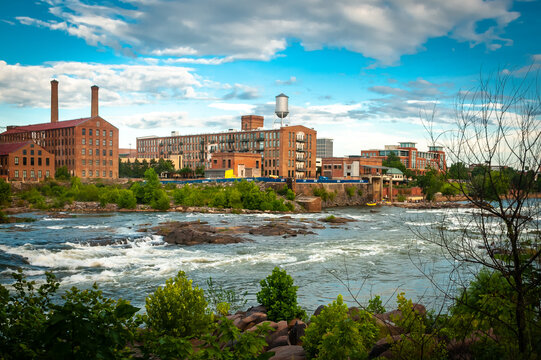
The Columbus of today reflects deliberate civic commitment spanning the better part of two decades. The RiverWalk, a 22-mile paved trail along the eastern bank of the Chattahoochee, transformed the riverfront from an industrial margin into the connective tissue of the city's outdoor life. The whitewater course on the Chattahoochee, created by removing historic mill dams and restoring the river's natural gradient, is recognized as the longest urban whitewater course in the world and draws kayakers, rafters, and zip-line riders from across the Southeast.
Uptown Columbus, the downtown commercial and arts district, has seen sustained reinvestment in historic mill buildings and 19th-century commercial architecture now housing restaurants, breweries, galleries, live music venues, and professional offices. The Springer Opera House, a National Historic Landmark and the State Theatre of Georgia, anchors the cultural life of the district with a year-round performance calendar drawing audiences from well beyond the metro area.
Columbus State University, with an enrollment of approximately 8,000 students, operates both its main campus and the RiverPark campus in the Uptown arts district, embedding university energy directly into the city's civic core. The Schwob School of Music and the Department of Theatre are particularly strong, and their productions enrich the community calendar in ways that residents of any background can access.
Fort Moore and the Military Community
Fort Moore, formerly Fort Benning, occupies more than 180,000 acres straddling the Georgia-Alabama border just south of Columbus. As the home of the U.S. Army Infantry School, Airborne School, and Ranger School, it ranks among the Army's most significant training installations and is one of Georgia's largest employers. The military community its presence creates is not peripheral to Columbus life. It is central to it.
Military families bring professional diversity, international perspective, civic energy, and economic purchasing power that shape the city in ways visible from the school system to the restaurant scene. Veterans who complete their service and choose to remain in Columbus because they have built roots here represent a substantial portion of the permanent civilian population and contribute to the neighborhood stability and civic investment that characterizes the city's best residential areas.
For families arriving under military orders, Columbus has a well-developed support network: housing options at multiple price points near the post gates, a school system experienced with the needs of mobile military families, and community organizations specifically built to help new arrivals orient quickly.
The River, the Trails, and Life Outdoors
The Chattahoochee River defines the Columbus landscape in a way that few urban waterways define the cities beside them. The whitewater park draws the headlines, but the river's role in daily life runs deeper than any single attraction. Morning runs and evening rides on the RiverWalk. Sunset views from the restaurants and bars lining the riverfront. Fishing at multiple access points along the bank. The texture of living beside moving water in a city that has chosen to face the river rather than turn its back on it.
Flat Rock Park, operated by the Army and open to the public, provides 1,000 acres of trails and natural areas. Chattahoochee Bend State Park and West Point Lake to the north offer additional outdoor recreation within a comfortable drive. Harris County's Lake Harding provides boating and waterfront recreation that its residents access as an everyday amenity rather than a weekend occasion.
Food, Arts, and Community
Uptown Columbus has built a dining and entertainment scene worth exploring carefully. Country's Barbecue, a Columbus institution with decades of history, and a growing collection of independent restaurants and craft beverage producers along Broadway and surrounding streets give the city a culinary identity shaped by its own residents. Locally owned wine bars and newer dining concepts arriving alongside the district's residential growth have elevated the food conversation considerably over the past several years.
The Columbus Museum is one of the largest art museums in the Southeast and presents American art and regional history alongside a robust schedule of traveling exhibitions. The National Infantry Museum and Soldier Center at Fort Moore is among the finest military history museums in the country. The Columbus Clingstones, the city's minor league baseball team, offer a summer community gathering tradition at Synovus Park. Taken together, these institutions describe a city that has invested in the quality of its own permanent life.
Economy
The Military and Federal Presence
Fort Moore's economic contribution to the Columbus metro is substantial and structural. The installation employs tens of thousands of active-duty soldiers, civilian employees, and contractors, generating payroll and service demand that circulates through the regional economy on a scale that insulates Columbus from volatility affecting less diversified markets. Defense contracting firms, logistics companies, technology providers, and training organizations cluster near Fort Moore because the installation's mission creates sustained, non-cyclical demand for their services.
Healthcare
Piedmont Columbus Regional operates Midtown and Northside campuses serving as the healthcare anchor for a region extending well beyond Muscogee County. The system employs a wide range of clinical and administrative professionals and has expanded specialty care in cardiology, oncology, orthopedics, and women's health to serve the region's growing permanent population. St. Francis Emory Healthcare adds acute care capacity and a mission-driven organizational culture that has shaped its community role for generations.
Financial Services and Corporate Headquarters
Columbus is home to several significant corporate headquarters that give its economy unusual depth for a city of its size. Aflac, the supplemental insurance company, has been headquartered here since its founding and employs thousands in professional roles spanning actuarial, technology, marketing, and corporate operations. Synovus Financial, one of the Southeast's leading regional bank holding companies, is also headquartered in Columbus. TSYS, a global payment solutions company operating as part of Global Payments, maintains substantial operations in the city. These three employers together represent a meaningful concentration of white-collar professional employment that gives Columbus a genuine corporate economy alongside its military and healthcare foundations.
Manufacturing, Logistics, and the Atlanta Proximity Factor
The Columbus metro has maintained a manufacturing presence through both legacy industrial operations and newer facilities attracted by the region's workforce and geographic positioning between Atlanta and Birmingham. Kia's manufacturing plant in neighboring Troup County has catalyzed supplier and logistics operations throughout the regional corridor, and the I-185 corridor supports distribution activity employing a broad range of skilled trades and logistics professionals.
Columbus sits approximately 100 miles southwest of Atlanta, placing it within commuting range for professionals who travel to Atlanta one or two days per week while working remotely the rest of the time. This positioning has attracted households seeking Atlanta-adjacent professional opportunity at a significantly lower cost of living, and the city's growing fiber internet infrastructure and expanding coworking options serve that remote worker population well.
Cost of Living
Housing and What the Budget Actually Buys
Columbus runs approximately 12 to 18 percent below the national average cost of living, with housing providing the most dramatic savings. Median home prices in Muscogee County cluster in the $180,000 to $230,000 range, figures representing exceptional value by any national standard and allowing households relocating from Atlanta, the Mid-Atlantic, or the Northeast to significantly improve their housing situation relative to what the same budget produces at their origin.
Harris County carries somewhat higher median prices reflecting its school reputation and larger lot sizes, but still represents meaningful savings compared to equivalent suburban environments near major metros. Chattahoochee, Talbot, Marion, and Meriwether counties extend the affordability ladder further for buyers seeking acreage, rural character, or historic home fabric at entry-level costs.
Average one-bedroom apartment rents in the Columbus area run approximately $900 to $1,200 per month depending on neighborhood and amenity level, well below national averages. Families seeking three- and four-bedroom homes in established neighborhoods find that their rental budgets stretch considerably further here than in most comparable-sized Southern cities.
Georgia's Tax Environment
Georgia provides a retirement income exclusion allowing residents over a certain age to exclude a portion of retirement income from state taxes. Households should consult a qualified tax professional to understand how their specific income sources and circumstances are treated under current Georgia law. Property taxes in Muscogee County are moderate, and the surrounding rural counties generally carry lower effective rates reflecting smaller municipal service footprints. Grocery purchases are subject to Georgia state sales tax, which differs from some neighboring states.
Practical Daily Costs
A personal vehicle is a practical necessity throughout the Columbus metro. The residential geography spans a wide area, and while Uptown offers meaningful walkability, surrounding suburban and county communities require personal transportation for work, school, and daily errands. Traffic congestion is modest compared to Atlanta and most similarly sized metros, and commute times within Muscogee County and into adjacent Harris and Chattahoochee counties are generally workable.
Utility costs are seasonal, with summer air conditioning representing the most significant variable. Columbus sits in the humid subtropical climate zone and summer heat is genuine, but winter costs are mild compared to Northern markets. The area does not carry coastal hurricane exposure, though severe thunderstorm and occasional tornado risk is a routine part of life throughout the Southeast that residents prepare for as a normal seasonal consideration.
Real Estate Market
Market Conditions
The Columbus real estate market is characterized by relative stability compared to the volatility affecting coastal and major-metro markets in recent years. The combination of steady Fort Moore-driven demand, corporate employment anchors, and a permanent civilian population that replaces itself regularly has produced a market where prices appreciate steadily rather than in the dramatic spikes and corrections affecting more speculative markets.
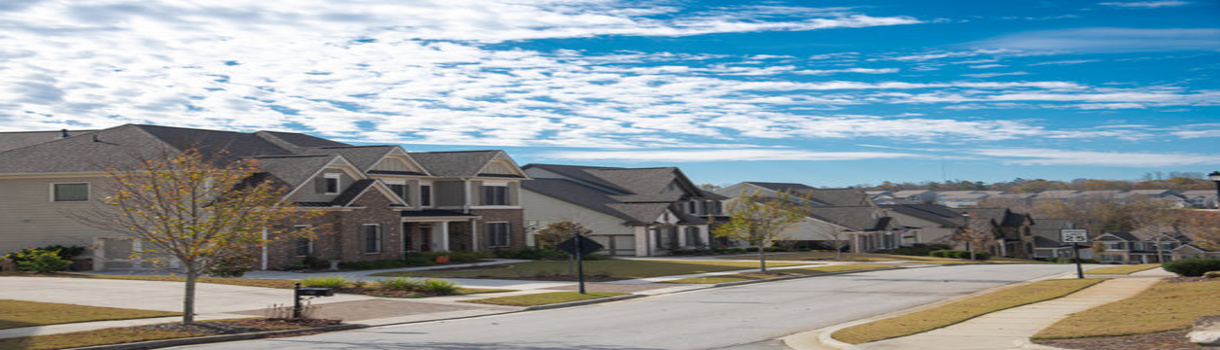
Inventory in established Muscogee County neighborhoods has been tight at accessible price points, with demand from relocating military families and civilians outpacing resale inventory in the sub-$250,000 range. New construction is concentrated in Harris County and the northern Muscogee County growth corridors, where national and local builders serve families drawn by Harris County Schools' reputation.
Architectural Range
Columbus's residential stock spans a wider architectural range than most cities of comparable size. The historic Midtown and Wynnton neighborhoods hold late Victorian, Craftsman bungalow, Colonial Revival, and mid-century modern homes on tree-lined streets with a settled character that new construction communities cannot replicate. The Bottoms neighborhood along the river has seen mill building conversions into loft residences and mixed-use developments that attract buyers seeking urban texture.
The suburban growth areas along Veterans Parkway and throughout Harris County offer the full range of production home construction from entry-level to semi-custom. Buyers benefit from working with agents who know the differences between communities presenting similarly in online listings but diverging meaningfully in build quality, lot character, school assignments, and HOA structure.
Where in the Columbus Area?
The Columbus metro distributes residential life across six counties with genuinely distinct characters. Understanding those differences shapes a relocation decision in ways that neighborhood-level research alone cannot accomplish.
Muscogee County
Muscogee County is the urban core of the Columbus metro. Nearly all of the city's institutional anchors, corporate employers, healthcare facilities, arts venues, and entertainment destinations sit within its boundaries. The county is essentially fully developed, meaning buyers choose from established neighborhoods, historic homes, and infill development rather than master-planned communities on new land.
Uptown and the Historic Core
Uptown Columbus, anchored by Broadway and the riverfront, is the city's most walkable and culturally active residential environment. Loft conversions in former textile mill buildings, renovated historic homes on nearby streets, and newer urban residential developments give Uptown a resident population that walks to dining, the RiverWalk, concerts at the Springer, and events at the Columbus Civic Center. The neighborhood rewards buyers and renters who want genuine urban texture and are willing to invest time in knowing its blocks well.
The adjacent Linwood neighborhood and streets surrounding the Columbus Museum hold some of the city's most architecturally distinguished residential stock, including large early-20th-century homes reflecting the prosperity of Columbus's textile mill era. These properties offer extraordinary character at prices that comparable Atlanta neighborhoods could not approach.
Midtown and Wynnton
Midtown Columbus and the Wynnton corridor form the city's established middle-class residential spine, with neighborhoods developed primarily between the 1920s and 1960s offering mature trees, solid construction, and proximity to schools, churches, and the commercial corridors of Manchester Expressway and Macon Road. These neighborhoods absorb much of the demand from military families and civilian professionals who want established community character without the historic district premium. Home prices here offer genuine value for buyers willing to do thoughtful due diligence on older homes.
North Columbus and Veterans Parkway
The northern Muscogee County growth corridor along Veterans Parkway holds the city's most active area of newer suburban construction. Shopping centers, national dining options, healthcare facilities, and fitness businesses have clustered here to serve residential growth following Veterans Parkway north toward the Harris County line. Families prioritizing newer construction, larger floor plans, and north-county retail find this corridor convenient, though it trades the character and tree canopy of older neighborhoods for the predictability and amenities of newer community development.
Communities Near Phenix City
While Phenix City sits in Alabama, communities immediately across the Chattahoochee from Columbus function as an integrated part of the Columbus residential market for many households. Alabama's income tax structure differs from Georgia's, and buyers considering Alabama-side communities should consult a tax professional to understand how those differences apply to their specific situation. Bridge crossings connecting Phenix City to Columbus are efficient, and commute times to Fort Moore, Uptown, or the corporate employment centers are comparable to many Muscogee County neighborhoods.
Harris County
Harris County lies north of Muscogee County along the Alabama border and has earned a reputation as the Columbus metro's premier family destination, driven by a school system consistently delivering strong academic results and a residential character combining natural beauty with comfortable suburban amenities. Pine Mountain, Hamilton, and the Lake Harding communities give Harris County a geographic variety that most suburban counties simply cannot offer.
Midland and the North Harris County Growth Corridor
The Midland area and subdivisions extending north along GA-85 from the Muscogee County line represent the heart of Harris County's suburban residential growth. Communities here draw families willing to accept longer Columbus commutes in exchange for Harris County Schools, newer construction, and lower-density residential living. The schools consistently rank among the strongest in western Georgia, and that reputation sustains buyer demand that has kept Harris County values firm even as broader market conditions have shifted.
Pine Mountain and Warm Springs
Pine Mountain, home to Callaway Gardens, sits in eastern Harris County near the Meriwether County line and represents a fundamentally different kind of Harris County living. The town is small, the pace deliberate, and the natural landscape of the Pine Mountain Ridge and surrounding forests creates an environment attracting buyers who want to stay within the Columbus metro's orbit while feeling genuinely removed from suburban development pressure. Warm Springs, technically in Meriwether County but sharing the same cultural corridor, carries the legacy of Franklin Roosevelt's Little White House and a community identity shaped by that heritage.
Hamilton and Lake Harding
Hamilton, the Harris County seat, is a small town with genuine community identity built around its courthouse square, local institutions, and the surrounding rural landscape. Lake Harding, formed by the Bartletts Ferry Dam on the Chattahoochee, provides boating, fishing, and waterfront living drawing buyers from across the metro who want lake access as an everyday feature rather than a weekend destination. Properties on Lake Harding range from modest fishing cabins to substantial waterfront homes, and the community around the lake has its own established social fabric.
Chattahoochee County
Chattahoochee County lies south of Muscogee County along the river and is shaped almost entirely by its relationship to Fort Moore. The county holds the smallest population of any county in Georgia and its residential character is defined by the needs of the military community it serves. Cusseta, the county seat, is a small community with services oriented toward the post.
Buyers choosing Chattahoochee County are almost exclusively motivated by proximity to Fort Moore's southern gate, which shortens commutes for soldiers and civilian employees assigned to the post's southern reaches. Housing prices here are among the most accessible in the metro, and the community, while small, has the practical infrastructure that military families prioritizing post access above other residential considerations require.
Talbot County
Talbot County sits northeast of Muscogee County in the Georgia piedmont and represents one of the region's most historically intact rural landscapes. Talbotton, the county seat, holds a courthouse square and a collection of antebellum and Victorian buildings that anchor a community character largely untouched by suburban development pressure.
Buyers drawn to Talbot County typically seek acreage, privacy, and the particular quiet of the Georgia piedmont at price points that coastal and suburban markets have made nearly impossible to find. The commute to Columbus employment centers runs 40 to 60 minutes depending on destination, which is manageable for households that travel to the city occasionally while anchoring daily life in a rural setting. Rolling terrain, hardwood forests, and small creek systems create a landscape that rewards residents who value natural character as a primary residential criterion.
Marion County
Marion County lies south of Muscogee County and east of Chattahoochee County, forming the southeastern edge of the Columbus commuter region. Buena Vista, the county seat, has a historic courthouse square and a small downtown reflecting the agricultural and community traditions of this part of central Georgia.
Marion County offers acreage-based properties at the region's most accessible price points, suited to buyers who want land for farming, horses, timber, or simply space and quiet that denser markets cannot provide affordably. The drive to Columbus employment centers runs 45 to 60 minutes, comparable to what many Atlanta suburban residents accept routinely, but the residential environment in exchange is fundamentally different: more land, more quiet, and a community culture built on long-term place rather than recent arrival.
For retirees seeking rural property with reasonable Columbus healthcare access, and for families prioritizing land and rural lifestyle over suburban convenience, Marion County offers real value that closer-in counties cannot replicate at comparable prices.
Meriwether County
Meriwether County occupies the northern edge of the Columbus metro's commuter range, stretching from the Harris County line north toward Griffin. Greenville, the county seat, has a quiet historic small-town character. Warm Springs carries the Roosevelt legacy that has made it one of west Georgia's most historically significant small communities.
The county's topography shifts into the Pine Mountain Ridge toward its southern edge, producing a genuinely scenic landscape by the standards of the Georgia piedmont. Meriwether County's combination of natural beauty, historical depth, and distance from suburban development pressure attracts buyers who value authenticity in their community setting and who have made a considered choice to live at the metro's edge rather than its center.
Commutes from northern Meriwether County to Columbus run 60 to 75 minutes, making the county practical only for households with location flexibility, remote work arrangements, or employment within the county. For those households, the residential value on offer in terms of land, character, and community quality is genuine and difficult to find elsewhere in the region at comparable prices.

Next Steps
Let us help!
Columbus rewards careful research. The difference between a renovated Craftsman bungalow on a shaded Wynnton street and a new-construction home in a Harris County subdivision is not only a question of price or distance from downtown. It is a question of school assignments, commute patterns, neighborhood culture, maintenance expectations, and the particular texture of daily life each setting produces.
A military family on orders who needs post proximity faces entirely different priorities than a remote worker who chose Columbus for the cost of living and wants walkable access to Uptown's dining and the RiverWalk. A first-time buyer working within a tight budget has different research needs than a retiring couple relocating from Atlanta who want to downsize financially while upgrading their quality of life. A buyer drawn to a historic Midtown home needs to understand older construction in ways that a buyer evaluating a North Columbus subdivision does not.
PrimeStreet connects buyers and renters relocating to the Columbus area with experienced local real estate professionals who understand these distinctions from daily practice. Whether the goal is a character-rich home near the river, a Harris County community with strong schools, rural acreage in Talbot or Marion county, or a low-maintenance option close to Fort Moore, the right agent makes the difference between a search that drains energy and one that builds genuine confidence.
Call 855-531-5347 or click Find an Agent to reach a Columbus area agent ready to listen first and then help match the right community to the life that belongs there.