
By Melanie Ortiz Reyes - Marketing Strategist - PrimeStreet.io
Moving There
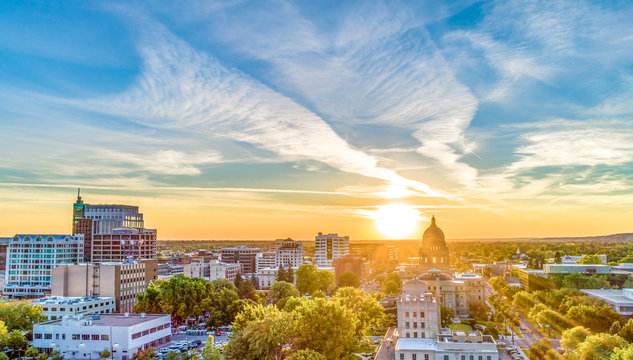
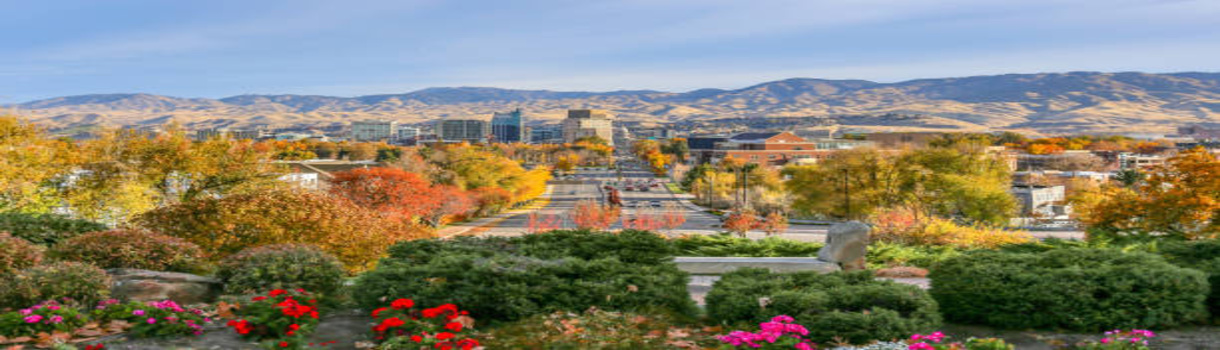
Boise has a reputation problem, though not the kind that hurts a city. The problem is that people who have never been here tend to picture something smaller and plainer than what they find. They expect a mid-size western town that happens to be a state capital, and they arrive to find a city with a genuinely walkable downtown, a food and arts scene with real substance, a river running through a greenbelt that connects neighborhoods across the valley, and mountains close enough that the view from most downtown streets includes visible snow from roughly October through June.
The Treasure Valley, as the broader Boise metro area is known, spreads across a high desert basin along the Boise River at the foot of the foothills of the Rocky Mountain system. Ada County holds Boise proper along with the cities of Meridian, Eagle, Star, and Kuna. Canyon County to the west anchors a second population center around Nampa and Caldwell. Gem, Elmore, Owyhee, and Boise counties extend the metro's reach into the surrounding high desert and mountain terrain, each carrying a character far removed from the subdivisions filling the valley floor.
The metro has grown rapidly, absorbing households from California, Washington, Oregon, and beyond who arrived looking for lower housing costs, outdoor access, and a pace of life that felt more manageable than what they left. That growth has reshaped the valley in ways that are visible and ongoing. Housing prices are no longer the dramatic bargain they were in 2018. Traffic on Eagle Road and the I-84 corridor is a real consideration. But the qualities that drew people here in the first place, the access to the outdoors, the genuine community culture, the sense that a city of this size can still be known and navigated by a person who lives here, those have not disappeared. They have just become less of a secret.
This guide is written for people making a real relocation decision. It covers the economy, housing market, cost of living, and the county-by-county character of the Treasure Valley in enough depth to support a decision grounded in knowledge rather than assumption.
What Makes Boise Different?
A Downtown That Actually Works
Boise's downtown core is one of its most underappreciated assets and one of the first things newcomers mention after spending time here. The grid of streets between the capitol and the Boise River holds restaurants, coffee shops, independent retail, galleries, and music venues that serve the permanent residential population year-round. This is not a downtown that closes after business hours or that exists primarily as a daytime office district. People live in it, eat in it, and gather in it across all four seasons.
The Basque Block on Grove Street is a national landmark of a different kind than most, a concentrated block of Basque cultural institutions, restaurants, and gathering places that reflect the history of the Basque sheepherding community that settled in southern Idaho generations ago and has maintained a cultural presence in Boise unlike anything found in most American cities of comparable size. The Basque Museum and Cultural Center, Bar Gernika, and the Basque Market draw visitors from across the country, and the annual Jaialdi festival, held every five years, brings Basque people from around the world to the streets of downtown Boise in a way that says something specific and honest about who this city is.
The Boise Contemporary Theater, the Idaho Shakespeare Festival performing in an outdoor amphitheater along the Boise River each summer, the Treefort Music Festival each spring, and the year-round programming at the Treefort umbrella of events give the city a cultural calendar that keeps its creative community engaged across every season. These are not institutions that exist to attract tourists. They exist because permanent residents built and sustained them, and that distinction matters when evaluating a city's long-term livability.
The Greenbelt and the River
The Boise River Greenbelt runs for more than 25 miles along both banks of the Boise River from the Lucky Peak Reservoir east of the city to the western edge of the valley. It connects parks, neighborhoods, college campuses, and natural areas in a way that turns what could simply be a river into an organizing feature of urban life. Residents use it on foot, by bicycle, and on inner tubes during the summer float season, when the river becomes a community gathering activity that cuts across every neighborhood and demographic in the valley.
Ann Morrison Park and Julia Davis Park, both along the Greenbelt in the heart of the city, host community events and provide green space that serves residents of adjacent neighborhoods as a practical daily resource rather than an occasional destination. Kathryn Albertson Park, a wildlife preserve near downtown, provides nesting habitat for waterfowl and a quieter stretch of the waterway that regular visitors return to for the quality of its stillness. The Greenbelt is one of those features that long-time residents describe as difficult to fully appreciate until you have lived alongside it for a year and discovered how thoroughly it shapes what the city feels like.
Mountains, Desert, and Everything Between
Boise sits at the edge of two distinct landscapes, and that position shapes what outdoor life looks like here in ways that are genuinely different from most mountain west cities. The Boise Foothills begin at the city's northern boundary and provide ridge hiking, mountain biking, and trail running within a ten-minute drive, or a short bike ride, from most central Boise neighborhoods. The network of trails in the foothills, managed through a combination of city, county, and nonprofit stewardship, is one of the most used trail systems per capita in the country and a daily presence in the lives of residents who build their mornings or evenings around it.
Bogus Basin Mountain Recreation Area, a ski and snowboard destination in the Boise Mountains about 16 miles from downtown, provides winter recreation access that is genuinely convenient by mountain resort standards. It is not a destination resort on the scale of Sun Valley, but it functions as a community mountain in a way that Sun Valley, two hours to the east, cannot. Families drive up after school. Residents ski a few hours and return for dinner. That accessibility is its own kind of value.
The Snake River Birds of Prey National Conservation Area south of Boise in Owyhee County holds the densest nesting population of birds of prey in North America and provides a high desert landscape that rewards visitors willing to leave the valley floor. The Owyhee Mountains to the southwest, the Sawtooth Mountains accessible via the Ponderosa Pine Scenic Byway, and the Sun Valley and Stanley Basin area to the northeast collectively give Boise residents a range of backcountry access that takes years to fully explore.



Economy
Technology and Advanced Manufacturing
Boise's economy is more diverse than its size and geography might suggest, and the technology sector that has developed along the Treasure Valley over the past two decades has added significant depth to an employment base that previously relied more heavily on agriculture, government, and resource extraction. Micron Technology, headquartered in Boise, is one of the world's largest manufacturers of semiconductor memory chips and has been a cornerstone of the local technology economy since the 1970s. Hewlett Packard Enterprise maintains a major presence in the Boise area, and a growing cluster of software companies, cybersecurity firms, and tech startups has formed around the Idaho Technology Council and the Boise State University technology ecosystem.
For engineers, software developers, supply chain professionals, and technology operations specialists, the Boise employment market has more depth than casual observers expect, and the compensation structures in this market tend to compare favorably to coastal equivalents when applied to the local cost of living.
Healthcare and Higher Education
St. Luke's Health System and Saint Alphonsus Regional Medical Center are the two major healthcare anchors in the Treasure Valley, each operating hospital campuses and extensive outpatient networks that collectively employ thousands of clinical and administrative professionals. The regional healthcare market has grown substantially to serve the population that has arrived over the past decade, and demand for nurses, physicians, allied health professionals, and healthcare administrators has remained consistent through multiple economic cycles. Boise State University, with more than 26,000 students on its blue turf campus along the Boise River, provides both a workforce pipeline and a direct employment base in education, research, and administrative roles that anchors the city's institutional economy.
Agriculture, Logistics, and the Regional Economy
Idaho's agricultural economy, among the most productive per capita in the country, supports a significant food processing, logistics, and agricultural services sector in the Treasure Valley that provides employment across a range of skilled trades and professional roles. The dairy industry, the potato processing sector, and the broader food manufacturing corridor along the I-84 Canyon County axis employ thousands of workers in operations that are often invisible to the technology and healthcare professional community but that form a durable foundation for the regional economy. Distribution and logistics companies have followed the population growth along the I-84 corridor and have added warehousing and supply chain employment to an area whose geographic position between the Pacific Northwest and the Mountain West gives it genuine regional importance for freight movement.
Cost of Living
Housing and the Honest Numbers
Boise's housing costs are the topic that generates the most confusion among people who read older relocation articles and arrive expecting the prices those articles described. The metro absorbed years of compressed demand during the pandemic relocation wave and median prices in Ada County roughly doubled between 2019 and 2022. The market has moderated since then, but households arriving with 2018 benchmarks in their heads need to update their expectations considerably.
Median home prices in Ada County currently run in the $450,000 to $550,000 range depending on city and neighborhood, a level that still compares favorably to coastal California, the Seattle metro, and most of the Mountain West cities that compete for the same relocating households. Canyon County to the west offers meaningfully lower medians, with Nampa and Caldwell communities providing the most accessible entry points in the metro for first-time buyers and households whose budgets are constrained. Gem County, further west, and Elmore County to the southeast extend the affordability ladder further for buyers willing to accept longer commutes and a more rural setting.
Average rents for a one-bedroom apartment in central Boise run approximately $1,300 to $1,800 per month depending on neighborhood and building vintage. Canyon County rental markets run below those figures and represent the most practical option for households arriving without an immediate purchase plan. The rental vacancy rate has historically been tight in the Boise metro, and households planning a rental-to-purchase transition should expect competitive conditions in the sub-$2,000 rental range.
Idaho Taxes and the Financial Picture
Idaho levies a graduated state income tax with a top rate that applies at relatively modest income thresholds, a factor households relocating from no-income-tax states should model carefully before treating Idaho's housing prices as the sole financial comparison. Property taxes in Ada County are moderate by western standards and benefit from the homeowner's exemption available to owner-occupants of primary residences, which reduces the taxable value of owner-occupied homes. Canyon and the outlying counties carry somewhat lower effective property tax rates than Ada County given smaller municipal service footprints.
Wildfire smoke is a seasonal air quality consideration in the Treasure Valley that has become more pronounced in recent years as fire seasons have intensified across the Pacific Northwest and Northern Rockies. Late summer smoke events, typically running from mid-July through September in significant years, affect outdoor recreation and air quality in ways that households with respiratory sensitivities should research and factor into their decision. The valley sits in a position that accumulates smoke from fires across a broad region, and the phenomenon is consistent enough that it functions as a practical feature of late summer life rather than an occasional anomaly.
Real Estate Market
The Boise market has returned to a more deliberate pace after the frenetic conditions of 2020 through 2022, when cash offers, waived inspections, and escalation clauses well above list price were routine features of transactions across most price ranges. Buyers today have the ability to conduct inspections, request repairs, and negotiate in ways that were effectively impossible at the market's peak. Inventory has improved, though the sub-$400,000 range in Ada County remains competitive given the persistent demand from first-time buyers and households relocating from higher-cost markets.
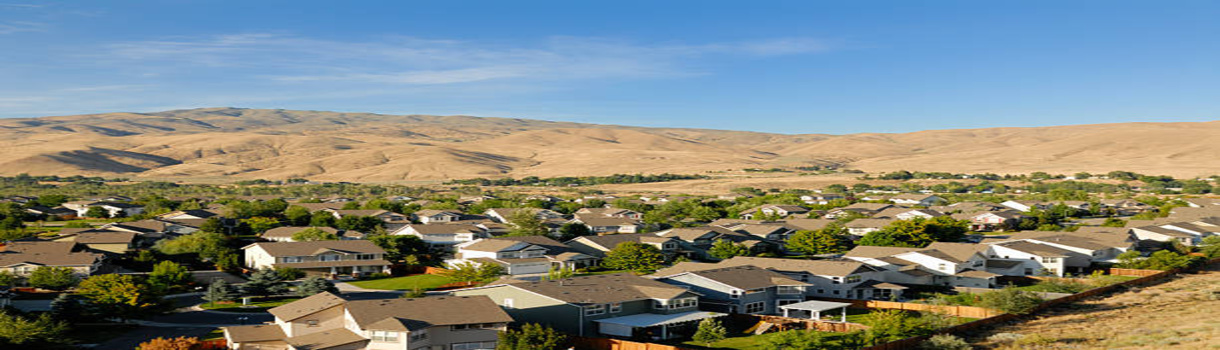
New construction is concentrated in the northern and eastern Meridian growth areas, the Star and Eagle corridors in western Ada County, and the developing communities of Middleton, Nampa, and Caldwell in Canyon County. National builders including D.R. Horton, Woodside Homes, and Toll Brothers operate alongside regional builders who understand the specific soil conditions, irrigation rights, and community character considerations that affect construction quality and long-term ownership experience in the Treasure Valley.
Architectural Character
Boise's older established neighborhoods carry an architectural inventory that reflects the city's development from the late territorial period through the mid-twentieth century. The North End, the city's most beloved historic neighborhood, holds craftsman bungalows, Victorian-era homes, and early twentieth-century residential architecture on tree-lined streets that give it a character and canopy cover that newer neighborhoods take decades to approximate. The Northend's streets follow an older grid that predates the automobile-oriented planning of the valley's suburban expansion, and the resulting walkability is a physical quality baked into the neighborhood's DNA rather than engineered after the fact.
The Bench neighborhoods south of downtown and the Boise Avenue corridor hold mid-century ranch homes and postwar residential stock that serves buyers seeking established neighborhoods at more accessible prices than the North End commands. East Boise's older subdivisions along the Warm Springs Avenue corridor provide a different version of established neighborhood character, closer to the foothills and to the Lucky Peak reservoir recreation area, with large lots and mature landscaping that newer communities cannot replicate.
Where in the Treasure Valley?
The six counties that define the Boise metro area range from the urban density of downtown Boise to the sagebrush rangelands of Owyhee County, a geographic spread significant enough that the county and community of residence shapes daily experience as much as the city itself. Understanding what each area offers, and what it asks in return, determines whether a relocation decision holds up over the long run.
Ada County
Ada County is the Treasure Valley's urban core and holds Boise, Meridian, Eagle, Star, and Kuna within its boundaries. It is the most expensive county in the metro and the one that holds the majority of the region's employment, cultural institutions, healthcare facilities, and recreational infrastructure. Choosing Ada County means choosing the metro's most developed version of itself, and the specific city within the county matters considerably given the differences in character, school districts, and community feel among Boise, Meridian, Eagle, and the smaller municipalities.
Downtown Boise and the North End
Downtown Boise and the North End neighborhood immediately adjacent to it represent the version of Boise life most visible in national media coverage and most sought-after by households relocating from walkable urban environments. The North End's craftsman bungalows and Victorian homes on Warm Springs Avenue, Harrison Boulevard, and the lettered streets of the Hays Street grid attract buyers who place walkability, neighborhood character, and proximity to the Greenbelt at the top of their priority list. The neighborhood's weekly farmers market, its independent coffee shops along 13th Street, and its trail access into the foothills give it a daily quality of life that residents consistently describe as difficult to replicate elsewhere in the valley. It works best for households without a strong dependence on square footage or storage, given that the older homes here tend to run smaller than new construction equivalents at comparable price points.
East Boise and the Bench
East Boise's neighborhoods along the Warm Springs and Barber Valley corridors provide foothills access and proximity to Lucky Peak Reservoir for households who prioritize outdoor recreation over walkable urban density. The Barber Valley trail network connects directly to the foothills system and draws mountain bikers and trail runners from across the valley who base their recreation out of the eastern neighborhoods. The Bench, a broad elevated terrace south of downtown Boise along Federal Way and Overland Road, carries a more modest residential character with mid-century homes, diverse demographics, and some of the city's most genuinely neighborhood-scale commercial streets. Bench neighborhoods tend to suit buyers seeking affordability within Boise city limits who are less focused on the North End's premium character.
Meridian
Meridian has grown from a small agricultural community into the most populous city in Idaho over the course of about two decades, a growth rate that has produced a community whose suburban infrastructure is largely new, whose school district has expanded rapidly to meet demand, and whose commercial corridors along Eagle Road and Fairview Avenue hold enough retail and services that many residents rarely leave the city for daily errands. The West Ada School District serves Meridian and has built a reputation for academic performance that consistently drives family demand into the city's subdivisions. Buyers who need new construction, community amenity packages, and strong school access at prices somewhat below Boise proper or the Eagle market consistently find that Meridian delivers on all three. The tradeoff is the suburban character that comes with a community built primarily in the past twenty years, with the wider streets, attached garages, and subdivision patterns of contemporary residential development.
Eagle
Eagle sits northwest of Boise along the Boise River and carries a community character that splits between the upscale suburban development of its newer southeastern sections and the quieter, more rural feel of the communities north of the river. The downtown Eagle Road corridor has developed into a walkable small-city commercial district with independent restaurants and locally owned businesses that give the city a center of gravity its newer neighborhoods might not otherwise have. Eagle has attracted a higher-income residential demographic than most of the surrounding Ada County communities, and its housing prices reflect that positioning. Buyers who want newer construction, good schools, and a community feel that sits closer to small-town than suburban, without leaving Ada County's employment and service infrastructure, consistently find Eagle worth evaluating.
Canyon County
Canyon County lies west of Ada County along the I-84 corridor and provides the Treasure Valley's most accessible housing market for buyers and renters whose budgets cannot reach Ada County's current price levels. Nampa and Caldwell are the county's principal cities, each with their own employment base, school systems, and community character that reward research rather than assumptions drawn from comparisons to Ada County.
Nampa
Nampa is Canyon County's largest city and one of the fastest-growing in Idaho, with a residential market that has absorbed significant buyer demand from households priced out of Ada County and from new arrivals who identify the value gap between the two counties as the primary driver of their location decision. The city has a working-community character shaped by agriculture, manufacturing, and the logistics sector that anchors much of Canyon County's employment base. Northwest Nazarene University gives the city an academic presence and a cultural anchor that contributes to a community life broader than the city's economic profile might suggest. Nampa's commute to central Boise runs 25 to 40 minutes depending on origin and destination, a trade-off that the housing cost differential justifies for a significant share of the households that land here.
Caldwell
Caldwell, at the western end of Canyon County along I-84, is the county seat and holds the College of Idaho, a small liberal arts institution with a campus character and intellectual tradition that give the city something distinctly its own. The downtown has seen meaningful reinvestment over the past several years, with new restaurants, a renovated historic theater, and civic investment in public spaces that reflect a community working deliberately to build on its own assets. Housing prices in Caldwell run below Nampa's averages and represent some of the most accessible in the entire metro. For buyers whose employment sits in the western Canyon County corridor or who need maximum purchasing power and can absorb a longer Boise commute, Caldwell delivers value that is difficult to find elsewhere in the valley.
Gem County
Gem County lies northwest of Ada County along the Payette River and represents the metro's quietest and least developed commuter reach. Emmett, the county seat, is a small agricultural city in a river valley framed by the Squaw Butte and the surrounding high desert ridgelines. The community has a farm town character shaped by orchards, cattle ranching, and the Payette River corridor that runs through it, and it draws buyers who want the combination of valley floor accessibility and genuine rural quiet that no Ada or Canyon County community can credibly offer.
The commute to Boise from Emmett runs approximately 40 to 50 minutes and crosses a mountain pass that can be affected by winter weather conditions. For households with location flexibility, remote work arrangements, or employment within Gem County itself, the residential value on offer here is real: larger lots, lower prices, a slower pace, and a community culture built on long-term place rather than recent arrival. The Payette River fishing and the access to the Squaw Butte area trails and open land give Gem County a natural recreation character that the more developed valley communities have largely traded away for infrastructure and density.
Elmore County
Elmore County sits southeast of Ada County in a landscape that shifts from the Snake River Plain into the high desert terrain of the Bennett Hills and the Camas Prairie. Mountain Home, the county seat, is a community shaped significantly by Mountain Home Air Force Base, one of the Air Force's primary fighter wing installations and the county's dominant employer. The base gives Mountain Home a military community character and an economic stability that insulates it from the volatility affecting purely civilian markets.
For active-duty military families assigned to Mountain Home AFB, the community provides what most military installation towns provide: affordable housing close to the gate, a school system experienced with mobile military families, and a support network built over decades of military community presence. The drive to Boise runs approximately 45 minutes on I-84, making the city accessible for services, healthcare, and entertainment without requiring a daily commute for the majority of residents whose work is on or near the installation. For civilian buyers, Elmore County offers some of the region's most accessible ownership prices for households whose work allows geographic flexibility.
Owyhee County
Owyhee County occupies the southwestern corner of the metro's commuter region and covers a vast high desert and canyon landscape that has more in common with the Great Basin than with the agricultural valley floor of Ada and Canyon counties. Murphy, the county seat, is one of the smallest county seats in the United States, a fact that captures something essential about Owyhee County's character. The population is small, the land is enormous, and the people who choose to live here have made a deliberate trade of convenience for space, quiet, and a relationship with the landscape that denser places simply cannot accommodate.
Buyers in Owyhee County typically seek acreage, agricultural or ranching land, or the particular solitude of the high desert at prices that allow them to own land in quantities that would be financially impossible in the valley. The Snake River Birds of Prey National Conservation Area, the Bruneau Dunes State Park, and the canyon country of the Owyhee River watershed provide natural landscape of a quality and scale that draws serious outdoor enthusiasts willing to base themselves far from urban services to access it regularly. For the right household, Owyhee County offers a version of life that has almost no equivalent in the rest of the metro area.
Boise County
Boise County lies northeast of Ada County in the Boise Mountains and along the South Fork of the Payette River, and its character shifts the conversation entirely from valley living into mountain and canyon terrain. Idaho City, the county seat, was the largest city in the Pacific Northwest during the gold rush era of the 1860s and retains enough of that history in its buildings and community identity to give it a character genuinely unlike anything in the valley below. The drive from Boise takes about 45 minutes on Highway 21, the Ponderosa Pine Scenic Byway, and the road itself is part of the experience.
Households who choose Boise County are typically making a specific and considered lifestyle decision. They want mountain living, proximity to the Boise National Forest, access to the South Fork Payette River for fishing and rafting, and a community culture shaped by people who chose the mountains deliberately rather than those who arrived for convenience. Cabins, small acreage properties, and rural residential lots at the forest edge make up most of the residential inventory. The school district is small. Services are limited. And for the households that belong here, none of that is a deterrent.

Next Steps
Let us help!
The Treasure Valley rewards people who take the time to understand what each community actually delivers rather than relying on what the metro's national reputation suggests. The difference between a home in Boise's North End and one in a Meridian subdivision is not simply a question of price or proximity to Eagle Road. It is a question of neighborhood character, school assignments, lot size, walkability, and the particular rhythm of daily life that each setting produces.
A technology professional whose office sits in east Boise near the Micron campus faces a different location calculation than a healthcare worker commuting to St. Luke's on Curtis Road. A couple relocating from Portland who want walkable streets and independent restaurant access has different priorities than a military family assigned to Mountain Home AFB who needs proximity to the base and a school system experienced with frequent moves. A buyer drawn to the craftsman character of a North End bungalow carries different research requirements than one evaluating a new construction community in Star or Middleton.
PrimeStreet connects relocating buyers and renters with experienced Treasure Valley real estate professionals who understand these distinctions from daily practice. Whether the priority is a walkable Boise neighborhood close to the river and the trails, a Meridian or Eagle community with strong schools and newer construction, an affordable Canyon County entry point, or a rural property in Gem or Boise County, the right local agent is the difference between a search that drains energy and one that builds genuine confidence. Call 855-531-5347 or click Find an Agent to reach a Treasure Valley agent ready to listen first and then help match you to the right community.