
By Melanie Ortiz Reyes - Marketing Strategist - PrimeStreet.io
Move to Austin
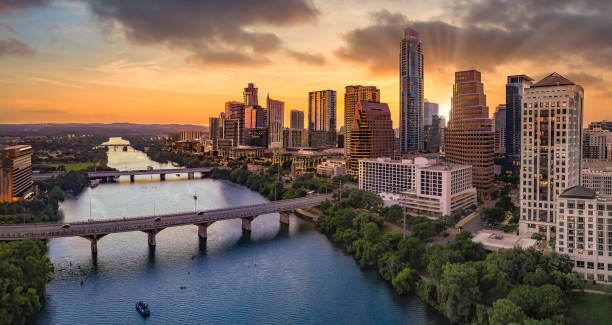
The first thing people tend to hear about Austin is that it grew too fast. What takes longer to understand is that growth, as disruptive as it has been, happened for reasons that are easy to see once you have spent time here. Austin is genuinely good at being a city. It has a music culture with real roots, a food scene that reflects actual diversity rather than imported trends, a university that generates ideas and talent in quantities large enough to reshape entire industries, and a physical setting along the Colorado River that gives the metro a visual and recreational anchor unlike anything else in Texas.
The Austin metropolitan area spans six counties and covers terrain that ranges from the dense urban neighborhoods inside the loop to limestone-capped Hill Country ridges and river valleys where the pace of daily life is measured in seasons rather than traffic cycles. Travis County holds the city itself. Williamson County to the north has absorbed an enormous wave of family relocation. Hays County to the southwest is where the Hill Country begins. Bastrop, Caldwell, and Lee counties extend the metro's reach eastward into a landscape of post oaks, piney woods, and working ranches that feel genuinely removed from the capital city twenty minutes up the road.
People who move here from the coasts, from Chicago, from Denver, or from other Texas cities describe a recurring dynamic: they came for a job or a lower cost of living and stayed because Austin turned out to be more than they expected. This guide is written for people making a serious relocation decision. It covers the economy, housing, cost of living, neighborhoods across all six counties, and the details of daily life that determine whether a place is genuinely livable or simply attractive in photographs.
What Makes Austin Different?
A Capital City With Its Own Identity
Austin has been the seat of Texas government since 1839, and that history of civic infrastructure, public institution building, and deliberate city planning is visible in a way that distinguishes it from the other major Texas metros. The Capitol grounds anchor the north end of Congress Avenue, which runs south to the Colorado River in a way that gives the urban core a legible spine. The Blanton Museum of Art, the Bob Bullock Texas State History Museum, and the Long Center for the Performing Arts provide cultural anchors that serve the permanent population year-round.
The University of Texas at Austin enrolls more than 50,000 students and employs a faculty research enterprise that generates significant economic output in fields including engineering, life sciences, law, and public affairs. The university's presence is not merely demographic. It sets an intellectual tone that has drawn technology companies, research institutions, and a workforce of highly educated professionals who in turn have supported the growth of restaurants, bookshops, independent theaters, and a civic culture that takes ideas seriously.
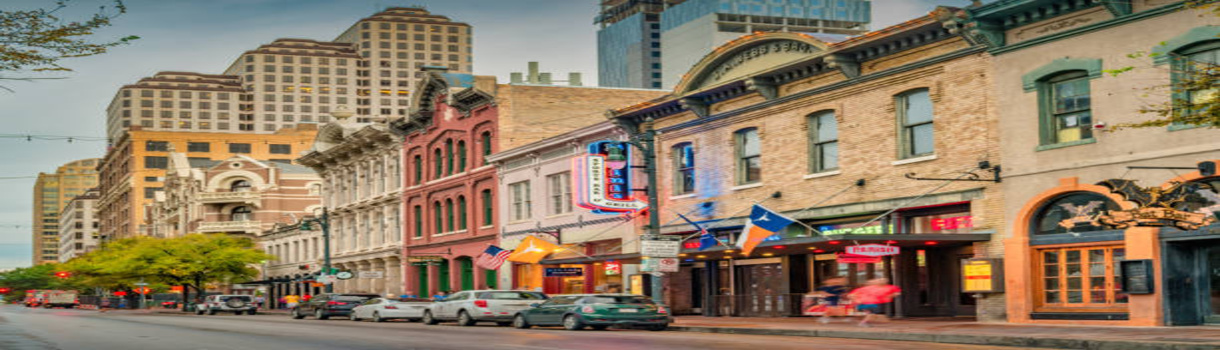
South Congress Avenue, East Sixth Street, the warehouse district, and the stretch of South Lamar between the river and Ben White Boulevard each function as genuine neighborhood commercial corridors rather than tourist destinations with local window dressing. The distinction matters for people considering full-time life here. Austin's best known neighborhoods have permanent populations that use them daily, and that produces a different quality of street life than resort towns designed for visitors.
The Water and the Land
The Colorado River, dammed into a series of lakes that locals call the Highland Lakes, runs through the western edge of the Austin metro and provides the recreational foundation that shapes how residents spend their leisure time. Lake Travis, the largest of the chain, offers boating, swimming, fishing, and waterfront dining at a scale that few inland metros can claim. Barton Springs Pool, a natural limestone swimming hole fed by underground springs in Zilker Park, has been a defining Austin institution for more than a century and serves as a gathering place that cuts across neighborhood, income, and demographic lines in a way that is increasingly rare in growing cities.
The Barton Creek Greenbelt runs along the creek's carved limestone canyon through the southwestern quadrant of the city, providing hiking and swimming access minutes from the urban core. McKinney Falls State Park, Hamilton Pool Preserve, and Pedernales Falls State Park extend those natural recreation options into the surrounding Hill Country with a variety in terrain and character that rewards regular exploration. The landscape itself, particularly in Hays and Bastrop counties, has a beauty that is easy to underestimate before arrival and difficult to overstate after.



Economy
Technology and the Knowledge Economy
Austin's transformation into a major technology hub has been the dominant economic story of the past two decades, though the city's employment base is considerably more diverse than that framing suggests. Tesla relocated its headquarters to Austin in 2021 and operates a massive manufacturing facility in eastern Travis County. Apple has built a corporate campus in northwest Austin with a planned capacity of 15,000 employees. Samsung's semiconductor fabrication plant in Taylor, just north of the metro, represents one of the largest foreign direct investments in Texas history. Dell Technologies, which was founded in a University of Texas dorm room, remains headquartered in the metro and employs thousands of engineers and operations staff.
The density of technology employment has created a downstream economy of professional services, software development shops, consulting firms, and venture-backed startups that collectively employ tens of thousands of workers across the metro. The Austin Chamber of Commerce and the Capital Factory accelerator community have worked deliberately to build the kind of startup infrastructure that retains locally educated talent rather than watching it migrate to the coasts after graduation, and that effort has had measurable results.
Healthcare, Government, and Education
State government is the other major employment pillar in the capital city. The Texas state agencies, legislature, courts, and associated lobbying and legal infrastructure collectively employ thousands of professionals whose jobs are anchored to the city regardless of economic cycles. Baylor Scott and White Health, Ascension Seton, and St. David's HealthCare each operate major hospital campuses and extensive networks of outpatient facilities that serve a metro population growing rapidly enough to justify continuous expansion.
For households relocating in fields including nursing, healthcare administration, software engineering, public policy, legal services, education, or skilled trades, Austin's employment depth is genuine. The construction sector has maintained years of near-continuous activity driven by residential and commercial development across all six counties, providing strong wages for tradespeople willing to follow growth.
Cost of Living
Housing and What the Budget Actually Buys
Austin's cost of living increased sharply between 2019 and 2022 as remote worker relocation, corporate headquarters moves, and pandemic-era migration compressed years of demand into a short window. The market has since found more balance, with median home prices in Travis County settling into ranges that, while elevated compared to most of Texas, remain below comparable urban markets in California, New York, or coastal Florida.
Williamson County, particularly communities like Round Rock, Georgetown, and Cedar Park, offers meaningfully lower median prices than Travis County's urban core while maintaining competitive school districts and reasonable commute access to major employers. Hays County communities like San Marcos and Kyle represent the entry-level tier of the owner-occupied market within a half hour of downtown Austin. Bastrop and Caldwell counties extend affordability further for households comfortable with a 40-to-60-minute commute and willing to prioritize acreage over proximity.
Average apartment rents in central Austin and the closer suburbs run $1,500 to $2,200 per month for a one-bedroom unit depending on location and vintage. Rental costs in Georgetown, Pflugerville, and the eastern Travis County communities run below those figures and represent the most practical entry point for households arriving without an immediate purchase plan.
Texas Taxes and the Real Cost Calculation
Texas levies no individual state income tax, which represents a meaningful financial advantage for households relocating from states with significant income tax burdens. The trade-off is a property tax rate that is among the higher ones nationally, with effective rates in Travis County typically running between 1.7 and 2.2 percent of assessed value depending on the taxing entities that apply to a given address. The net financial impact of the Texas tax structure varies considerably by income level and home value, and households should model their specific situation rather than relying on general characterizations.
Utility costs, particularly electricity during summer months, are higher than the national average given the extended heat season and the aggressive air conditioning demands of Texas summers. The Electric Reliability Council of Texas manages the state grid independently, an arrangement that has advantages in terms of regulatory flexibility and disadvantages in terms of exposure to extreme weather events. Home generators and battery backup systems have become increasingly common purchases among established Austin-area residents.
Real Estate Market
What Buyers Find Today
The Austin real estate market is meaningfully more navigable in 2024 than it was during the 2021-to-2022 peak, when multiple offers, escalation clauses, and appraisal waivers were routine features of nearly every transaction. Inventory has increased across the metro, and buyers in most submarkets can conduct due diligence, negotiate inspection responses, and make considered decisions rather than reactive ones. That said, well-priced properties in Williamson County's top school districts and Travis County's most walkable neighborhoods continue to attract competitive interest.
New construction is concentrated in Williamson County's Georgetown and Liberty Hill areas, the Kyle and Buda corridor in Hays County, the Bastrop and Elgin areas to the east, and the Leander and Cedar Park communities north of Austin. National builders including D.R. Horton, Pulte, and KB Home operate alongside regional builders who know the specific demands of Central Texas construction, including soil expansion characteristics, summer heat management, and the structural requirements of Hill Country terrain.
Architectural Character and Neighborhood Types
Travis County's older neighborhoods, particularly Hyde Park, Clarksville, Bouldin Creek, and the areas immediately east and south of downtown, contain a mix of craftsman bungalows, mid-century ranch homes, and older cottages that have been heavily renovated as the city's land costs have risen. These neighborhoods carry genuine character shaped by decades of habitation and investment, and they attract buyers who value walkability and proximity to the urban core over square footage and storage.
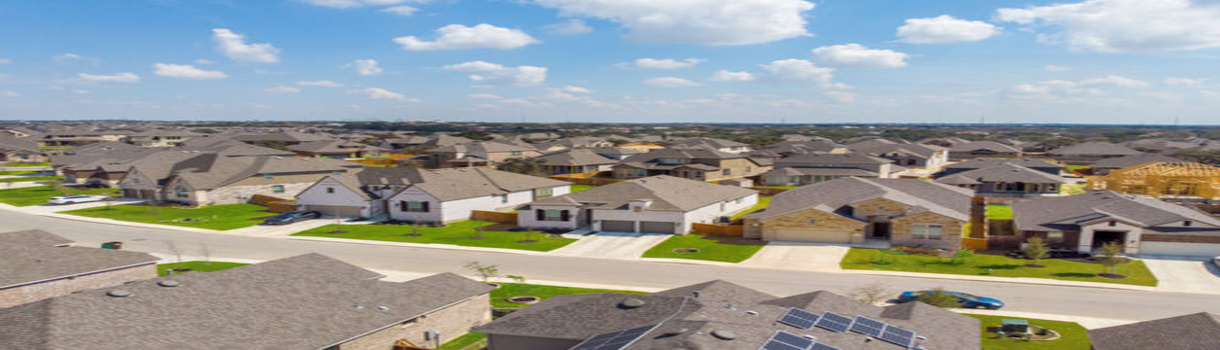
The dominant housing type in the suburban counties is the production home built since 2000, with open floor plans, attached garages, stone and brick exteriors suited to the Texas climate, and community amenities that range from basic trails to resort-style pools and fitness facilities. Buyers evaluating these communities benefit from looking beyond the model home to the specific subdivision's HOA financial health, the build quality track record of the specific builder, and the school assignments that come with a given street address.
Where in Austin?
The six counties of the Austin metro area cover terrain and community types ranging from walkable urban neighborhoods blocks from the Texas Capitol to rural properties along the Colorado River and its Hill Country tributaries. Understanding the distinctions between them is the foundation of a relocation decision that holds up over time.
Travis County
Travis County is Austin. The city proper sits within it, as do the older suburban communities of Pflugerville, Manor, and Lago Vista that have been absorbed into the metro's growth pattern over the past two decades. The county is largely built out in its central and western sections, meaning that buyers choosing it are generally choosing established neighborhoods with mature trees, older homes, and the school assignments, commute patterns, and community cultures that come with decades of settled life.
Central Austin and the Urban Neighborhoods
The neighborhoods inside the MoPac and US-183 corridor represent Austin's urban core. South Congress, Travis Heights, Barton Hills, Tarrytown, Hyde Park, and the Mueller redevelopment on the former airport site each offer walkable streets, proximity to the city's cultural and dining institutions, and the particular quality of life that comes from living close enough to work, restaurants, and parks that a car is optional for daily errands. Properties here are among the most expensive in the metro, and buyers trade square footage for location in a calculation that long-term residents consistently describe as worthwhile.
East Austin and the Mueller District
East Austin has undergone the most visible transformation of any Austin neighborhood in the past fifteen years. What was a historically Latino, working-class community along East Sixth Street and Cesar Chavez Avenue has developed into one of the city's most active dining, retail, and residential corridors. The Mueller mixed-use development on the former Robert Mueller Municipal Airport site has added thousands of homes, shops, offices, and parks to the northeastern quadrant in a planned format that continues to attract buyers seeking urban density with community design intentionality.
Williamson County
Williamson County sits directly north of Travis County and has absorbed the majority of the metro's family relocation demand over the past decade. The combination of newer housing stock, competitive school districts, lower land costs than Travis County, and direct highway access to the major employer corridors along US-183 and SH-45 has made Round Rock, Georgetown, Cedar Park, Leander, and Pflugerville collectively the most active housing markets in the metro.
Round Rock
Round Rock anchors the southern end of Williamson County and carries a community identity built on decades of planned growth, investment in parks and recreation infrastructure, and school district performance that has made it one of the most recognized family relocation destinations in Texas. Dell's headquarters campus sits within Round Rock city limits, providing a major employment anchor, and the commercial corridors along IH-35 and University Boulevard have developed to the point that daily life rarely requires a drive into Austin proper.
Georgetown
Georgetown, the county seat, has grown from a quiet town centered on its Victorian courthouse square into one of the fastest-growing cities in the country. The historic square remains a genuine gathering place with independent restaurants, galleries, and a year-round events calendar that draws residents from across the county. The surrounding residential growth ranges from active adult communities like Sun City Georgetown, one of the largest age-restricted developments in the country, to family subdivisions with elementary schools within walking distance.
Hays County
Hays County occupies the southwestern quadrant of the Austin metro and marks the beginning of the Texas Hill Country in earnest. The terrain changes visibly as US-290 or RR-12 carry drivers westward from the I-35 corridor into the Blanco River valley and the cedar-covered ridges beyond. San Marcos, the county seat and home to Texas State University, provides an affordable and lively urban center. Wimberley, Dripping Springs, and Kyle each offer distinct versions of Hill Country suburban living with growing amenities and permanent populations.
San Marcos
San Marcos sits at the intersection of I-35 and the Blanco River and holds a community character shaped by Texas State University's 38,000-plus students alongside a permanent population of families and professionals who value the city's size, affordability, and access to the San Marcos River. The river, spring-fed and consistently clear, runs through the center of the city and supports swimming, kayaking, and tubing that give San Marcos a recreational identity distinct from every other community in the metro.
Wimberley and Dripping Springs
Wimberley and Dripping Springs attract households seeking the Hill Country aesthetic at its most developed. Both towns have built strong identities around outdoor recreation, farm-to-table dining, weekend tourism, and a growing permanent population of remote workers and retirees who want landscape and community in equal measure. The Blanco River and Cypress Creek anchor Wimberley's natural character. Dripping Springs, positioned along US-290 at the eastern edge of the wine and whiskey trail that runs through the Hill Country, has become one of the region's most active small-city destinations.
Bastrop County
Bastrop County lies east of Travis County in a landscape that feels distinctly different from both the urban core to the west and the Hill Country to the southwest. The Lost Pines, a relic forest of loblolly pines isolated from the main East Texas pineywoods by the Post Oak Savanna, define the county's visual character and give the Bastrop area a forested quality rare this far west in Texas. The county seat of Bastrop sits along the Colorado River with a restored Victorian downtown, a growing arts community, and a permanent population that has expanded as housing costs in Travis County pushed buyers further east.
Elgin, east of Bastrop on US-290, has transitioned from a small agricultural center into a bedroom community with growing amenities and a livestock auction that serves as a reminder of the working ranch economy that still operates alongside the residential growth. Both communities offer land at price points that are exceptional relative to the Travis County equivalents, and buyers who can absorb the 35-to-50-minute commute to central Austin employment find genuine purchasing power here.
Lee County
Lee County forms the northeastern edge of the Austin metro's commuter reach and remains the most rural of the six counties. Giddings, the county seat, is a small agricultural and commercial center with a courthouse square, a community hospital, and the basic service infrastructure of a working small Texas city. The county's landscape is post oak and blackland prairie, largely devoted to cattle ranching and row cropping, with few subdivisions and abundant land available for buyers who want genuine rural acreage at prices well below any nearer county.
The commute to central Austin employment from Giddings runs 60 to 75 minutes in normal traffic conditions, which limits Lee County's appeal to households that travel to the city infrequently or that work remotely with only occasional on-site requirements. For that specific combination of needs, including land, rural quiet, and eventual access to a major metro, Lee County offers something few other places in Texas can match at comparable price points.

Next Steps
Let us help!
The Austin metro rewards people who take time to understand it before choosing a county and a community within it. The difference between a home in Travis County's Bouldin Creek and a home in Williamson County's Georgetown is measured in more than miles. It is measured in commute patterns, school assignments, property tax rates, HOA structures, community culture, and the particular version of daily life that each setting produces.
A family relocating for a technology job in north Austin faces a different decision matrix than a couple retiring from the Northeast who want walkability and Hill Country access. A remote worker whose primary needs are high-speed internet and outdoor recreation has different priorities than a healthcare professional whose daily commute runs to a Baylor Scott and White campus. A buyer drawn to the character of an East Austin craftsman home carries different research requirements than one evaluating a new-construction community in Liberty Hill.
PrimeStreet connects relocating buyers and renters with experienced Austin-area real estate professionals who understand these distinctions from daily practice. Whether the priority is a walkable urban neighborhood close to the Capitol, a Williamson County community with top-ranked schools, a Hill Country acreage property in Hays County, or an affordable entry point in Bastrop or Caldwell counties, the right local agent is the difference between a search that exhausts and one that delivers. Call 855-531-5347 or click Find an Agent to connect with an agent who specializes in the Austin area.